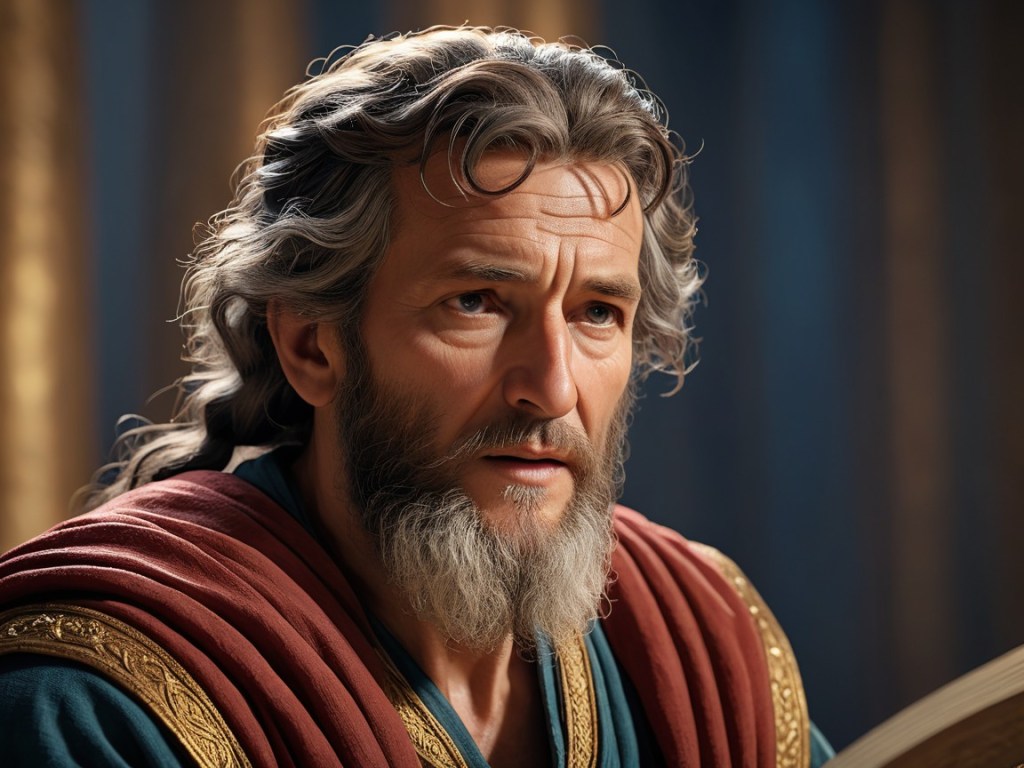
Habakkuk did not hesitate to ask God a question,
He esteemed God’s command and did not take it as a suggestion,
Habakkuk needed answers and received them in quiet ingestion,
God will answer you, get ready to take the truth in digestion.
God told Habakkuk to write the vision and make it plain,
A vision gives you direction on where to go when riding life’s train,
A vision makes things bearable even on the rough and tough terrain,
Write down all your goals, the minor ones and the main.
The proud shall fail but by faith the just shall live,
Like a hand from an open heart, by faith the just shall give,
For they know it is more blessed to give than to receive,
By faith, the upright, a legacy shall live and leave.
Habakkuk showed faith in God in the face of impending adversity.
God gave him commands to lead them to unending productivity,
He gave them commands to lead them out of captivity,
God wants us to have trust in Him, for He wants to set us free.
Hebrews 11:32-35 (KJV) – “32 And what shall I more say? For the time would fail me to tell of Gedeon, and of Barak, and of Samson, and of Jephthae; of David also, and Samuel, and of the prophets: 33 Who through faith subdued kingdoms, wrought righteousness, obtained promises, stopped the mouths of lions. 34 Quenched the violence of fire, escaped the edge of the sword, out of weakness were made strong, waxed valiant in fight, turned to flight the armies of the aliens. 35 Women received their dead raised to life again: and others were tortured, not accepting deliverance; that they might obtain a better resurrection.”
Introduction
The name Habakkuk means to embrace. Habakkuk was one of the prophets of the Bible whom the writer of Hebrews meant when he talked about the faith of the prophets. The book of Habakkuk is believed to have been written during the late 7th century BCE, likely between 609 and 597 BCE, a time of significant political and social turmoil in the ancient kingdom of Judah. At that time, Judah was under the threat of the Babylonian Empire, which was expanding its power and influence in the region. The Babylonians were known for their cruelty and had already conquered many nations, including the northern kingdom of Israel.
Habakkuk, the prophet, is deeply troubled by the moral and social decay he sees within Judah. He is also troubled by the impending Babylonian invasion, which probably is a divine punishment for the wickedness and idolatry within his own nation. In the first chapter, Habakkuk poses a series of questions and complaints to God, questioning why God allows evil and injustice to persist and why He would use the wicked Babylonians to punish His people.
In response, God provides answers and assurances to Habakkuk’s concerns. God affirms His sovereignty and explains that the Babylonians will eventually face their own judgment for their pride and cruelty. The righteous are encouraged to live by faith despite the challenging circumstances and to trust in God’s ultimate justice.
The Book of Habakkuk, therefore, addresses themes of faith, justice, and theodicy (the problem of evil). It serves as a dialogue between a prophet seeking understanding and a God who provides answers and calls for trust and faith in His divine plan, even in the face of difficult and distressing times. The book is relatively short but offers valuable insights into the relationship between humanity and the divine in the midst of adversity and moral challenges.
The book emphasizes the prophet’s questioning, complaints, and the answers and assurances he receives from God. The book is unique among the prophetic books in the Bible because it primarily consists of a conversation between the prophet Habakkuk and God, rather than a collection of prophetic oracles.
Questioning God
Habakkuk 1:2-4 (AMP) – “2 O Lord, how long will I call for help and You will not hear? I cry out to You, “Violence!” Yet You do not save. 3 Why do You make me see iniquity, and cause me to look on wickedness? For destruction and violence are before me; Strife continues and contention arises. 4 Therefore, the law is ineffective and ignored and justice is never upheld, For the wicked surround the righteous; Therefore, justice becomes perverted.”
Many are confused by how God works but they cannot dare ask Him. So, they end up making assumptions about God which are not true. They end up giving God all sorts of negative attributes that have resulted from misunderstanding Him. Some call Him cruel; others call Him selfish, and others call Him unfair to mention but a few. Some people have given up on religion, others have given up on Christianity because of this confusion.
1 Corinthians 14:33 (KJV) – “For God is not the author of confusion, but of peace.” God is not the author of confusion. So, He does not want you to be confused. God is the author of peace, meaning, He wants you to have peace. Confusion brings conflict, peace takes away conflict. Confusion stirs up trouble, peace calms the stormy seas of trouble. Confusion roughens up situations, peace smoothens situations. Confusion leads to death; peace leads to life. God’s handwriting spells out peace, while Satan’s handwriting spells out confusion. Therefore, confusion needs to be avoided while peace needs to be tightly embraced.
When the Bible says that God is not the author of confusion it means that God does not want you to be confused. He wants you to have peace of mind so that you can worship Him joyfully and focus on Him. He knows that you cannot have peace if you don’t know Him and you don’t know His will for your life. He does not want you to continue living a life of trial and error. Instead, He wants you to move fast and forward. Therefore, He is willing to give you direction of the path He has ordained for you. He wants you to ask Him whatever questions that are troubling your mind because He wants you to get blessed by building a relationship with Him.
By faith, Habakkuk asked God questions that he really needed answers for. Prophet Habakkuk raised questions and complaints to God regarding the apparent injustice and wickedness in Judah. This act of questioning demonstrated his desire to understand God’s ways and his faith in seeking answers from the divine God.
Unlike Habakkuk, most of us see some questions as too inconsequential to ask God. We think that we are meant to ask God only those things that are highly significant. God wants us to ask Him everything that we don’t know and understand. When He tells us in 1 Thessalonians 5:17 to pray without ceasing, He knows that not all times we have important things worrying us. Therefore, He expects us to take everything to Him, what is major and what is minor. He does not want even the lightest burden to be on our shoulders. Thus, He is willing to assist us in carrying all our baggage, so that we may be happy and free. God wants us to increase in knowledge. God wants us to ask Him questions.
Waiting for God’s Response
Habakkuk 2:1 (KJV) – “I will stand upon my watch, and set me upon the tower, and will watch to see what he will say unto me, and what I shall answer when I am reproved.”
After his initial questions, Habakkuk chooses to station himself and wait for God’s response. This act of waiting reflects his faith and readiness to receive God’s answer. We talk to God but we rarely listen to His response. Our conversation with God is often one-sided. When a dialogue is single-sided it ceases to be a dialogue. We are the students, and God is the Master Teacher. Unfortunately, many times we take the role of being the instructor who is constantly speaking and give God the role of the student who has no right to question or comment on the lecture.
This habit leads us to frustration. We get angry with God because He has not answered our prayers when we should be angry at ourselves because we did not pause to listen. This behavior is dangerous as it has broken many relationships and associations. What the other person has to say should be equally as important as what we have to say.
Habakkuk showed faith in God when He waited for the Lord’s response. He assumed the role of a student who needed answers from the Divine Instructor. Therefore, after he finished questioning, Habakkuk waited for God’s divine response and God responded. Do we pause to wait for God’s response?
Have a vision and write it down
Habakkuk 2:2-3 (KJV) – “2 And the Lord answered me, and said, Write the vision, and make it plain upon tables, that he may run that readeth it. 3 For the vision is yet for an appointed time, but at the end it shall speak, and not lie: though it tarry, wait for it; because it will surely come, it will not tarry.”
God instructed Habakkuk to write the vision and make it plain upon tables. He told Habakkuk that the vision will be fulfilled at an appointed time. God did not overwrite the obstacles that they may meet before the fulfillment of the vision. Instead, He gave them assurance, telling them that even though it tarries, it will surely come.
Comedian and talk show host Steve Harvey says that this particular text is one of two texts in the Bible that completely changed his life and made him successful. The other text that changed his life was James 4:2. When talking about Habakkuk 2:2-3, he emphasized the power of writing something down. He challenged his audience to list down what they wanted in life on a piece of paper (he recommended them to write 300 things that they wanted God to do for them).
Steve told them to read the list every night and every morning. He urged them to go back to the list at the end of the year, ticking off all the things they had written down on the list that they have gotten. He assured them that at the end of the year, they would have ticked off at least 30 things from that list which represents ten percent of the entire list.
The advice Steve gave is a tremendous thing to practice. I cannot assure you of the number of things you will be able to tick off your list at the end of the year. However, I stress the point that you need to write down your goals, plans and objectives that you wish to accomplish.
I was sitting in the house one day and I decided to go through a notebook from four years ago where I had written down plans that I wished to carry out. I was astonished to realize that almost everything I had written there had been accomplished. Some of those things I had written down had not been accomplished the way I had planned for them to be fulfilled but they were still fulfilled. Another day, I was going through one of my old notebooks. In that notebook, I had written somewhere roughly, “I would want a scholarship.” Surprisingly, I read that about three months after I was given a scholarship to study for a Masters Degree in Mechatronical Engineering. As you are journeying to your vision, things may not always go as planned but you will get there.
I often have a practice of writing down the things that I wish to accomplish every week on the first day of the week. On Sunday, after the Sabbath is over, I write down all tasks that I’m planning to do in the coming week. When I evaluate my performance on Friday (the sixth day) before the Sabbath, I would often get frustrated when I realize that I have not been able to do some of the things that I had written down. Sometimes and often the reason is, some tasks took longer than I had expected. Therefore, I was not able to do everything that I had planned to do. Sometimes there can be an emergency that made me not to finish the tasks.
What I would do is to carry forward the undone tasks to the following week. This would be frustrating when I realize that I still haven’t been able to do them when I evaluate my performance at the end of that other week. But I never gave up. I would keep on carrying the tasks forward. Sometimes, it may take as long as three months for me to finish the said tasks, but a time comes when I finally finish them. The Bible says even though the vision tarries, it will surely come to pass (Habakkuk 2:3).
There is power in writing things down. After God spoke the Commandments, He wrote them. The prophets would speak the message to the people whom God had sent them to. The messages they spoke were afterward written and they have been of boundless value to us through the ages. Writing gives a message a higher level of permanency than speaking.
Writing also comes in handy in clarifying things. When you write an idea on a piece of paper, it becomes clearer as opposed to just having it in your head. From my experience, the more I write, the more my thoughts become organized. The more I write Godly material, the more I have clear and sound judgment and my reasoning and thinking ability keeps on getting higher.
These are some of the benefits of writing:
Improved Memory Retention
- Writing engages multiple areas of the brain, reinforcing the information and making it easier to recall later.
- It’s especially effective for learning and studying, as the act of writing helps commit details to memory.
Enhanced Clarity and Focus
- Putting thoughts on paper helps organize your mind, clarify ideas, and make better decisions.
- It reduces mental clutter, allowing you to focus on what’s important.
Boosted Creativity
- Writing encourages free-flowing thoughts and brainstorming, sparking creativity.
- It’s a powerful tool for idea generation and problem-solving.
Stress Relief and Emotional Processing
- Journaling or writing about emotions can help process feelings and reduce stress.
- It’s an effective way to understand and manage emotions, leading to better mental health.
Improved Productivity and Goal Achievement
- Writing down tasks and goals increases accountability and motivation.
- To-do lists, planners, or written reminders keep you organized and productive.
Better Understanding and Reflection
- Writing encourages deeper thinking about topics, helping you understand them more thoroughly.
- It also allows for self-reflection, fostering personal growth.
Record-Keeping and Legacy
- Written records preserve information, memories, and ideas for future reference.
- It helps track progress, remember key moments, and share experiences with others.
Strengthened Communication Skills
- Writing improves vocabulary, grammar, and the ability to articulate thoughts clearly.
- It sharpens communication, benefiting both written and verbal expression.
Physical and Cognitive Benefits
- Handwriting, in particular, enhances fine motor skills and cognitive processing.
- It activates different brain regions compared to typing, which can deepen understanding.
Increased Gratitude and Positivity
- Writing down things you’re grateful for fosters a more positive mindset.
- It shifts focus from problems to blessings, promoting emotional well-being.
The value of writing was first emphasized to me and other students by Dr. Martin Mburu who was the Assistant Professor of English at the United States International University when he taught us a course titled Strategies to University Success. Before, he taught me that course, he had previously taught me a course titled Composition 2 which he highly emphasized the value of reading. Another person who emphasized to me the value of writing at around that time was my friend Brian Khaemba.
Brian had visited me and we decided to take a walk around the area (we were probably going to the shops). As we were leaving the house, Brian took a notebook and a pen and told me that he could not leave the house without those items. This was new to me. Most people, especially young people, will tell you that they cannot leave the house without their phones. I was impressed when Brian told me that.
While we were walking, he started telling me the value of reading and writing. He told me that the nation of Ethiopia was not colonized like the other African nations because they knew how to read and write. I do not know if that is true, what I know is that God wants you to document everything down because He is a God who is organized and who keeps records. God wants you to have a vision and by faith, God wants you to write it down.
The just shall live by faith
Habakkuk 2:4 (KJV) – “Behold, his soul which is lifted up is not upright in him: but the just shall live by his faith.”
Proud people are not upright people. They are bound to fail if they persist in their pride. Such people are not righteous and just because pride is sin and the root cause of all other sins. One whose heart is haughty is unstable in the mind which results in instability in the thought processes and weakness in character. Such a person has welcomed doubt and fear to dwell in his heart. Therefore, he is prone to make poor decisions that will result in failure. Having such a leader will lead to the improper functioning of the jurisdiction in which they or she leads.
“The just shall live by faith.” Elijah did not have to worry much about the drought that befell the unrighteous Israelites because he lived by faith. God provided for him amid the drought. Isaac prospered in the middle of the heathen Philistine people in a land that was facing famine because he lived by faith. Job did not curse God and die despite the severe challenges he faced because he lived by faith. Daniel was saved alive in the lion’s den because he lived by faith.
Shadrach, Meshach and Abednego were unburnt in the fiery furnace that was heated seven times because they lived by faith. Abraham and Sarah gave birth to Isaac when they were past age and their reproductive organs had died because they lived by faith. A little boy named David defeated the giant Goliath because he lived by faith. Faith opens doors to astonishing miracles. Faith opens the windows of heaven. Faith secures your walk through the heavenly pearly gates. Faith moves mountains. Faith moves fountains. Faith pleases God. The just shall live by faith.
True satisfaction
Habakkuk 2:5-8 (KJV) – “5 Yea also, because he transgresseth by wine, he is a proud man, neither keepeth at home, who enlargeth his desire as hell, and is as death, and cannot be satisfied, but gathereth unto him all nations, and heapeth unto him all people: 6 Shall not all these take up a parable against him, and a taunting proverb against him, and say, Woe to him that increaseth that which is not his! How long? And to him that ladeth himself with thick clay! 7 Shall they not rise up suddenly that shall bite thee, and awake that shall vex thee, and thou shalt be for booties unto them? 8 Because thou hast spoiled many nations, all the remnant of the people shall spoil thee; because of men’s blood, and for the violence of the land, of the city, and of all that dwell therein.”
This passage specifically addresses a “proud man” who transgresses through wine, displaying a character that is not content, constantly seeking to enlarge his desires. The imagery used compares this person to death and hell, suggesting insatiable and destructive tendencies.
The mention of transgression by wine could symbolize the misuse or abuse of wealth and luxury, leading to moral decay. The individual described is proud and unwilling to stay at home, constantly seeking to expand and accumulate. This person is depicted as insatiable, with desires that enlarge like hell, which represents a realm of the afterlife associated with punishment.
The text suggests that people from various nations will take up a parable against this proud person, expressing a sense of judgment or warning (“Woe”) against the one who increases what is not rightfully his and burdens himself with “thick clay,” possibly referring to greed of excessive wealth or material possessions.
The verses predict a sudden rise of those who will retaliate against this proud and unjust person. The imagery of being spoiled or plundered in return for the spoiling of many nations suggests a cycle of retribution. The reasons given for this retaliation include shedding of blood and violence against the people, the land, the city, and all its inhabitants.
These verses from Habakkuk convey a message of warning against a proud and greedy individual who, through violence and exploitation, accumulates wealth and power. The prophecy foretells a time when this person will face consequences, as other nations revolt against him, seeking retribution for the harm he caused.
The person who does not know God and the one who makes a deliberate choice not to trust in Him, looks for satisfaction from the wrong avenues. Some will look for satisfaction through intemperate eating, but they don’t find it since lack of self-control in food leads to a dilapidated health state. Some look for satisfaction through heavy drinking of alcoholic beverages.
Some are heavily depressed; so, they turn to drugs attempting to rise from depression. Unfortunately, these drugs make them sink deeper into depression. Some get heavily disappointed after they have accumulated wealth which they thought would give them happiness and satisfaction, but it fails to fulfil the desired mandate. It often results in more gloom if the wealth gotten has been acquired illegally. Doubt in God’s Word can bring short-term pleasure but it can never bring satisfaction. True satisfaction is found by trusting in God’s divine Word.
True Prosperity
Habakkuk 2:9-14 (KJV) – “9 Woe to him that coveteth an evil covetousness to his house, that he may set his nest on high, that he may be delivered from the power of evil! 10 Thou hast consulted shame to thy house by cutting off many people, and hast sinned against thy soul. 11 For the stone shall cry out of the wall, and the beam out of the timber shall answer it. 12 Woe to him that buildeth a town with blood, and stablisheth a city by iniquity! 13 Behold, is it not of the Lord of hosts that the people shall labour in the very fire, and the people shall weary themselves for very vanity? 14 For the earth shall be filled with the knowledge of the glory of the Lord, as the waters cover the sea.”
Covetousness is sin (Exodus 20:17). Luke 12:15 (KJV) – “And He said unto them, Take heed, and beware of covetousness: for a man’s life consisteth not in the abundance of things which he possesseth.” Some people measure their value by the material things that they possess. They measure themselves by the houses they live in, the cars they drive and the clothes that they wear. Therefore, we use the same standards to measure other people.
The value of a person’s life is fully understood by the Creator. Jesus died on the cross for everyone because He highly values everybody. Covetousness and a high esteem of material things lead many to commit sin to get them. Many are deceived to believe that success and prosperity is defined by the amount of money they have made. Therefore, they use all means, including illegal and immoral means to accumulate riches.
The Bible says that those people who use evil schemes to get wealth bring shame upon themselves and their families. It says that such people sin against their own souls. The huge accumulation of wealth is not directly related to their mental well-being. Their wealth can make them lack peace of mind because it was acquired by dubious means. It can make them have ill-health because the wealth they have acquired has made them to indulge in unhealthy eating and drinking habits.
Often when robbers and con artists finish a mission successfully, they go to a bar or a club to ‘enjoy’ what they have acquired illegally. They indulge in heavy drinking which in turn damages their body organs and impairs their judgment. Most of the people who have acquired wealth illegally end up losing it. Thus, their success is shorter than leprechauns. True and ever-lasting success can never be found when you lean on your own understanding.
True success and ever-lasting prosperity can only be acquired when you have faith. It can only be gotten by trusting in God alone. God wants you to be successful that is why He wants you to have faith in Him.
Leading others in Truth
Habakkuk 2:15-17 (KJV) – “15 Woe unto him that giveth his neighbour drink, that puttest thy bottle to him, and makest him drunken also, that thou mayest look on their nakedness! 16 Thou art filled with shame for glory: drink thou also, and let thy foreskin be uncovered: the cup of the Lord’s right hand shall be turned unto thee, and shameful spewing shall be on thy glory. 17 For the violence of Lebanon shall cover thee, and the spoil of beasts, which made them afraid, because of men’s blood, and for the violence of the land, of the city, and of all that dwell therein.”
Some people know what is right and they do it but they deceive others to pursue the wrong path so that they can witness their failure and laugh at it. The Devil and his army know that righteous living leads to life and the good it has to offer in abundance but they deceive you to do evil because they want your life to be cut short. Some people sell harmful drugs which they don’t use because they know that drugs are harmful. Some preachers know that Saturday is the Sabbath and it was never changed but they cannot dare preach it.
We are to live as wise people by living by every Word that proceeds from the mouth of God (Deuteronomy 8:3, Matthew 4:4). God is good (Psalm 100:5). God is love (1 John 4:16). God loves everybody (John 3:16). God delights in mercy (Micah 7:18). God is truth (John 14:6, John 16:13). God reigns from everlasting to everlasting (Psalm 90:2), He is infinite and everything about Him is infinite. Every good and perfect gift comes from God (James 1:17). God is the bread of life (John 6:35, John 6:48, John 6:51). God is light and in Him there is no darkness at all (1 John 1:5, John 8:12). God is above all things (John 3:31). God is the best, He is perfect (Matthew 5:48).
All these qualities of God are in His Word because God’s Word and God are one and the same (John 1:1).
Therefore, if God is good, His word is good and since His Word is good it can only bring forth good fruit. It cannot bring harm. God’s Word is love just as He is. Therefore, everything it produces has love written all over it. God loves everybody means that His Word is meant to bless everyone. God delights in mercy and He forgives and saves through His Word.
God is truth, His Word is truth. His word is the foundation of all truth. God’s Word is infinite and it reigns from everlasting to everlasting just like Him. His Word cannot be exhausted. It also means that His Word carries infinite solutions and possibilities. Every good and perfect gift comes from God, it comes from God’s Word. God is the bread of life, if you feed on His Word, you will have life.
God is light; thus His Word is instrumental in illuminating the dark areas of your life. His Word sheds light on what you don’t understand and erases all confusion. God is above all things, and if you diligently study and apply His Word, it will cause you to be above only and not beneath (Deuteronomy 28:13). God is perfect, His Word aims to make you perfect. His Word aims to bring out the best version of yourself.
Matthew 5:19 (KJV) – “Whosoever therefore shall break one of these least commandments, and shall teach men so, he shall be called the least in the kingdom of heaven: but whosoever shall do and teach them, the same shall be called great in the kingdom of heaven.”
Those who practice and teach truth will be highly elevated by God because they have lived their lives elevating other people. God’s Word is truth and carries all the attributes of God. God’s Word only exalts, it never brings down. Those who do not live by it and those who teach false doctrines are likened in Habakkuk 2:15 to those who make their neighbors drunk so that they may look at their nakedness and laugh. Such people will receive curses from the God of justice because they are cursing others. As leaders in all capacities, we have been given the responsibility to lead people on the right road and the only way to lead them correctly is by using truth to guide them.
God has created you to be a leader. He wants you to lead others in truth.
Profitable activities
Habakkuk 2:18-20 (KJV) – “18 What profiteth the graven image that the maker thereof hath graven it; the molten image, and a teacher of lies, that the maker of his work trusteth therein, to make dumb idols? 19 Woe unto him that saith to the wood, Awake; to the dumb stone, Arise, it shall teach! Behold, it is laid over with gold and silver, and there is no breath at all in the midst of it. 20 But the Lord is in His holy temple: let all the earth keep silence before Him.”
Graven images usually take a long time to be artistically modelled. Some may even take years to be carved. Secondly, the material used in some of them is expensive as some are made from gold and other precious stones. The people who spend time carving idols waste their energy, time and resources to do work that only results in great losses.
Habakkuk asks, “What profiteth the graven image that the maker thereof hath graven it?” I know most of you reading this have never made a graven image, so, you feel that this verse does not relate to you. This verse touches on the second commandment, which is found in Exodus 20:4-6. It is as unprofitable to disobey the Second Commandment as it is unprofitable to disobey the other nine. Therefore, when Habakkuk asks that question, he is essentially asking, “What profit does disobeying the commandments of God give you?”
Some people work so hard to disobey God. They use a lot of time, energy and resources to walk the broad way than they would have used when walking the narrow way. For example people spend too much money in night clubs drinking the most expensive alcoholic drinks which damages their health. If they had simply stayed at home and rested, they would have saved that money. If they had stayed at home and read a good book, they would have added value to their minds through the increase of knowledge. If they had shared a quote from the book or a verse from the Bible on social media or via a text message to friends, they would have added value to someone else’s life.
The person who disobeys God’s commands devalues his life and the lives of others. This may be in the form of the example He is portraying. The cloud of negative influence that passes above those who are under his influence makes them imitate habits that are not meant to be copied. Thus, the quality of their lives gets downgraded.
Deuteronomy 8:1 (KJV) – “All the commandments which I command thee this day shall ye observe to do, that ye may live, and multiply, and go in and possess the land which the Lord sware unto your fathers.”
Obeying the commandments of God is engaging in profitable activities.
God wants you to engage in profitable activities. He wants you to trust in His Word. He wants you to obey His commandments.
Habakkuk’s Prayer of Faith
Habakkuk 3:1-19 (KJV) – “1 A prayer of Habakkuk the prophet upon Shigionoth.2 O Lord, I have heard thy speech, and was afraid: O Lord, revive Thy work in the midst of the years, in the midst of the years make known; in wrath remember mercy. 3 God came from Teman, and the Holy One from mount Paran. Selah. His glory covered the heavens, and the earth was full of His praise. 4 And His brightness was as the light; He had horns coming out of His hand: and there was the hiding of His power. 5 Before Him went the pestilence, and burning coals went forth at His feet. 6 He stood, and measured the earth: He beheld, and drove asunder the nations; and the everlasting mountains were scattered, the perpetual hills did bow: His ways are everlasting. 7 I saw the tents of Cushan in affliction: and the curtains of the land of Midian did tremble. 8 Was the Lord displeased against the rivers? Was thine anger against the rivers? Was thy wrath against the sea, that thou didst ride upon thine horses and thy chariots of salvation? 9 Thy bow was made quite naked, according to the oaths of the tribes, even thy word. Selah. Thou didst cleave the earth with rivers. 10 The mountains saw thee, and they trembled: the overflowing of the water passed by: the deep uttered his voice, and lifted up his hands on high. 11 The sun and moon stood still in their habitation: at the light of thine arrows they went, and at the shining of thy glittering spear. 12 Thou didst march through the land in indignation, Thou didst thresh the heathen in anger. 13 Thou wentest forth for the salvation of Thy people, even for salvation with Thine anointed; Thou woundedst the head out of the house of the wicked, by discovering the foundation unto the neck. Selah. 14 Thou didst strike through with his staves the head of his villages: they came out as a whirlwind to scatter me: their rejoicing was as to devour the poor secretly. 15 Thou didst walk through the sea with Thine horses, through the heap of great waters. 16 When I heard, my belly trembled; my lips quivered at the voice: rottenness entered into my bones, and I trembled in myself, that I might rest in the day of trouble: when He cometh up unto the people, He will invade them with His troops. 17 Although the fig tree shall not blossom, neither shall fruit be in the vines; the labour of the olive shall fail, and the fields shall yield no meat; the flock shall be cut off from the fold, and there shall be no herd in the stalls: 18 Yet I will rejoice in the Lord, I will joy in the God of my salvation. 19 The Lord God is my strength, and He will make my feet like hinds’ feet, and He will make me to walk upon mine high places. To the chief singer on my stringed instruments.”
In Habbakuk’s prayer, we see that he acknowledges God’s sovereignty. God reigns over nature and nations and works all things for His purposes. We can also see that he has faith amid adversity. Trusting in God does not depend on circumstances but on His unchanging character. His prayer portrays joy in salvation. True joy is found in God alone, even when earthly provisions fail. Habbakuk finds his strength in God. God equips His people to endure trials and rise above challenges.
Habakkuk expresses his trust and faith in God’s sovereignty, even in the face of impending adversity.
While Habakkuk’s actions are not extensively detailed in the book, his willingness to question God, his patience in waiting for God’s response, and his ultimate declaration of trust and joy in God’s salvation are expressions of faith and devotion in the midst of challenging circumstances. These actions demonstrate his commitment to seeking understanding and remaining faithful to God’s purpose.
GOD BLESS YOU!
Prayer
Dear God, I thank you for all that you have done for me. I also thank you for learning the lessons that I have learned through the book of Habakkuk. Forgive me for the sins that I have committed. Please help me to have goals that glorify you and will bless other people. Make me find true satisfaction and true prosperity. Help me to lead others to the truth and to engage in profitable and righteous productive activities alone. In Jesus name, Amen.
Activity
- Is there a question that you have been shying off to ask God? Ask Him.
- Write down your goals, both major and minor, and pray for them daily.
- Ask God what you can do to lead others to truth.
- Do an honest assessment of yourself. Are you just in all your ways? Ask God to help you in your weak areas.
- Find out the righteous activities that you can engage in that are within your ability and current resources.
- Ask God to increase your faith daily whenever you pray.
Author: Mark Alex
BUY MY EBOOK: A FAITH FUELED LIFE: I RUN ON FAITH AND I’M NEVER RUNNING LOW
A FAITH FUELED LIFE: I RUN ON FAITH AND I’M NEVER RUNNING LOW (Amazon): https://amzn.to/4atSjuO
A FAITH FUELED LIFE: I RUN ON FAITH AND I’M NEVER RUNNING LOW (Google Play): https://bit.ly/4i9fXQp
Email: gettruthgetlife@gmail.com
Phone Number: +254710633247
My LinkedIn Profile: https://www.linkedin.com/in/mark-alex-0b87a9109/
PayPal: gettruthgetlife@gmail.com
Revolut: revolut.me/markalex92


Leave a Reply