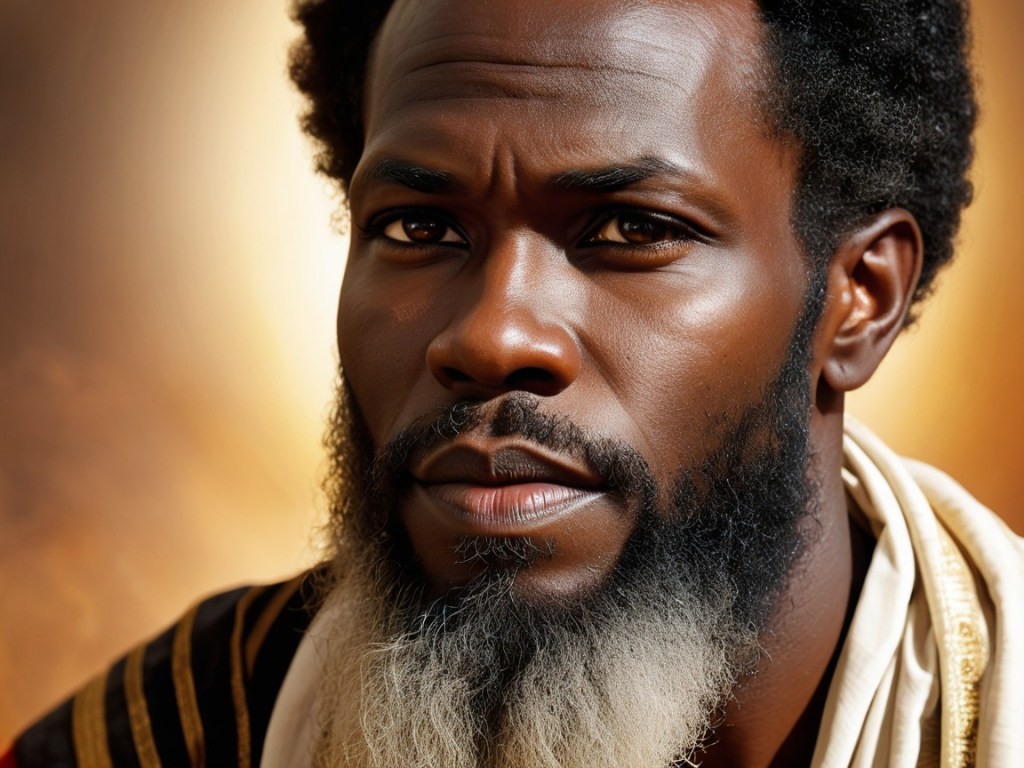
In the barren years devoid of rain’s gentle tears,
Elijah, bold and resolute, faced his fears,
By the Brook Cherith, God provided for the humble prophet,
Faith in God profits dry pockets.
Zarephath’s widow, her hands scant with provision,
Became a conduit for divine precision,
Out of nothing, the Almighty God can light a massive fire,
When you delight in God, He will give you your heart’s desire.
Through God who gives life, Elijah raised the dead,
A true man of God who caused fire when he prayed,
To face the same fate as Naboth, to Ahab he said,
Upon hearing God’s Word, humbly, King Ahab repented.
The Lord shall fight for you, you shall hold your peace,
God’s people are not weak as the world perceives,
The two captains of fifty, Elijah they failed to seize,
Elisha saw Elijah with a chariot of fire as he leaves.
On chariots of fire, Elijah’s journey did cease,
But his work lived on, a flame never to decrease,
In mentorship, in miracle, in words profound,
Elijah’s legacy, in Elisha, was two times found.
Hebrews 11:32-35 (KJV) – “32 And what shall I more say? For the time would fail me to tell of Gedeon, and of Barak, and of Samson, and of Jephthae; of David also, and Samuel, and of the prophets: 33 Who through faith subdued kingdoms, wrought righteousness, obtained promises, stopped the mouths of lions. 34 Quenched the violence of fire, escaped the edge of the sword, out of weakness were made strong, waxed valiant in fight, turned to flight the armies of the aliens. 35 Women received their dead raised to life again: and others were tortured, not accepting deliverance; that they might obtain a better resurrection.”
In the grand narrative of faith-filled heroes immortalized in Hebrews 11, one luminary shines brightest: Elijah, the epitome of divine courage and unwavering resolve. Though his name may not grace this passage (Hebrews 11), Elijah’s exploits are woven with such magnificence that they seamlessly complement the miraculous deeds celebrated therein.
Elijah strides onto the biblical stage ready to challenge kingdoms, confront idolatry, and champion righteousness amidst moral decay. Yet, Elijah’s story isn’t just about theatrics and marvels. It’s a testament to divine intervention and awe-inspiring wonders. From halting rain for three and a half years to raising a widow’s son from death’s grip, Elijah’s repertoire rivals that of the greatest illusionists at a royal gala.
And let’s not overlook his mastery of turning weakness into strength, a theme echoed in the heroes immortalized in Hebrews 11:34. Amidst the serene solitude of the wilderness, surrounded by nature’s symphony, Elijah discovers inner fortitude through communion with the Almighty. Like a phoenix rising from ashes, he emerges from moments of vulnerability imbued with renewed vigor, ready to face any challenge head-on.
Elijah’s legacy shines as the epitome of hope and inspiration, guiding believers across generations. His saga vividly demonstrates that faith can move mountains, part seas, and summon fire from the heavens! So, when doubts assail your spirit, remember the stirring adventures of Elijah and draw from his wellspring of boldness, courage, and unwavering commitment to righteousness. If Elijah could conquer adversity with such resolute faith, then surely, so can you!
The name Elijah comes from two Hebrew Components El and Yah. El (אֵל): This component of the name Elijah means “God” or “God Almighty” in Hebrew. It’s a common term used in the Bible to refer to the God of Israel, denoting strength, power, and sovereignty. Yah (יָה): This part is a shortened form of the sacred name of God, Yahweh (יהוה), which is derived from the Hebrew verb “to be” (hayah). Yah is often used as a poetic abbreviation of Yahweh in the Hebrew Bible and is associated with the personal name of God, particularly in praise and worship contexts.
When combined, the name “Elijah” (אֵלִיָּהוּ) in Hebrew is composed of “El” (God) and “Yah” (a shortened form of Yahweh), resulting in the meaning “My God is Yahweh” or “Yahweh is God.”
This name reflects the central theme of monotheism and the exclusive worship of the God of Israel, emphasizing Elijah’s role as a prophet dedicated to proclaiming the sovereignty and supremacy of Yahweh over all other gods. Elijah is believed to have lived during the 9th century BCE, during the reign of King Ahab of Israel (approximately 874–853 BCE). He is identified as Elijah the Tishbite, although the specific location of Tishbe is uncertain.
In 1 Kings 17:1, Elijah is described as being from the inhabitants of Gilead. Gilead was a region located to the east of the Jordan River, known for its rugged terrain and fertile plains. The name “Gilead” itself is believed to have originated from Hebrew roots meaning “rocky region” or “heap of stones.”
Gilead was inhabited by various tribes and peoples throughout history. In biblical times, it was predominantly settled by Israelites, particularly the tribes of Gad and half of the tribe of Manasseh, as their allotted inheritance after the conquest of Canaan. Additionally, Gilead was inhabited by other groups such as the Ammonites, Moabites, and various nomadic tribes.
The region of Gilead held strategic importance due to its natural resources, including fertile land for agriculture, grazing pastures for livestock, and forests for timber. It also served as a buffer zone between the Israelites and neighboring peoples.
Overall, Gilead was a diverse and significant region in biblical times, home to various peoples and cultures, and it played a prominent role in the narratives of the Old Testament, including the story of Elijah. Prophet Elijah is a significant figure in the Bible, known for his acts of faith and powerful miracles. Let’s look at how faith enabled him to conquer the obstacles he overcame.
Out of the Comfort Zone
1 Kings 17:1-3 (KJV) – “1 And Elijah the Tishbite, who was of the inhabitants of Gilead, said unto Ahab, As the Lord God of Israel liveth, before whom I stand, there shall not be dew nor rain these years, but according to my word. 2 And the Word of the Lord came unto him, saying, 3 Get thee hence, and turn thee eastward, and hide thyself by the brook Cherith, that is before Jordan.”
The prophet Elijah is first introduced in 1 Kings 17:1 as Elijah the Tishbite from Gilead. Gilead, as we know, was renowned for its rich natural resources – fertile land, pastures for livestock, and bountiful forests. In simpler terms, Elijah lived in a place of comfort.
But this comfort did not diminish his faith. The scriptures tell us that Elijah’s unwavering faith compelled him to answer God’s call, even amidst his comfortable surroundings. This perfectly exemplifies the concept of the comfort zone acting as a significant obstacle on the path to achievement, a truth many of us have likely encountered in our own lives.
Buddha
Just like Buddha, the Prophet Elijah’s story shows how stepping outside your comfort zone can lead to profound discovery.
According to the Encyclopedia Britannica, Buddha was born Siddhartha Gautama, Buddha was a prince raised in luxury within the sheltered walls of a royal palace in Lumbini, modern-day Nepal. His world was one of unimaginable comfort, carefully curated to shield him from the harsh realities of life, especially suffering. However, a deep empathy blossomed within him, a realization that suffering was an undeniable truth of the human condition.
This yearning for understanding propelled him out of his comfort zone. He embarked on a radical journey of asceticism, enduring years of meditation and self-denial. Legend tells of his encounter with the “Four Sights” – a frail old man, a ravaged sick person, a lifeless corpse, and a serene ascetic. These encounters were a stark awakening, shattering his sheltered existence and igniting his quest for enlightenment.
It’s from this profound transformation that Buddha’s Four Noble Truths emerged: the truth of suffering (Dukkha), the truth of the cause of suffering (Samudaya), the truth of the end of suffering (Nirodha), and the truth of the path to the end of suffering (Magga).
There’s a common misconception that those born into privilege rarely surpass their parents’ achievements. The adage “necessity is the mother of invention” highlights the idea that struggle spurs progress. After all, if everything is provided, why venture outside your comfort zone? While there’s truth to this notion, it’s not a universal law. Buddha proved them wrong when he stepped out of his privileged comfort zone to go to the outer world and learn more about suffering.
Both Buddha and Elijah, though from vastly different backgrounds, demonstrate the transformative power of stepping outside one’s comfort zone. It’s a journey that can lead to profound self-discovery and a deeper understanding of the world, regardless of your origins.
John Pierpont Morgan
Imagine a world without JPMorgan Chase, a global financial titan with branches reaching across the globe. Believe it or not, this powerhouse company owes its existence to one remarkable man: John Pierpont Morgan, better known as J.P. Morgan.
Born with a silver spoon in his mouth in 1837 (Britannica, 2024), J.P. Morgan was the son of a successful financier (Britannica, 2024). Yet his story isn’t one of simply inheriting wealth. J.P. Morgan was a man who thrived on challenges. He wasn’t content with resting on his laurels.
His fingerprints are all over the transformation of American industry. J.P. Morgan saw the potential in a fledgling railroad system riddled with inefficiencies. He wasn’t daunted by the chaos. Instead, he stepped up, playing a pivotal role in consolidating and reorganizing these struggling railroads (Chernow, 2004). This wasn’t just tinkering around the edges – it was a complete overhaul. The result? A more stable and efficient railroad industry, boasting some of the largest and most successful railroad systems the country had ever seen (Chernow, 2004).
But J.P. Morgan’s ambitions stretched far beyond the tracks. He turned his keen eye for business towards industries ripe for consolidation. By financing the mergers of various industrial companies, he played a key role in the birth of American giants like U.S. Steel and General Electric (Chernow, 2004). These mergers weren’t just about combining companies; they were strategic moves that created economies of scale, giving these new powerhouses a significant edge in the market (Chandler, 1977).
J.P. Morgan’s legacy is a testament to the power of vision, strategic thinking, and a willingness to tackle complex challenges. He didn’t shy away from venturing outside his comfort zone, and in doing so, he helped reshape the American business landscape.
Charles Koch
Charles de Ganahl Koch wasn’t your typical rich kid. Born into a privileged family that owned Koch Industries, you might expect a life of luxury. But Charles’ father, Fred C. Koch, had different plans. In an interview with Warren Cassell Jr., Koch recounted, “My father wanted me to work as if I was the poorest person in the world.” This wasn’t a life of deprivation, but a deliberate push out of his comfort zone. It may have been tough training at the time, but Charles now stands as the Co-Owner, Chairman, and CEO of Koch Industries (Britannica, n.d.), a testament to the value of his father’s unconventional approach.
Other people who were not necessarily born in wealthy families but who stepped out of their comfort zones to achieve notable success are:
Oprah Winfrey
Oprah Winfrey’s rise to global media mogul status is a testament to resilience, calculated risks, and a relentless pursuit of growth. Her story isn’t just about fame and fortune – it’s a roadmap for overcoming challenges and stepping outside your comfort zone.
Oprah’s childhood in rural Mississippi was far from idyllic. Poverty and instability were constant companions, and she has openly spoken about facing hunger and wearing clothes made from potato sacks (Biography.com, 2024). But these early hardships instilled in her a powerful work ethic and an unwavering ability to persevere.
At just 19, with no prior broadcasting experience, Oprah landed a job as a radio co-anchor in Nashville (Encyclopædia Britannica, 2024). This unexpected opportunity thrust her into the unfamiliar world of public speaking. Facing her fears head-on, she honed her communication skills and discovered a natural talent for captivating an audience.
The transition from radio to television in Baltimore in 1976 marked another significant step outside her comfort zone (Encyclopædia Britannica, 2024). Television presented new challenges with a focus on visual presentation and audience engagement. Yet, Oprah embraced this opportunity, developing a captivating on-air presence that drew viewers in.
Oprah wasn’t afraid to push boundaries to elevate her show in Chicago. She tackled controversial topics like racism, abuse, and sexuality, which were often avoided by mainstream talk shows at the time (Encyclopædia Britannica, 2024). She also welcomed a diverse range of guests, from celebrities to ordinary people, creating a platform for voices that were often unheard. These bold moves resonated with audiences and helped her show stand out in a crowded market.
In 1985, Oprah co-founded Harpo Productions, her own production company (Encyclopædia Britannica, 2024). This entrepreneurial venture required her to step outside her established role as a talk show host and take on new responsibilities in production and content creation. This move showcased her ambition and willingness to learn new skills.
Oprah’s love of learning extends beyond business ventures. Launched in 1996, her Book Club segment became a cultural phenomenon (Encyclopædia Britannica, 2024). This initiative not only boosted literacy rates but also demonstrated her commitment to lifelong learning, inspiring viewers to explore new ideas and broaden their horizons.
Throughout her journey, Oprah has been open about her personal struggles with weight management and self-discovery. By actively pursuing personal growth and encouraging her audience to do the same, she became a powerful role model. Her story exemplifies the transformative power of stepping outside your comfort zone and embracing the challenges that lead to growth and self-improvement.
Oprah Winfrey’s remarkable journey is an inspiration to anyone who dares to dream big and venture into the unknown. By embracing challenges, taking calculated risks, and relentlessly pursuing learning, she achieved extraordinary success and left an indelible mark on the world.
Nelson Mandela
Nelson Mandela’s name is synonymous with courage, resilience, and the fight for justice. But his journey wasn’t confined to a single, iconic moment. His entire life was a testament to stepping outside his comfort zone, pushing boundaries, and ultimately achieving extraordinary things.
Early Defiance: Even before his imprisonment, Mandela, a young lawyer, stood up against the racist system of apartheid in South Africa (Nelson Mandela Foundation, n.d.). This wasn’t just defying the law; it was a deliberate act of challenging the status quo, a clear sign of a man unafraid to step outside his comfort zone (Smith, 2016).
Years of Imprisonment: For 27 years, Robben Island became Mandela’s harsh reality. Isolation and harsh conditions couldn’t break his spirit. Instead, he used this time to learn, grow, and strategize for a future free South Africa. This wasn’t just passive endurance; it was a conscious choice to adapt and prepare, a testament to his immense mental fortitude (Smith, 2016).
The Controversial Choice: Upon his release, Mandela surprised many by advocating for reconciliation with white South Africans. This wasn’t the easy path. It was a courageous decision, driven by a belief in healing the nation’s deep wounds. Negotiating with his former oppressors required immense personal courage, a quality honed during his years of struggle (Smith, 2016).
Leading a New Nation: In 1994, history was made when Mandela became South Africa’s first black president. Leading a nation through such a dramatic transformation – building bridges, fostering unity, and dismantling a system of oppression – undoubtedly pushed him outside his comfort zone once again (Smith, 2016).
Nelson Mandela’s life story is an inspiration. It’s a powerful reminder that taking risks, venturing into the unknown, and pushing boundaries can lead to incredible achievements and positive change.
Michael Jordan
Michael Jordan. The name itself conjures images of gravity-defying dunks, clutch game-winners, and a relentless drive for excellence. But did you know “His Airness” wasn’t always destined for greatness?
From Humble Beginnings to a Shocking Rejection: Born in 1963, Jordan’s love for basketball ignited early. Imagine his heartbreak, then, when he was cut from his high school varsity team as a sophomore. This could have been a crushing blow, but Jordan’s story takes a different turn.
Fueling Disappointment into Determination: Instead of giving up, Jordan channeled his disappointment into a burning desire to improve. He trained relentlessly, honing his skills and surpassing everyone’s expectations. By the next year, he not only made the team but proved the power of perseverance (Lazenby, 2014).
College Star and NBA Arrival: Jordan’s talent blossomed at the University of North Carolina, leading them to a national championship in 1982 (National Collegiate Athletic Association, n.d.). Drafted by the Chicago Bulls in 1984, he entered the NBA with a promising future. However, championships wouldn’t come easy.
Early Struggles and Forging a Legend: Facing seasoned veterans, Jordan didn’t win a ring right away. But this setback only fueled his fire. He tirelessly refined his skills, addressing weaknesses and developing his now-iconic leaping ability (Heisler, 2008). By the late 1980s, his hard work paid off. Jordan led the Chicago Bulls to a dynasty, winning six NBA championships between 1991 and 1998, solidifying his status as a legend (National Basketball Association, n.d.).
Baseball and Back to Basketball: In a surprising move in 1993, Jordan retired from basketball to pursue a childhood dream of playing baseball. He was not afraid to step out of his comfort zone and leave his legendary basketball status to try a new sport. This detour proved challenging, and adapting to a new sport brought its own set of difficulties (Baden, 2014).
The Return of the King: After two years, Jordan returned to basketball, even stronger and more determined. He led the Bulls to three more championships, proving that setbacks can be steppingstones to even greater heights (Heisler, 2008).
A Legacy of Inspiration: Michael Jordan’s story is more than just basketball. It’s about unwavering dedication, the ability to bounce back from setbacks, and the relentless pursuit of improvement. He inspires athletes and individuals worldwide to overcome obstacles and chase their dreams. Jordan’s journey is a testament to the human spirit’s ability to rise above adversity and achieve greatness.
Marie Curie
Marie Curie’s life, chronicled in Britannica (n.d.), is a captivating story of unwavering spirit and relentless pursuit of scientific progress. Throughout her career, she defied limitations on multiple fronts, venturing far beyond her comfort zone.
From Humble Beginnings to Daring Dreams: Born Maria Skłodowska in occupied Poland, Curie dared to dream of a future in science, a path far from what society expected of a woman in the late 19th century (Britannica, n.d.). Her journey to study in Paris wasn’t just about academics; it meant leaving her family behind, adapting to a new culture and language, and navigating a social environment where female scientists were unwelcome.
Breaking the Glass Ceiling in a Man’s World: Science in Curie’s era was a club with a strictly enforced “no girls allowed” sign (Britannica, n.d.). Throughout her career, she faced constant skepticism and resistance from established male scientists. To gain recognition and access to resources, Curie had to prove herself exceptional again and again, overcoming a system that often disregarded the contributions of women.
Pioneering the Unknown: Curie’s groundbreaking work with radioactivity dealt with entirely new elements. There were no established safety protocols, forcing her to become a pioneer in this area. She developed new techniques while essentially working in uncharted scientific territory (Britannica, n.d.).
Perseverance Through Setbacks: Extracting tiny amounts of radioactive elements from tons of ore was a tedious and laborious task. For years, Curie and her husband Pierre persevered in rudimentary lab conditions, facing countless setbacks and failures (Britannica, n.d.). Their unwavering dedication ultimately led to groundbreaking discoveries.
A Dedication That Came at a Cost: The dangers of radiation were unknown in Curie’s time (Britannica, n.d.). For years, she handled radioactive materials with minimal protection, which ultimately contributed to her health problems. Her dedication serves as a stark reminder of the sacrifices scientists sometimes make in the pursuit of knowledge.
Marie Curie’s life story, as documented in the Encyclopedia Britannica, is a powerful testament to defying limitations and pushing boundaries. Her relentless drive and willingness to venture into the unknown paved the way for groundbreaking scientific advancements, inspiring generations of scientists to come.
Ludwig Van Beethoven
Ludwig van Beethoven (1770-1827) wasn’t just a composer; he was a revolutionary force in the world of music (Britannica, n.d.). His music transcended the limitations of his time, and its influence continues to resonate today. Here’s what made Beethoven such a groundbreaking figure:
Early Innovation: Forget following the rules! Even as a child prodigy, Beethoven wasn’t afraid to break the mold (Britannica, n.d.). His early compositions were infused with a boldness that set him apart from his peers (Rosen, 2001). He experimented with form and structure, laying the foundation for the revolutionary music that would come later.
Triumph Over Tragedy: Imagine a musician losing their hearing – it’s a terrifying thought. In his late twenties, Beethoven began to experience deafness, a devastating blow that could have silenced him forever (Britannica, n.d.). But Beethoven wasn’t one to give up. With unwavering determination, he found new ways to compose and experience music (Sullivan, 1998). This forced him to push outside his comfort zone. He became a catalyst for innovation, driving him to explore uncharted creative territories.
Shattering the Mold: Beethoven’s impact is most evident in his radical approach to established musical forms like symphonies and piano sonatas (Britannica, n.d.). He tore down the limitations of these structures, pushing the boundaries of length, complexity, and emotional expression (Marston, 2004). It wasn’t an easy journey for audiences or musicians. His music challenged them to grapple with new sonic landscapes and a wider range of emotions.
Fearless Exploration: As Beethoven aged, his compositions became even more experimental and dissonant (Britannica, n.d.). Unfazed by the possibility of alienating listeners, he continued his relentless pursuit of new artistic territory (Kerman, 1995). His late-period works stand as a testament to his unwavering commitment to artistic exploration, even in the face of potential criticism.
Hellen Keller
Helen Keller wasn’t your average person. Her life wasn’t merely a storybook; it was an epic adventure of overcoming seemingly impossible challenges. Every twist and turn showcased her incredible spirit, a spirit that refused to be broken (Keller, 1903).
Imagine a world of complete darkness and silence. No sound, no spoken words, no way to connect with others. This was Helen’s reality for the first few years of her life (Keller, 1903). Learning to communicate and understand the world was a monumental task that pushed her far outside her comfort zone (Bruehl, 1989).
Then, a turning point arrived. When her teacher, Anne Sullivan, came into her life, Helen was understandably resistant and frustrated. Learning a whole new way to communicate through touch was scary and unfamiliar (Gordon, 2019). But Helen wasn’t one to give up. She faced this challenge head-on with unwavering determination (Keller, 1903).
Learning a language is hard enough for most children. But for Helen, it meant grasping complex ideas without ever seeing or hearing them (DuBois, 2000). It took incredible focus and a constant willingness to learn and adapt (Keller, 1903). Helen’s dedication to language is a true testament to her unyielding spirit.
Once Helen found her voice, she refused to be silenced. She became a powerful advocate for people with disabilities, traveling the world and speaking out for those who couldn’t speak for themselves (Wagner, 2007). Public speaking can be nerve-wracking, but Helen used her newfound voice to make a real difference (Keller, 1913).
Helen Keller shattered all expectations of what someone with her limitations could achieve (Wadsworth, 2013). Her relentless pursuit of acceptance and opportunity took immense courage and a willingness to challenge the status quo (Keller, 1913). Her story is a powerful reminder that human potential has no limits.
Helen Keller’s journey is an inspiration to anyone who feels trapped or limited. Her unwavering spirit and her remarkable achievements show us the incredible things that can be accomplished when we push ourselves beyond our comfort zones (Keller, 1903).
Ellen G. White
Ellen G. White’s story of achievement involves stepping outside her comfort zone in several ways. Here’s how we can see her pushing boundaries:
Childhood Accident: Around the age of nine, Ellen G. White experienced a life-altering event. While walking home from school, she was struck in the face by a stone thrown by a classmate. The injury left her unconscious for weeks and with lasting health problems. This experience, which she later described as a turning point in her life, may have contributed to her developing a deep sense of faith (Encyclopædia Britannica, 2024).
Early Visions: At a young age, Ellen White began experiencing visions and messages she attributed to God. Sharing these experiences in a conservative religious community would have been quite challenging and could have brought ridicule (Encyclopædia Britannica, 2024).
Public Speaking: Ellen White, a young woman in the mid-1800s, was not expected to be a public speaker or leader. However, she felt compelled to share her visions and interpretations of scripture, venturing outside the traditional gender roles of her time (Encyclopædia Britannica, 2024).
Facing Criticism: Her visions and interpretations of scripture were not universally accepted. She faced criticism and opposition from within her own religious community, requiring her to defend her beliefs and calling (Encyclopædia Britannica, 2024).
Travel and Writing: Ellen White traveled extensively throughout North America and Europe, speaking and writing prolifically. This would have pushed her outside her comfort zone in terms of physical challenges, cultural differences, and the demands of a public life (Encyclopædia Britannica, 2024).
Organizational Leadership: She played a key role in the development of the Seventh-day Adventist Church, helping shape its doctrines and practices. This leadership role would have required significant administrative and organizational skills, which may not have come naturally to her (Encyclopædia Britannica, 2024).
Ellen G. White’s story shows how stepping outside your comfort zone can be driven by a higher purpose. Her perseverance and willingness to face criticism for her beliefs is an inspiring example.
Jesus Christ
2 Corinthians 8:9 (KJV) – “For ye know the grace of our Lord Jesus Christ, that, though He was rich, yet for your sakes He became poor, that ye through His poverty might be rich.”
Jesus Himself deserted His own comfort in heaven to come to earth and live among the poorest. He was born in a manger, a place that animals lived. Being born in a manger symbolized that He did not deserve to be born in a decent place among human beings. Jesus is righteous but He chose to take our sinful state and exchange it with His righteousness. Therefore, He took every bad thing we have so that He may give us every good thing He has. He is the epitome of going out of one’s comfort zone.
“Christ was treated as we deserve, that we might be treated as He deserves. He was condemned for our sins, in which He had no share, that we might be justified by His righteousness, in which we had no share. He suffered the death which was ours, that we might receive the life which was His. “With His stripes we are healed.” – The Desire of Ages, Page 25.2, Ellen G. White.
Jesus, despite being sinless, carried the burden of humanity’s sins upon Himself. He endured the suffering and death that rightly belonged to us due to our violations of God’s law. Through Christ’s sacrifice, believers gain access to God’s grace and favor. Instead of facing the deserved punishment for our sins, we are offered forgiveness and reconciliation with God. Despite His innocence, Jesus assumed the guilt and condemnation of humanity’s sins. This underscores the voluntary nature of Christ’s sacrifice and His willingness to bear the consequences of humanity’s rebellion against God.
By believing in Christ, believers are credited with His righteousness. This means that God considers believers righteous not because of their own merit, but because of Christ’s righteousness attributed to them. Jesus faced death on the cross, the ultimate consequence of sin, so that believers could attain eternal life in Him. Through His resurrection, believers are assured of victory over death and the promise of eternal fellowship with God.
“With His stripes we are healed” – This phrase references Isaiah 53:5, which prophesies about the suffering and atoning work of the Messiah. It signifies the spiritual healing and restoration believers receive through Jesus Christ’s sacrificial death.
A profound exchange was brought about by Christ’s sacrificial death: He took our place, bearing our sins and punishment, so that we could receive forgiveness, righteousness, and eternal life through faith in Him.
Romans 8:32 (KJV) – “He that spared not His own Son, but delivered Him up for us all, how shall He not with Him also freely give us all things?”
God the Father did not spare His own son. His infinite, unconditional love for the sinful people of the world caused Him to give His only begotten son Jesus Christ to die for the world (John 3:16). God the Father went out of His comfort zone to save humanity.
Philippians 2:5-11 (KJV) – “5 Let this mind be in you, which was also in Christ Jesus: 6 Who, being in the form of God, thought it not robbery to be equal with God: 7 But made Himself of no reputation, and took upon Him the form of a servant, and was made in the likeness of men: 8 And being found in fashion as a man, He humbled himself, and became obedient unto death, even the death of the cross. 9 Wherefore God also hath highly exalted Him, and given Him a name which is above every name: 10 That at the name of Jesus every knee should bow, of things in heaven, and things in earth, and things under the earth; 11 And that every tongue should confess that Jesus Christ is Lord, to the glory of God the Father.”
By going out of His comfort zone, God succeeded in saving the human race. The evil that Satan had brought through pride, Jesus overcame it through humility. Humility will always be victorious over pride. Righteousness will always win evil. God will always defeat Satan. With His omnipotence, Jesus did not fight back. Instead, He humbled himself unto death even the death of the cross.
Embracing humility requires one to get out of their comfort zone. For example, when you embrace humility and become teachable as a little child to acquire truth, you will be able to learn more. Thus, your life will transform positively. Getting out of your comfort zone will make you gain a new skill. On the other hand, when you are proud and don’t want to appear like you lack the knowledge of something, you will remain in the state that you are in.
Outside the comfort zone – a prerequisite for growth
A popular saying goes, “Growth comes from discomfort.” Learning is not always a pleasant experience. The older one grows the more likely one avoids new things. This may explain why some people never go beyond a certain level of achievement.
Leadership expert John C. Maxwell and many other personal growth authors have emphasized this statement, “What brought you here is not what will take you there.” To clarify this, when you are traveling from New York, USA to Nairobi, Kenya, you may use a taxi or a bus to take you to the airport. But you cannot use the same taxi or bus to take you to Kenya. You will exit the vehicle which has brought you to the airport and board a plane that will fly overseas and take you to your desired destination.
When you are learning something new as an adult, humility is needed and readiness to adapt to new things. Children find it easier to learn new things because they have acknowledged that they do not know anything. So, when you tell them to do something, they are likely going to do it without questioning, especially if they are below 8 years old.
Matthew 19:14 (KJV) – “But Jesus said, suffer little children, and forbid them not, to come unto Me: for of such is the kingdom of heaven.” Jesus says, “For of such is the kingdom of heaven.” What He means is that those who have the heart of little children will go to heaven. Humility is common among little children. Robert Kiyosaki says that people who are between the age of 12 to 24 adapt what is called rebellious learning. Robert means that they learn through rebelliousness. This can be dangerous, because one would take a long time to get it right by rebelling against truth than they would if they had humbly obeyed the truth.
Teenagers and adults are unwilling to go out of their comfort zones. Parents and their teenage children tend to fight because neither wants to listen to the other. Parents may see the dangerous path that their teenage children are taking and want them to avoid that path by all means. However, they tend to fail greatly and are thus frustrated because they want their conversations to be one sided. They expect their children to obey them because they are older and more experienced than them.
Raising teenage millennials, generation z and the alpha generation has been quite challenging for some parents. This is because, the parents grew up in a setting where one would obey without question whatever an adult would tell them.
We should understand that we live in the information age, whereby almost every information one is looking for is on the internet. Teachers of this era may find it more difficult to teach students because some students have more information than teachers. This is because most of the information that people need is readily available and affordable. The children growing up in this era may be more knowledgeable on some things than adults. So, they question whatever belief they are taught.
Counsel to parents is to seek God’s guidance on wisdom on how to bring up your kids and give a listening ear to them. Instead of merely issuing commands, teach. Help them understand the logic and value behind whatever you are telling them to do. If you tell them not to listen to secular music, give them a reason. These teachings can be powerful if you can give personal examples.
Some children are struggling in silence with things that are not as big as they look. They do not want to tell anyone what they are going through because they feel no one would understand them since the people around them have painted perfect pictures of themselves. The pastor in their church is always honored with good words and praise and seems too holy to approach. Their school teachers are always well-dressed-dressed and seem to be highly disciplined. Their parents and church teachers are highly educated with PhDs and have top jobs in top organizations.
The child is struggling to meet the standards of these esteemed people in society surrounding him and feels greatly discouraged whenever make a mistake. John C. Maxwell says that while communicating, when we tell people of our achievements we win their respect and when we tell people of our failures and mistakes we win their love. He urges us to find a way to balance them. Unfortunately, many successful teachers (this includes successful parents) only tell the youth and children of their success.
Parents should spend more time with their children and give them stories of valuable life lessons, how they attained the success they attained and some of the failures they encountered. Some examples may seem embarrassing to give, but ask God for guidance on how to communicate them.
Our parents and grandparents in Africa (Probably those born before 1980) and maybe in other parts of the world lived in an age where there was minimal democracy. They were forced to obey the colonizers. The first African leaders who took over the governments from the colonizers adopted this system. Therefore, the saying, “you cannot question your boss” became engraved in the hearts of people who grew up in that era whether consciously or subconsciously.
This mindset had both advantages and disadvantages. The advantage being, one would flourish in life, if he or she followed the right advice. The disadvantage was the good beliefs adopted would be shallow in the minds of the individuals adopting them because they have not taken time to question them and reason through them. At the same time, it would lead to a narrow perspective as people would enclose their minds to adopt other strategies and methods.
For example, the oppressors widely taught the highly absorbed notion, “Go to school, and work hard so that you may get a good job.” Because some of them desired that people should remain oppressed, they never inspired people to follow their purpose and pursue their talents. What happened is those who followed that advice ended up living a life they don’t like.
Some people ended up being poor because they tried so hard to get good grades in school, but they could not get them and since they were taught that excelling in school and getting a job is the only way, they lose hope easily. Others have ended up being middle class (upper or lower). They graduated with good grades and got the job of their dreams and went up the ranks in employment positions. After they retire, they get their retirement pension.
Some have encountered years of delay in getting these pensions. While some have had the governments of their countries reduce their retirement benefits. Therefore, the standard of quality of life they were accustomed to goes down. When the standard of someone’s life goes down involuntarily, the person loses their freedom. I have used the word involuntarily because some rich men and women have chosen to voluntarily live a modest life. That is different. However, most people (including Christians) if they were honest, would tell you that the life they are living is not the life of their dreams, it is a life forced by circumstances.
People losing their financial freedom may lead them to losing freedom in other areas. For example, less financial freedom may lead to depression and wrangles in the family. Less financial freedom leads to less time freedom. For example, in third world countries, public transport can be very inefficient. Sometimes, people have to spend time waiting for the bus to take off as they are waiting for people to fill up. They stop at every bus stop for people to alight and for others to board. Private transport is more expensive but it saves you so much time.
A bus can take hours to travel from one city to another, if the cities are hundreds of kilometers apart. Many people will board it because they cannot afford an airplane which takes less than an hour to travel the same distance. God wants you to be materially wealthy because if you take an airplane compared to taking a bus, you will be able to use the rest of the hours bringing more people to His kingdom. Instead of spending those 7 or 8 hours on the road, you can use one hour to visit a children’s home, another hour to meet a friend and have a constructive conversation, you can do many things with that time.
God wants His genuine children to have freedom of choices. If you choose to use public transport let it be because you enjoy it (maybe you want to mingle with people) but don’t let it be because you can’t afford a better choice. The Bible tells us that Jesus came to set the captives free (Luke 4:18). God wants us to be free in all areas including our finances. The more you study, understand and apply the words of the Bible, the more liberated you will be.
Sometimes and in some countries, in the case of government workers, the retirement benefits and other benefits for citizens who are considered less privileged may impose a heavy burden on the taxpayers, hence contributing to an increase in taxes. It is not God’s ideal will for people to be too dependent on the government or on anyone else (Jeremiah 17:5).
One who sells his goods and services to people receives money for the value they offer. The relationship between the buyer and the seller is a balanced relationship, they are both benefitting each other. This may sound harsh but a person who is begging on the streets, especially if they have a fully functional body is not adding much value, instead he is taking away. The same applies to those people who are over dependent on government schemes for the underprivileged. Begging puts you under the mercy of someone.
For example, governments are formed by people and man is to err. The government may come up with a very unbiblical law like legalizing gay marriages. That may force those who depend on it to vote for that law. Since they e they won’t have a choice, they will have to vote for it even if they don’t like it. In the last days, many of the people who will bow down to the mark of the beast are people who don’t want to bow down to it, but circumstances have forced them to. Financial challenges force people to work on the Sabbath day and do various evil things.
Nick Vujicic does not have any of the four limbs, but he does not beg on the streets and he does not depend on government aid? Why? Because he is dependent on God. God showed him his purpose and gave him direction on how to pursue that purpose and showed him how to get out of his comfort zone and make the best from the little he thought he had. Going outside the comfort zone is not always a comfortable idea to think about, leave alone act upon, but it is the most comfortable choice you can ever make.
Besides Colonel Sanders and a few others, very few people do something significant beyond the age of sixty because the only possibilities they see is their pension. However, when one takes their own precious time and thoroughly studies the Bible, they will realize that God wants you to pursue your purpose in utilizing your talents for the glory of God.
You can get fired from your job. No one can fire you from your purpose and talents. You can retire from your job. You can never retire from your purpose and talents. Working for a salary requires one to do the bare minimum to get that salary. In fact, the majority of employees do the bare minimum because they are working for a salary. That may explain why we have a lot of unethical and immoral practices in the workplace because people are not doing what they love to do. They come up with excuses to miss work and mark themselves present when they are absent. One needs to pursue their purpose.
When more people pursue their purpose, immorality would reduce, and ethics would increase. I don’t need to mark myself present when writing Christian articles, poems, songs or while leading a team in developing technology products. I have tried my best through God’s help to tailor my company Real Biz Digital to allow more people to pursue their purpose.
For example, we do not have strict work hours from 8 to 5. Instead, we work with deadlines. I do not need people to be physically present at the workplace. They can work from wherever they want to work from as long as the work gets done. This fosters independence and once people feel independent, they are likely to be more responsible and will highly likely do the work given from their hearts. Purpose and talents push you to get out of your comfort zone and makes you add great value to the lives of people, thus living the life of your dreams.
Inspiring quotes on getting out of the comfort zone:
“Don’t be afraid to step outside your comfort zone. You might actually fly.” – Anonymous.
“Life begins at the end of the comfort zone.” – American Author, Neale Donald Walsch.
“You miss 100% of the shots you don’t take.” – Wayne Gretzky.
The Israelites were probably used to prosperity, fertile land and constant rains. This prosperity probably made them feel that there was no need for God and as the days continued, they continued in doing evil. God had given them time to repent but they would not change their ways. God in His love, had to bring drought so that the Israelites would return to Him. He sent Elijah to speak to them. Elijah in his humility and willingness to serve God, did not hesitate. He risked his life, went out of his comfort zone and approached the highest person in that land, King Ahab with that hard message.
Have the humility of a child and trust in God as you get out of your comfort zone.
Faith above Worries
1 Kings 17:2-6 (KJV) – “2 And the Word of the Lord came unto him, saying, 3 Get thee hence, and turn thee eastward, and hide thyself by the brook Cherith, that is before Jordan. 4 And it shall be, that thou shalt drink of the brook; and I have commanded the ravens to feed thee there. 5 So he went and did according unto the Word of the Lord: for he went and dwelt by the brook Cherith, that is before Jordan. 6 And the ravens brought him bread and flesh in the morning, and bread and flesh in the evening; and he drank of the brook.”
Elijah delivered God’s message to King Ahab concerning the forthcoming drought. He was among the Israelite people. Therefore, he was probably ready to get affected by the lack of rain. He probably did not know what he was going to do and had no idea of how he was going to get food in future.
Matthew 6:25-29 (KJV) – “25 Therefore I say unto you, Take no thought for your life, what ye shall eat, or what ye shall drink; nor yet for your body, what ye shall put on. Is not the life more than meat, and the body than raiment? 26 Behold the fowls of the air: for they sow not, neither do they reap, nor gather into barns; yet your heavenly Father feedeth them. Are ye not much better than they? 27 Which of you by taking thought can add one cubit unto his stature? 28 And why take ye thought for raiment? Consider the lilies of the field, how they grow; they toil not, neither do they spin: 29 And yet I say unto you, That even Solomon in all his glory was not arrayed like one of these.”
We rob our minds of rest when we spend too much time trying to figure out the future. A genuine Christian should never worry about tomorrow or about anything else for that matter. Matthew 6:34 (KJV) – “Take therefore no thought for the morrow: for the morrow shall take thought for the things of itself. Sufficient unto the day is the evil thereof.” Our part is to play our part. Once you know that you have done what you are supposed to do and you have done your best, leave the rest to God.
Psalm 127:1-2 (AMPC) – “1 Except the Lord builds the house, they labor in vain who build it; except the Lord keeps the city, the watchman wakes but in vain. 2 It is vain for you to rise up early, to take rest late, to eat the bread of [anxious] toil—for He gives [blessings] to His beloved in sleep.”
It is vain for one to engage in endeavors without having God as the central figure in those pursuits. God does not encourage laziness as some confuse Psalm 127:1-2 to mean. Instead, He does not want you to put your total trust in your hard work and abilities. He wants you to put your trust in Him. Working diligently is a remarkable thing. However, trusting fully in your diligence to bring positive results from your work is not a wise thing. Some people spend so much time in their secular work that they fail to get time to spend with God and their families. Unfortunately, they are discouraged when they fail to see their painstaking efforts blossoming.
God gives His beloved sleep.
One musician may be working so hard trying to come up with creative out of the box styles to write and produce a hit song. He gets devastated when the music he has been working on fails to top the charts or fails to sell. Another musician may be spending quality time studying and sharing God’s Word, then God ends up giving him a song in a dream while he is asleep, and the song ends up impacting a multitude of lives and bringing him success that he had not imagined before. God gives His beloved sleep.
Having spent time with God, Prophet Elijah possibly understood this divine principle. He understood that God was able to sustain him even in the most challenging circumstances and even if He does not, he would still serve Him. Therefore, he embarked on God’s assignment, worrying less about where he was going to get his next meal. God gives His beloved sleep. God makes ways where there was no way. God bestowed blessings upon Elijah by sending him to the Cherith brook to drink from it and commanded the ravens to feed him there. Divine intervention goes beyond human intention and imagination.
The God of Infinite Strategies
1 Kings 17:7-10 (KJV) – “7 And it came to pass after a while, that the brook dried up, because there had been no rain in the land. 8 And the Word of the Lord came unto him, saying, 9 Arise, get thee to Zarephath, which belongeth to Zidon, and dwell there: behold, I have commanded a widow woman there to sustain thee.”
“This woman was not an Israelite. She had never had the privileges and blessings that the chosen people of God had enjoyed; but she was a believer in the true God and had walked in all the light that was shining on her pathway. And now, when there was no safety for Elijah in the land of Israel, God sent him to this woman to find an asylum in her home.” – Prophets and Kings, Page 129.2, Ellen G. White.
When unfortunate events attack our ability to put a meal on the table like losing a job, we feel so discouraged. When we fail an interview for a dream job in a dream organization, we feel hopeless. When a business deal does not go positively as envisioned, we may get so disheartened.
Most times, the stress we face when such circumstances happen to us is due to our limitations. We are limited in our views and as a result we want to limit God to fit in our plans and aspirations. One may be looking for a job at an international Non-Governmental Organization with a comfortable paycheck but maybe God wants that person to open their own Global Non-Profit Organization.
Isaiah 55:8-9 (KJV) – “8 For My thoughts are not your thoughts, neither are your ways My ways, saith the Lord. 9 For as the heavens are higher than the earth, so are My ways higher than your ways, and My thoughts than your thoughts.”
The distance between heaven and earth is unfathomable. Comparing our ways and thoughts in light to God’s is incomprehensible. That is why I encourage you to spend sufficient time studying the Bible so that your mind can be elevated as it attempts to reach the Creator’s infinite mind. Bible study will give you infinite divine ideas and strategies because the Word of God wants to make you the first and not the last. It wants to put you above only and not beneath (Deuteronomy 28:13).
Rarely do we understand beyond what we have already seen. Things that have not yet been seen can be quite difficult to understand. This is why we are told to apply faith first before we understand (Hebrews 11:3). This is because as created beings, what we have seen is microscopically so little when compared to what we have not yet seen.
Therefore, we should trust that God is going to fulfill the promise He has given us without worrying about how (the methodology) He is going to do it. We should be open to the mysteries that God wants to marvel our eyes and minds with as He follows miracle after miracle in our journey of faith.
Unlike most of us, Elijah did not complain to God when the brook dried up. Instead, he stuck on the divine assignment which afterward yielded divine blessing when God sent him to a widow to feed him there. Most people are waiting for God to give them connections with high-profile people, because they think that is where their blessing lies.
One of the reasons you should treat everyone with honor is because God can use anybody. More often than not, He uses everybody. The way one should treat their most respected celebrity or star is the same way one ought to treat the least respected in society.
Matthew 25:40 (KJV) – “And the King shall answer and say unto them, Verily I say unto you, Inasmuch as ye have done it unto one of the least of these my brethren, ye have done it unto Me.”
God did not send Elijah to a king. He had previously reproved the king. Many people, when given an assignment to tell our leaders the truth, they will pull back as a result of fearing the consequences. One may wonder how they can correct a Senior Church Elder and he is the one contributing the most offering. One may wonder, if they reprove a leader which land would they run away to because he or she is the head of that particular place. Elijah feared not. He cared for other people’s needs more than he cared for his own needs.
God sent Elijah to get his help from a widow. Widows usually struggle financially because the provider of the home on whom everybody depended on is dead. God sending Elijah to get sustainability help from a widow is like sending someone to find shelter from a homeless person. It is like sending someone to get food from a hungry person.
Elijah did not question God. He did exactly what God had commanded him. Through the lack of faith, we bypass most of our divine blessings when we look down on the very ones whom God has sent our way to help us. We sometimes even get depressed because those whom we thought would help us have not assisted us. Such situations call for the application of simple faith and in this case, it is treating everybody with respect like Elijah did.
God never runs out of strategies/methods of doing what He intends to do. That makes Him very interesting. The Bible, which most Christians assume to be boring, surpasses all forms of worldly entertainment combined. The imaginative and the deep reader when studying the Bible will uncover treasures that they never knew existed. Joy and peace will be cultivated in their hearts as they cherish the divinely inspired pages of the Bible.
The Widow’s Oil and Flour Miracle
1 Kings 17:10-16 (KJV) – “10 So he arose and went to Zarephath. And when he came to the gate of the city, behold, the widow woman was there gathering of sticks: and he called to her, and said, Fetch me, I pray thee, a little water in a vessel, that I may drink. 11 And as she was going to fetch it, he called to her, and said, Bring me, I pray thee, a morsel of bread in thine hand. 12 And she said, As the Lord thy God liveth, I have not a cake, but an handful of meal in a barrel, and a little oil in a cruse: and, behold, I am gathering two sticks, that I may go in and dress it for me and my son, that we may eat it, and die. 13 And Elijah said unto her, Fear not; go and do as thou hast said: but make me thereof a little cake first, and bring it unto me, and after make for thee and for thy son. 14 For thus saith the Lord God of Israel, The barrel of meal shall not waste, neither shall the cruse of oil fail, until the day that the Lord sendeth rain upon the earth. 15 And she went and did according to the saying of Elijah: and she, and he, and her house, did eat many days. 16 And the barrel of meal wasted not, neither did the cruse of oil fail, according to the Word of the Lord, which He spake by Elijah.”
Elijah obeyed God’s Word immediately and went to the city of Zarephath. Zarephath is mentioned as a location where the prophet Elijah was sent during a time of drought and famine. It is described as being located near Sidon, which was a coastal city in ancient Phoenicia (modern-day Lebanon).
Elijah asked the widow to give her water to drink then he asked her for food to eat. By making this request to her, Elijah gave her the opportunity and privilege to do a good deed. His request left the widow with no choice but to exercise her faith in God. The assignments that God will often give us are assignments that demand us to exercise faith. Usually, blessings often lie in wait after conducting those assignments.
We should be knowledgeable of God’s Word so that we can know when God speaks through people as God will use various means to speak with us. However, whichever way He chooses to use is always in line with His Word. Elijah gave the lady an assignment of faith. He gave her the golden opportunity to be blessed and to be a blessing.
“In this poverty-stricken home the famine pressed sore, and the pitifully meager fare seemed about to fail. The coming of Elijah on the very day when the widow feared that she must give up the struggle to sustain life tested to the utmost her faith in the power of the living God to provide for her necessities. But even in her dire extremity she bore witness to her faith by a compliance with the request of the stranger who was asking her to share her last morsel with him.” – Prophets and Kings, Page 130.1, Ellen G. White.
I often hear people say, there are no opportunities where they are currently. Opportunities are everywhere for God’s children. In case you don’t know, I would like you to know that any chance one gets of doing good is an opportunity to receive God’s blessings. Our lives are not fueled by the level of skills, talents and capacity we hold; they are fueled by God’s blessings. We miss out on divine blessings when we fail to do what God has told us to do.
In His endless love, sometimes God will bring that assignment to us over and over again so that we don’t miss out on what He has in store for us through that assignment. For instance, God might be wanting you to join the Church choir or the praise and worship team because He has a hidden blessing for you there.
A certain advertisement might be showing up to you innumerable times because God wants you to take hold of the opportunity that is in there. Other times, you might find yourself continually in the listening of certain conversations by different people that convey a specific idea to you. These conversations keep bombarding you. For example, you may find conversations concerning the true Sabbath seem to be always following you. It will be of great help to you if you can discern such opportunities and move by faith like the widow of Zarephath.
Like Elijah, people of God ought to give people the opportunity to be blessed and to be a blessing. When given work to do for God, we should give others the opportunity to help us so that they too may receive a blessing. Some of us have the spiritual understanding that service to God results in blessings, which is true. Therefore, we want to do all the work by ourselves so that we can get the full blessings.
We should not be selfish with God’s blessings. There are many people who are willing to assist and are waiting for someone to give them a chance. If you are in the position of giving them a chance, don’t deny them an opportunity to get blessed. Reach out to people, young and old, with no fear of rejection. If you get rejected you will have nothing to regret compared to if you did not try.
Luke 6:12-13 (KJV) – “12 And it came to pass in those days, that He went out into a mountain to pray, and continued all night in prayer to God. 13 And when it was day, He called unto Him His disciples: and of them He chose twelve, whom also He named apostles;”
Jesus chose His 12 apostles after He had prayed all night. Being God, He would have done the entire work of spreading the gospel alone but He did not. This is because He wanted to give other people the opportunity to join Him in His work. They witnessed Him living according to what He preached. They watched Him getting rejected and how He handled that rejection. They saw Him love and forgive the people who hated Him the most. They saw Him practice righteousness at all times, even in the most trying circumstances. Jesus being flesh like them gave them hope and made them realize that it was possible to be a light in this dark world and to be salt amid the tastelessness that is in this world.
We may be doing a very tedious work but when we do it alone, other people might not see how difficult the task we are undertaking is because they did not take part in it. That may be the reason why some people make crazy demands.
For example, when you don’t involve your child in your money-making process to see and take part in it, the child may make so many demands to you that involve using money to buy unnecessary things. This is because he or she assumes that making money is easy. Therefore, they feel that whatever they ask from you, you have the ability to buy. This can make some children and some people to feel some sense of entitlement.
Some parents believe that involving children on issues to do with money at an early age will corrupt their minds. When you give your child everything they ask for, including what is harmful to them, it may corrupt their minds and may make them to be entitled and dependent on people. However, when you teach them at an early age on the process of making money, sometimes working together with them, they will highly likely be more responsible in future.
Such children will probably learn to exercise frugality and will also learn on how to grow the money that they earn. Such training is possible and more flexible when a parent is self-employed or owns a business than when a parent is employed because in employment there might be restrictions on bringing one’s children to work. A child who does not do house chores and has the parents doing everything for them, may end up treating the parents with contempt. However, one who is involved with house chores will most likely treat the parents with high-level respect.
When Jesus involved His disciples in assisting Him in the work of spreading the gospel, they were able to see how heavy but noble that work was. Elijah acted like an open window to the widow of Zarephath and allowed God’s blessings to flow through her by asking her to give him water to drink and food to eat. Obeying God’s Word through His servant Elijah caused the widow’s food to increase. The food that was meant to be enough for only one meal ended up being more than enough for the other days.
Resurrection of the Widow’s Son
1 Kings 17:17-23 (KJV) – “17 And it came to pass after these things, that the son of the woman, the mistress of the house, fell sick; and his sickness was so sore, that there was no breath left in him. 18 And she said unto Elijah, What have I to do with thee, O thou man of God? Art thou come unto me to call my sin to remembrance, and to slay my son? 19 And he said unto her, Give me thy son. And he took him out of her bosom, and carried him up into a loft, where he abode, and laid him upon his own bed. 20 And he cried unto the Lord, and said, O Lord my God, hast thou also brought evil upon the widow with whom I sojourn, by slaying her son? 21 And he stretched himself upon the child three times, and cried unto the Lord, and said, O Lord my God, I pray thee, let this child’s soul come into him again. 22 And the Lord heard the voice of Elijah; and the soul of the child came into him again, and he revived. 23 And Elijah took the child, and brought him down out of the chamber into the house, and delivered him unto his mother: and Elijah said, See, thy son liveth.”
A genuine man of God turns bad situations into good situations. Inviting genuine people of God to our homes translates to inviting blessings. If Elijah had not been there, probably the widow’s son would have died and not resurrected. Being close in proximity or in relation to a person of faith is a priceless asset. If you are standing or sitting next to them, they may be praying for you without your knowledge. If you are their friend or family member, they will be constantly bringing blessings to you.
“Be not forgetful to entertain strangers: for thereby some have entertained angels unawares.” Hebrews 13:2. These words have lost none of their force through the lapse of time. Our heavenly Father still continues to place in the pathway of His children opportunities that are blessings in disguise; and those who improve these opportunities find great joy. “If thou draw out thy soul to the hungry, and satisfy the afflicted soul; then shall thy light rise in obscurity, and thy darkness be as the noonday: and the Lord shall guide thee continually, and satisfy thy soul in drought, and make fat thy bones: and thou shalt be like a watered garden, and like a spring of water, whose waters fail not.” Isaiah 58:10, 11.” – Prophets and Kings, Page 132.1, Ellen G. White.
“To His faithful servants today Christ says, “He that receiveth you receiveth Me, and he that receiveth Me receiveth Him that sent Me.” No act of kindness shown in His name will fail to be recognized and rewarded. And in the same tender recognition Christ includes even the feeblest and lowliest of the family of God. “Whosoever shall give to drink,” He says, “unto one of these little ones”—those who are as children in their faith and their knowledge of Christ—“a cup of cold water only in the name of a disciple, verily I say unto you, he shall in no wise lose his reward.” Matthew 10:40, 42.” – Prophets and Kings, Page 132.2, Ellen G. White.
John 11:3 (KJV) – “Therefore his sisters sent unto him, saying, Lord, behold, he whom Thou lovest is sick.”
Mary and Martha sent a message to Jesus telling Him that his friend Lazarus whom He loves is sick. They sent this message to Him because they knew that Jesus has the ability to turn around that situation for the good. They were facing a challenge and that challenge was that their brother was sick. People find it easier telling a Godly person their problems than telling other people. This is because a Godly person is kind, understanding, won’t judge them and will give them the best solutions.
John 11:21 (NKJV) – “Now Martha said to Jesus, ‘Lord, if You had been here, my brother would not have died.’”
Martha told Jesus that if He had been there Lazarus would not have died. In other words, what she was saying was Lazarus died because Jesus was not close to them in proximity. This means that the closer you get to God, the more blessed your life becomes. Getting close to people of God should be more valued than getting close to your favorite celebrity or politician.
Some of your favorite celebrities may look down on you when you meet them because you are glorifying and uplifting them. They may make you leave that place with feelings of hatred and disappointment. A genuine converted child of God cannot do that because God has placed humility in their hearts.
Matthew 9:19-21 (KJV) – “19 And Jesus arose, and followed him, and so did His disciples. 20 And, behold, a woman, which was diseased with an issue of blood twelve years, came behind Him, and touched the hem of His garment: 21 For she said within herself, If I may but touch His garment, I shall be whole.”
The woman knew if she touched the hem of Jesus’ garment, she would be made whole. In other words, she knew that if she got close to Jesus she would get well. Jesus was awed by this rare faith and healed her immediately.
The problems we are facing would vanish if we would get close enough to God. When Jesus passed by the woman’s town, the woman with an issue of blood for twelve years was close to Jesus but not close enough because Jesus was passing by in her town. Jesus passed through the crowd that she was in. Still, she was not close enough to Him. She went behind Jesus meaning she moved closer. Being behind Jesus meant that she was quite close but still not close enough. It was only when she touched the hem of His garment that she was made whole. We may be thinking that we are close to Jesus and sometimes we may be blaming God for not turning around our terrible situations. The questions we should ask ourselves is, are we close enough to God?
When the woman touched the hem of Jesus’ garments, she did not leave any small space between Jesus and herself. How much space have we left between ourselves and Christ? The Devil does not need a huge space to damage our lives. He needs a small opening the size of a needle piercing to do the havoc he intends to. For he knows that once he gets through that small opening, he will do his best to widen it to a point that seems impossible to repair.
The woman understood that when she saw Jesus passing by in the area that she was in, she was not close enough. Some of us think that we are close enough to God because we go to church every Saturday and spend the entire Sabbath in church while we spend the rest of the week doing our own pleasure.
The woman knew that by getting right behind the Savior she was not close enough. Some of us think that by going to church on Sabbath, attending Bible study sessions four days a week, returning tithes and offerings faithfully, and fasting once a month we are close enough to God. You still need to pull closer. Other disciples were close to Jesus but John was the only one who laid on Jesus’ bosom. He made sure that he was close enough to Jesus. The woman knew that she had to pull closer and that is why she ensured that her hand came to contact with the hem of His garment. Through this, she received her most desired blessing.
Having the disease troubling her for twelve years meant that she had been seeking solutions to get healing as she was constantly writhing in pain. She might have prayed so hard and did everything that God had told her to in that she had probably reached a point of giving up. God gave her the opportunity by bringing Jesus right next to where she was. She did not hesitate; she reached out to Him to touch the hem of His garment.
If the widow had invited Elijah for the first day and failed to stay with him for the other subsequent days, she would have received the oil and flour miracle but would not have had her son raised from the dead. It was by abiding closely with the man of God that her son was resurrected from the dead. We should abide closely with God, leaving no space between us and Him and not letting Him go.
John 15:4-5 (KJV) – “4 Abide in Me, and I in you. As the branch cannot bear fruit of itself, except it abide in the vine; no more can ye, except ye abide in Me. 5 I am the vine, ye are the branches: He that abideth in Me, and I in him, the same bringeth forth much fruit: for without Me ye can do nothing.”
The more you abide in God, the more you will bring forth good fruit. Abiding by God will make miracles a part and parcel of your lifestyle. Just when you think God has given you everything you need, you realize that He has not yet started. This will happen only if you abide in Him and He abides in you. Without God we can do nothing (John 15:5). In other words, with God you can do everything.
John 15:8 (KJV) – “Herein is My Father glorified, that ye bear much fruit; so shall ye be My disciples.”
God is glorified when you bear fruit in abundance. Therefore, it is safe to conclude that He wants you to bear fruit. God does not specify the amount of fruit that He wants you to bear because He does not want to limit you. God wants you to go above and beyond your limits. God limits no one. Human beings are the ones who limit themselves.
John 15:7 (KJV) – “If ye abide in Me, and My words abide in you, ye shall ask what ye will, and it shall be done unto you.”
The secret to answered prayers is abiding by God. God wants to say yes to your prayers. He does not want you to lack any good thing. However, the condition He gives to you is to allow His words to abide in you. This is because God is obligated to His Word and God’s Word will guide you on what to ask for in prayer. Closeness to God is fostered when one studies, understands, meditates, memorizes and applies God’s Word by Faith. It was through obedience to God’s Word that the widow received the oil and flour miracle. It was through obedience to God’s Word by abiding with Elijah (a man of God) that she got her dear son resurrected.
The Newly Baptized
We should take note that Elijah did not leave the widow by herself after blessing her with the food that she needed. When people accept Jesus Christ as their personal savior and we baptize them, we should not count it an achievement and leave them to walk the Christian journey alone. We should be happy that they have achieved that milestone and realize that the journey does not end there. So, we should take it upon ourselves to walk with them daily.
Newly baptized people are on the Devil’s radar. Satan watches them closely and attacks them with stronger demons than he did before. He may attack them with diseases and calamities to discourage them. The temptations he will present to them will be of a stronger magnitude than those he brought upon them before. Therefore, some people will lose hold and fall out of the faith. If the church did a statistic on how many people remained committed to God after they were baptized, they would realize that those who held tightly to Jesus is a very small minority.
We are often deceived to believe that because someone has been baptized that person is okay and they need no more help. Therefore, we leave them to fight the spiritual battle on their own as we go to look for new converts. The circle continues and we wonder how comes the church does not gain much strength even though it keeps on baptizing more people.
Romans 1:16 (KJV) – “For I am not ashamed of the gospel of Christ: for it is the power of God unto salvation to everyone that believeth; to the Jew first, and also to the Greek.”
The Bible says in Romans 1:16, “to the Jews first.” The Jews represents believers while the Greeks represent unbelievers. In the great gospel commission, God has called us to teach all nations and to convert new people to Him (Matthew 28:19-20). However, Paul through the inspiration of God tells us in Romans 1:16 that we need to minister to believers first. This is because believers need Christ as much as unbelievers. Believers need to hear God’s Word as much as unbelievers. No created being has reached a level that they no longer need God.
Why should we minister to believers first? Any good and successful work should start from inside before it goes outside. It was when Moses had spent time with God on the mount, having God’s instructions sink deep in him that he came to the public and everybody noticed that his face was shining. Inner beauty affects outward appearance. However, outward appearance does not always reflect inner beauty. The most important component of a vehicle is the engine which is hidden inside. Before an orator speaks and before an author writes, they have to plan the message that they wish to convey from inside. They have to think first before they do the action. This does not just happen with authors and orators but with people in every line of work.
Therefore, we need to concentrate first on the inside job before the outside job. Strong buildings are not defined by their outward appearance or their lofty heights. Strong buildings are defined by the strength of their foundation. When looking at a building, you will only see the outward appearance and you will not see the foundation. It is when storms and other natural calamities come that you will be able to determine the strength of that foundation. When we focus on the inside and make our house, which is the church strong from inside, it will attract more people from outside.
When believers are empowered through the teaching of God’s Word, people from outside will look at how strong they are and how blessed they are that they will automatically want to join the church. A Christian life should be the best reflection of the blessedness that comes with keeping God’s commandments.
Muslims barely do evangelism but people are attracted to their religion because of how strong they are and how firmly they are grounded in their beliefs. This makes some Christians want to dress like them and even adapt Arabic words in their speech. This causes many to convert to their system of belief. Outreach is good and it should be conducted but we should not do it at the expense of our internal nourishment as a church.
Leaving the newly baptized to fend for themselves is like leaving new born babies to feed themselves. As much as newborn babies are hungry and their bodies need food to eat, they do not have the capacity to feed themselves. The woman received the oil and flour miracle through Elijah but she had not developed her faith to the level of raising the dead.
If Elijah had left her by herself, she would have probably lost faith in God the moment her son died. Staying with Elijah aided in strengthening her faith in the Highest, all-powerful God. She was able to learn more of God’s abilities as she realized that God was able to do more than increasing the food in her store.
Some may say that as long as the newly baptized people know where the church is, have a Bible and some spiritual books, they are safe. New born babies can have food and drink right next to them but they fail to eat and drink. Someone can go to church for years and fail to hear a sermon that speaks directly to them. Therefore, they may resolve to conclude, “This church is not for me, it is for them.” Someone may have the Bible with them but they do not know how to study it and where to start in their studies. Therefore, we need a more personalized approach when ministering to new converts and fellow believers.
I saw something in Syokimau Central Seventh Day Adventist Church, Kenya that amazed me. At the end of the camp meeting, the newly baptized people were called to the front of the church and the pastor left it open for whoever wanted to minister to each one of them to come to the pulpit and stand behind the one they wanted to minister to.
Some churches may have a similar model but they leave that work to Church Elders only while some leave it to registered members only. We should note that Church Elders form the minority of the church’s population and they are human beings. Therefore, there is only so much that they can handle. We should know that closeness to God is not defined by the level of position one holds in a church or the title that they possess.
There are laymen who hold no title and no position who are fully committed to God. Limiting that work to registered members only may limit visiting members from ministering to those they would want to serve. One may be a devoted Christian but a visitor to that church or a non-registered member who frequents that church.
God may have instilled a special feeling of connection or calling to a specific person in that congregation. Therefore, when the church limits the work of ministering to individual newly baptized people to those who are registered members, they are limiting God’s work. Elijah was sent to minister to a stranger and he ministered to her while he was a visitor in her house.
I am not a registered member of Syokimau Central Seventh Day Adventist Church but when they called people who would like to walk the faith journey with the newly baptized people, I stood up and went forward. Some people ridiculed me and asked me how I am going to minister to that person and I do not frequent that church. What they did not know is that I have a blog with Christian devotional articles which I could be sending daily to that person. Secondly, I have a phone that I can use to call him and thirdly, I can still physically visit that church.
We should do evangelism and bring more people to church. However, we should not focus too much on the outsiders and fail to focus on the insiders. We need the insiders as much as we need the outsiders.
The Newly Married
Genesis 2:21-24 (KJV) – “21 And the Lord God caused a deep sleep to fall upon Adam, and he slept: and He took one of his ribs, and closed up the flesh instead thereof; 22 And the rib, which the Lord God had taken from man, made He a woman, and brought her unto the man. 23 And Adam said, This is now bone of my bones, and flesh of my flesh: she shall be called Woman, because she was taken out of Man. 24 Therefore shall a man leave his father and his mother, and shall cleave unto his wife: and they shall be one flesh.”
Genesis 1:28 (KJV) – “And God blessed them, and God said unto them, Be fruitful, and multiply, and replenish the earth, and subdue it: and have dominion over the fish of the sea, and over the fowl of the air, and over every living thing that moveth upon the earth.”
There are two institutions listed in the account of creation, which are listed as blessed and which God made holy. One is the Sabbath and the other one is marriage. Satan has tried his best to attack these two. In its infant stages he attacks marriages because that is when the bonds are weak and the foundations have not been built properly to withstand the storms of life.
One way he attacks marriages is by making sure the spouses are too busy to spend time with each other, particularly the husband. The husband with good intentions acknowledges that he has new responsibilities as he has a new person that he needs to provide for compared to previously when he had to provide for himself alone. Therefore, as any normal person would, he resolves to work harder to get more income to provide for the family. It is here that Satan comes with all sorts of attacks.
First, the enemy will try to prevent the man from keeping the Sabbath day holy by promising him extra pay on Saturday. I have heard some people say that it is on Saturday when they get most clients and it is on that holy Sabbath day when they make more money. Therefore, making it hard for them to keep the Sabbath day holy. If the family has children, they will rarely find time to bring them to church and will rarely get time to cultivate their spiritual lives.
As the man is busy looking for money to feed his family, the Devil may bring temptations at his workplace. He may bring another woman (who sometimes might be more physically attractive than the wife or has something impressive in her personality or character or has none of the above) to seduce that man. It won’t take long before the two of them start having an extra-marital affair.
As the wife is lonely at home since her husband is too busy for her, Satan may start showing her options of other men who are available who are closer to her. The man might be the house guard or the gardener or someone else within the neighborhood. The man might be of a lower standard than the husband but is available. This can be seen when Eve met a serpent the few moments that she was not together with Adam.
In Genesis 1:28, God gave human beings dominion over all the animals, including the serpent. Eve was deceived by the serpent and fell into its trap. In other words, Eve lost her loyalty to God by heeding the advice of a creature that was lower than her, lower than her husband and lower than God. Some men are usually afraid that their wives might cheat on them with men who have more money than them or who are more powerful than them. This is not always the case. Sometimes, the lady will be involved in an extra-marital affair with a man lower in status than her spouse, mostly because he is more available than her husband.
Genesis 2:24 (KJV) – “Therefore shall a man leave his father and his mother, and shall cleave unto his wife: and they shall be one flesh.”
The word “cleave” is translated from the Hebrew word “דָּבַק” (dabaq), which is pronounced as “daw-bak.”
The root of the word “dabaq” carries the following meanings and connotations:
Cleave/Adhere/Join: The primary meaning of “dabaq” is to cling, stick, or adhere closely to something. It signifies a strong and intimate attachment or bonding.
Follow closely/Join together: In the context of marriage, “dabaq” implies a deep and committed relationship between a husband and wife, where they become closely united or joined together as one.
Pursue diligently: “Dabaq” can also convey the idea of pursuing something diligently or persistently, emphasizing the commitment and effort required to maintain a strong marital bond.
In Genesis 2:24, “cleave” (or “dabaq”) signifies the deep and intimate connection between a man and his wife, emphasizing their commitment to each other and their union as one flesh in marriage.
The Bible says, “They shall be one flesh.” I like to think of it in the context of members of a body. At no single time, unless interrupted by an external force do the members of a body leave each other. You cannot see the hand saying, “let me leave the body for a while, I go do my own things and then I will come back.” They are always together. Try as much as possible to be together with your spouse.
Entrepreneurship offers a good platform for spending time together as the two of you will be able to work together on the family business. However, if you are in employment or conducting other duties that might separate you two, ensure that after you finish those duties you spend the rest of the time with your spouse. The best way that any two or more people can spend time together is in engaging in the study of God’s Word. God’s Word created the marriage bond and it is God’s Word alone that is able to sustain it. Spouses should abide by each other more closer than how Elijah abided by the widow of Zarephath.
A True Man of God
1 Kings 17:24 (KJV) – “And the woman said to Elijah, Now by this I know that thou art a man of God, and that the Word of the Lord in thy mouth is truth.”
The woman acknowledged that Elijah was a man of God when he resurrected her son. A man of God is able to do things that others cannot do. Genesis 41:38-39 (KJV) – “38 And Pharaoh said unto his servants, Can we find such a one as this is, a man in whom the Spirit of God is? 39 And Pharaoh said unto Joseph, Forasmuch as God hath shewed thee all this, there is none so discreet and wise as thou art.” In the entire land of Egypt, Pharaoh had never met such a man as Joseph. The sorcerers, magicians and wizards in that land could not equal Joseph’s ability. Joseph was able to do something that nobody else in Egypt could do.
God wants you to stand out, that is why He calls you the light of the world. Joseph was not the only person in the Bible that was seen with preeminently unique abilities. We can see this with Moses when he stood before Pharaoh and while the magicians made serpents with their rods as he did. His serpent ate all the others because it was more superior as it was backed up by the power of God. Magicians in the land of Egypt tried reversing some of the plagues but they could not do it because their power has limits while God’s power is limitless.
The best men of power (magicians, wizards, sorcerers, astrologers etc.) in the land of Babylon could not tell and interpret Nebuchadnezzar’s dreams but Daniel could do it. God is all powerful and when we collaborate with Him and acknowledge Him, He works with us hand in hand with his omnipotence making our light so shine before men.
Matthew 7:18-20 (KJV) – “18 A good tree cannot bring forth evil fruit, neither can a corrupt tree bring forth good fruit. 19 Every tree that bringeth not forth good fruit is hewn down, and cast into the fire. 20 Wherefore by their fruits ye shall know them.”
The Bible tells us that we shall know whether a person is good or bad by the fruits they bear. Good fruits are good internally and externally. Bad fruits may look good from the outside but are not good on the inside. Someone may take fruit that is ripe and sweet and inject it with poison and the eater won’t notice till they are harmed and sometimes they may fail to notice what is harming them.
Fruits that are good not only look good but they also nourish. Their positive effects are long lasting as well. A tasty fruit that is poisoned may be sweet for a moment but the after effects are dreadful. Genesis 3:6 (KJV) – “And when the woman saw that the tree was good for food, and that it was pleasant to the eyes, and a tree to be desired to make one wise, she took of the fruit thereof, and did eat, and gave also unto her husband with her; and he did eat.” The fruit that Eve partook, looked good from the outside but it was a forbidden fruit. God is everlasting. Therefore, He works in us to produce from us fruits that have positive everlasting effects.
When Elijah stayed with the widow, her son got ill and died. The widow thought that Elijah had come to bring her bad luck. She had probably forgotten the oil and flour miracle. God might have brought continuous blessings to our lives, then one day when calamity befalls us, we forget everything that He has ever done and we start blaming Him like the Israelites in the wilderness.
We should know that when God is for us, no one and nothing can successfully stand against us (Romans 8:31). God has power over every form of evil including death. Satan can perform various miracles including healing chronic illnesses that he has placed upon his victims but he cannot give life because God is life and all life is dependent on God.
The widow felt discouraged that she had lost two most important men in her life, her husband and her son. When she lost her son, she probably felt that all hope was gone. It was at this moment that God stepped in and through his servant Elijah, the widow’s son was raised from the dead. The widow acknowledged that Elijah was a man of God because Elijah did something that no other power could do besides God.
Through His servant Elijah, God brought life to the lifeless. A man of God brings life into lifeless situations. As a Christian you should be intentional in bringing life because you are a follower of Jesus Christ who is Life. In every situation, ask yourself how you are going to collaborate with God and bring life to it.
You are a teacher and, in your classroom, there is a student who is always failing in exams. Are you going to kill their ambitions and dreams by insulting them and discouraging them or are you going to bring life to them by encouraging them, giving them hope and giving life to their ambitions? Elijah was used by God to give hope to the widow who had lost all hope.
I was thirteen years old in class eight (grade 8) in Laiser Hill Academy. The headmaster’s (of the primary section) name was Mr. Dick Joel Omondi. He was our English teacher too. He was always in the habit of encouraging students. Unlike the average academic teacher who advocates for focus on academics only, he continuously encouraged us to pursue our talents. One day, he told us to write poems and present them at the assembly (parade) in front of the whole school (kindergarten, primary and high school). Through that assignment, I discovered I have a poetic talent. I am extremely grateful for his constant encouragement.
I was six years old in class one (grade 1) in a primary school in Nairobi, Kenya called Highway Educational Complex. Mrs. Omach was the class teacher and was teaching us all subjects at the time. As she was teaching us Swahili, she gave an example and asked a question that was closely related to the example. She gave an opportunity to whoever knows the answer to go and write it on the blackboard. I felt that I had the answer in mind but started doubting myself because no one raised up their hand.
The reason why I doubted is because at that time I was an average student in terms of class position. Out of around 20 students, I used to be in position twelve or ten. Therefore, I asked myself, if everybody else from position one to nine didn’t have the answer, what makes me think that my answer is correct? However, something inside me told me to go and write the answer on the blackboard. Therefore, I raised my hand and went and wrote it.
After I wrote it, she was so amazed and to my surprise she said that my answer was correct. She went ahead and applauded me and said, “You are so clever.” I did not understand what she meant by that because to me the answer seemed so obvious. Keep in mind that what is obvious to you may not be obvious to someone else.
From that day onwards, she began saying that I am intelligent, telling everybody including the other teachers that this kid (me) is very intelligent. I did not know how that statement affected me till a few years back when I reflected on it having grown in the knowledge of psychology and the subconscious mind. What happened is I improved from being in position twelve or ten to position six in the middle of the year.
During the end of year exams in 1999, I became position one. Unfortunately, she was not there to witness me rising to the first rank. She had probably transferred to another school. I felt good that I was in position one but felt bad that she was not there. Those who were in the top three positions in all classes at the end of year exams were given prizes in the end year ceremony. In that particular year, they were giving fiber tip colors whereby the one who held the first position would get the largest.
Unfortunately, after I got mine, they got lost/stolen the very same day. Also, that was the only time I received a physical gift from school for passing school tests. In the succeeding years, I was normally on the top three in my school examinations, being in position one and two most of the time. However, the school chose to award certificates for the ones who held the top three positions instead of gifts. I will forever be grateful to that teacher because I felt that she unlocked a hidden potential in me. Like Elijah, God used her to bring life to what seemed lifeless.
Adrian Enock was the first person to call me his role model. This happened when I visited him at their home and had a conversation with him and his family. Adrian is one of my mentees as he is one of the students I teach in the teens class. He always makes an effort to foster a close relationship with me. He has taught me to do the same to my teachers and other people who I look up to. Whenever I face life’s obstacles and doubt if I can get through them, I always remember that Adrian called me his role model. That thought alone gives me strength as I do not want to let my mentees like him down. Adrian was used by God to bring life to events in my life which may have seemed to be dying.
I was teaching the teenagers occasionally in the April Vocational Bible Study at Nairobi South Seventh Day Adventist Church this year (2024). We were having a games class which was called River of Life. The teenagers were the ones required to participate in the games while the teachers supervised them. Hula hoops were present as part of the game. The teens were involved in a competition which required them to do the hula hoops either on the waist, the neck or the hand. I was moving around in various groups seeing what they were doing.
While I was visiting one group, I decided to give the hula hoop a try. I knew I could not do the waist and neck one so I tried the hand one which I thought was easier. One reason why I chose to do it is because sometimes students have painted a perfect picture of the teacher in their heads and some usually think that because the teacher is a master in one thing, he is a master in everything. One of my motives was to show them that there are things which they can do that I can’t.
I tried doing the hand hula hoop (which I thought was easy) about five times and I was not able to do it. I could see on the faces of the students in that group, they were trying hard not to laugh. In a soft voice one student in that group named Tatyana told me, “Teacher, you can do it.” This statement made me believe that what I thought was impossible was indeed possible. For I thought within myself, “If she believes in me, why should I not believe in myself?”
That simple short statement from her gave me a new sense of confidence. After she said that, another student named Aaron in that group, gave me instructions on how to do it. I decided to give the hand hula hoop one more attempt and surprisingly, I was able to do it. If it were not for those two, I don’t think I would have been able to do it. God used them to bring life to a lifeless situation.
Jesus and Elijah – True Son of God, True man of God
Matthew 27:54 (KJV) – “Now when the centurion, and they that were with him, watching Jesus, saw the earthquake, and those things that were done, they feared greatly, saying, Truly this was the Son of God.”
In the Bible, certain moments stand out as pivotal acknowledgments of divine presence and authority. Two such moments are the centurion’s proclamation at the crucifixion of Jesus and the widow’s acknowledgment of Elijah as a man of God. These instances, though separated by centuries and circumstances, are united in their profound recognition of God’s power manifest in His servants. God is the same always, He never changes (Hebrews 13:8). If the widow was able to say that Elijah was truly a man of God and the centurion was able to say that Jesus is truly the Son of God, people looking at you should be able to say the same thing when they witness God’s power in your life.
The Golgotha scene is one of intense drama and divine revelation. As Jesus breathes His last, the earth trembles, the sky darkens, and the veil of the temple is torn in two. These supernatural events accompany the crucifixion, culminating in the centurion’s awe-filled declaration. A Roman soldier, representative of the very authority that sanctioned Jesus’ death, the centurion’s recognition of Jesus as the Son of God is both significant and surprising. It marks a moment where an outsider, not previously a follower of Jesus, discerns the divine nature of the one crucified.
In contrast, the widow of Zarephath’s recognition of Elijah comes after a period of personal interaction and miraculous provision. During a time of severe drought and famine, Elijah is used by God to provide food that does not run out and later raises the widow’s son from the dead. These acts convince her that Elijah is indeed a man of God, as she exclaims, “Now by this I know that thou art a man of God, and that the Word of the Lord in thy mouth is truth” (1 Kings 17:24, KJV). Her acknowledgment is born out of personal experience and a series of miraculous interventions in her life.
Both recognitions are precipitated by miraculous events. For the centurion, it is the cosmic disturbances and the manner of Jesus’ death that prompt his declaration. For the widow, it is the miraculous provision of food and the resurrection of her son. These events surpass ordinary experiences and point to a higher power at work. This is because God is not an ordinary God. That is why He calls His children a peculiar people (1 Peter 2:9).
“We are afraid to do what’s right because doing what’s right makes me look funny. But Jesus said, “Yes, you are a peculiar people.””- Pastor Randy Skeete.
When we try not to be extraordinary so that we can fit in the crowd we are not appreciating how uniquely God created us to be. We are blurring the beauty that is found in diversity instead of amplifying it. The uniqueness placed inside you by God is meant to attract people to you. It is like an attraction site that people visit to see the unique attraction that is in it.
People will go to various national parks to see various species of animals that are not all found in one national park. One can travel thousands of miles from the United States of America where there are national parks but there are no wild populations of lions to Africa to see lions. The Great Wall of China which is an attraction site in China, is different from Machu Picchu in Peru and they are both different from the Eiffel Tower in France. Someone can travel to these three different sites just to see their uniqueness.
As a child of God, you should be so different that people should be willing to go out of their way to have an encounter with you just as the Queen of Sheba traveled a long distance to meet King Solomon. People who know their purpose and follow God’s direction in pursuing it get paid highly for who they are. Their uniqueness causes them to get paid as they are able to bless people with it. Nobody would pay them highly if they were like everybody else. God created you to stand out, not to fit in.
In both narratives of Jesus and Elijah, the acknowledgments highlight the authority and power of God manifest through His representatives. The centurion sees Jesus Christ not merely as a crucified man but as the divine Son of God. Similarly, the widow sees Elijah not just as a prophet but as a true man of God, speaking the very words of the Lord. These recognitions underscore the divine authority inherent in Elijah and Christ.
Interestingly, both acknowledgments come from individuals who might be considered outsiders. The centurion was a Roman soldier, not a follower of Jesus, and likely unfamiliar with Jewish Messianic expectations. The widow is a Gentile from Zarephath, outside the Israel community. Their recognitions remind readers that God’s revelation is not limited to insiders or the religiously educated. Instead, divine truth can be discerned by anyone, regardless of background, when faced with undeniable demonstrations of God’s power.
Joshua 2:9-11 (KJV) – “9 And she said unto the men, I know that the Lord hath given you the land, and that your terror is fallen upon us, and that all the inhabitants of the land faint because of you. 10 For we have heard how the Lord dried up the water of the Red sea for you, when ye came out of Egypt; and what ye did unto the two kings of the Amorites, that were on the other side Jordan, Sihon and Og, whom ye utterly destroyed. 11 And as soon as we had heard these things, our hearts did melt, neither did there remain any more courage in any man, because of you: for the Lord your God, He is God in heaven above, and in earth beneath.”
Rahab told the men that she knew that God had given them the land. Rahab was from a place that the inhabitants including herself did not believe in God and she was a prostitute. She said when they heard how the Lord dried up the waters of the red Sea for them and what happened to the two kings of the Amorites, their hearts melted and all courage resident in all the men of the land was lost. She acknowledged that the God of the Israelites is the true God and He is the one who rules everywhere. Outsiders should be able to see God in you if you are a true man of God.
Both the widow and the centurion realize that Jesus and Elijah are sent by God through direct personal experience. The centurion witnesses the extraordinary events surrounding Jesus’ death, leading him to his profound declaration. The widow experiences God’s provision and the raising of her son firsthand, which transforms her understanding of Elijah and his God. These personal experiences highlight how witnessing God’s power can lead to deeper faith and acknowledgment of His servants.
Ultimately, these moments of recognition reflect the broader biblical theme of faith and revelation. The centurion’s and the widow’s declarations are moments of revelation where faith is either born or confirmed. They recognize God’s presence and action in the world through His chosen instruments—Jesus Christ and Elijah. These moments echo throughout Scripture, where God reveals Himself to individuals in ways that transform their faith and understanding.
The centurion’s proclamation at the crucifixion and the widow’s acknowledgment of Elijah as a man of God are profound moments of divine recognition. Despite their different contexts, both declarations underscore the power of miraculous events to reveal divine truth, the role of outsiders in perceiving God’s work, and the importance of personal experience in fostering faith. These narratives remind us that God’s presence and authority are unmistakable, compelling even the most unlikely individuals to acknowledge His power and divinity. Through these stories, we see a consistent biblical theme: God’s revelation is powerful, transformative, and accessible to all who witness His mighty and wonderful works.
Families to Encourage One Another
Families need to encourage each other. When a man comes home from work the last thing that he wishes to hear is discouragement from his wife. Spouses kill each other’s spirits through discouragements. Comparing your wife or your husband to other women and men respectively is a dangerous mistake.
We should understand that people are different. Therefore, it is not wise to compare one person to the other, especially in a negative light even if the two are identical twins. Conversations like, “Why don’t you do for me what her husband has done for her?” Or “Why don’t you be like his wife?” Should never be heard in our homes.
Some wives may wonder how comes the husband has not been able to fulfill certain promises for years despite all the nagging and the pressure they give to their husbands. Some put their husbands under pressure thinking that the pressure they mount on him will make him work harder and as a result it will produce more positive results. They are wrong. The negative pressure that they place upon their husbands make their men to feel less valued.
Negativity diminishes the energy that they have. It fights faith in the heart of their men and increases the level of doubt in their minds. Therefore, when the man goes out there to look for money, all these negative factors work hand in hand to fight against him. Usually, the negative forces working against him will overpower him, especially if he is a man who does not take time to study God’s Word.
The same principle should be applied when dealing with our children. They don’t have to be good in math or science like other kids. Do not make them feel useless because they are not good at something. You should understand that God has given them abilities and gifts that are unique and that they are able to outshine others using those abilities. We should encourage our children to develop a close relationship with God. We should ask the Almighty God to show them their purpose in life and to give them direction on that purpose.
If your children do something that is legal and moral and that thing takes time before it starts making money, don’t mock or scorn them. If you mock them, you might be killing the very channel of blessing which God has ordained to make your family great. Don’t try to force your ideas on them. Instead, listen to them, earnestly pray for them and find out what you can do within your capacity to support them.
Many dreams among young people have unknowingly been killed by their parents who usually have the best of intentions toward them. For example, a child may have a gift in music and God has called him to be a musician. However, the process of making money out of that music takes long, maybe five to six years or more. Out of the care of the parent and some level of impatience, the parent starts discouraging the child not to pursue that path. Instead, he gives him the suggestion of working in a bank because he is worried of how the child will pay his or her bills.
Sometimes and often, the parents will not give that suggestion calmly, they will offer it in some sort of a forceful way. What happens is the child gets discouraged and stops pursuing his or her purpose. In some instances, that child may get an alternative employment and because he does not have freedom of time to pursue his passion, he fails to make the best use of his gift and leaves as a slave for the rest of his life. The term slave may seem harsh but if you do not have the freedom to do what God has called you to, you may be earning decent money but you are living like a slave.
On the other hand, God might block all opportunities to pursue other things, especially if that child has given their all to God. God may do this because He wants them to be steadfast in their purpose. He may delay giving them money to teach them that they are not supposed to work for money (Proverbs 23:4). Instead, they are called to work for their God-given purpose and their eyes should be solely focused on that purpose.
Families should do their best to work hand in hand with God to bring life and hope to lifeless and hopeless situations just like Elijah did to the widow.
The Road to a Positive World
We live in a negative world. The darkness that is in the world is more than the light. People get discouraged in their homes, they get discouraged in school and at work. Negative speech is highly common among people who call each other friends.
Phrases like, “You can’t do it” are more common than phrases like “You can do it.” Sometimes, when you are hanging out with friends and you tell them your lofty dreams and ambitions, it is quite common for them to tell you how impossible it is rather than how possible it is.
Many people’s hopes and dreams are killed as a result of living in such an environment. As a child, before your mind gets corrupted, you see infinite possibilities. You have a wild imagination and high self-confidence believing that everything you want to do is possible. This imagination gets diminished as you grow older because you try to fit in what you and others believe is reality.
To most people reality is what they have seen. However, we should be able to acknowledge that what we have not seen is more than what we have seen. What we have all seen in the physical world is a drop in the ocean, let alone in the spiritual realm.
Those who are anti-religion and place science above spirituality may seem like they are leading people to a path of intellectualism but in essence they are leading them to a road of close-mindedness, a lower view of life, and lack of vision and foresight. They advocate for people to believe what is logical and scientifically proven. What we all know is that what is not scientifically proven is more than what is scientifically proven. The mathematical equations that have not yet been discovered are more than the ones that have been discovered.
Psalm 14:1 (KJV) – “The fool hath said in his heart, There is no God.” Why is the person who denies the existence of God called a fool? The people who reject the existence of God are called fools because they close their minds to the existence of the Infinite and Everlasting One. Doing this, causes them to lose sight of infinite and everlasting possibilities. This places a barrier in their minds and makes them not to see and think above those barriers. As a result, they will not be able to come up with effective new inventions to positively transform the world.
Since they have placed science above God, the Creator of science, their knowledge in science will yield very minimal results. Some may use their scientific knowledge to come up with harmful diseases and vaccines that will come in handy in bringing humanity down in a bid to make more money from their injurious practices. Them not believing in God has locked their minds and made them believe that the only way to make money is through evil. This is foolishness.
Let’s reason together. If one depopulates the world through harmful vaccines, everybody dies and they end up making money, who will buy from them? They will have a lot of money but no customers and no one to associate with. Someone who robs or murders another person lacks the foresight that the person they have robbed and murdered might be the person whom God has set in their path to help them in the future.
The wise man acknowledges that God exists and by acknowledging Him in all his ways, his vision gets brightened and he opens a gate to endless possibilities. Such a person, through God’s help, comes up with avenues to transform lives positively and he will never run short of supply because he is bringing life to lifeless situations, things and people.
Jeremiah 33:3 (KJV) – “Call unto Me, and I will answer thee, and shew thee great and mighty things, which thou knowest not.” A scientist who collaborates with God, involving Him in all his dealings will come up with great scientific discoveries that are going to make the world a better place. The Creator of all knowledge will show him the principles of science that are not known and have never been discovered yet. The Infinite One will show him and give him the privilege to produce infinite astonishing new inventions that will bless the world. Such a man is called wise because through aligning with God, he has aligned himself with truth. Through the godly application of truth, he has made the world a better place.
A scientist who communes with God through diligent Bible study that is empowered and guided by the Holy Spirit develops a positive mind. The Bible says, “Out of the abundance of the heart the mouth speaks (Matthew 12:34, NKJV). Therefore, this person who has developed positive thinking through the study of God’s Word is able to speak positive words to people and his actions are positive as well, thus giving life to lifeless situations.
Nikola Tesla Serbian-American inventor, electrical engineer, mechanical engineer, and futurist said, “The gift of mental power comes from God, Divine Being, and if we concentrate our minds on that truth, we become in tune with this great power.”
Tesla was a scientist who professed to believe in God. He was able to come up with inventions such as:
Alternating Current (AC) Electrical System: Tesla’s development of the AC electrical system, including the induction motor and transformer, revolutionized the generation, transmission, and distribution of electric power. This system is still widely used today in electrical grids worldwide.
Tesla Coil: The Tesla coil is an electrical resonant transformer circuit used to produce high-voltage, low-current, high-frequency alternating-current electricity. It has applications in radio transmission, wireless energy transfer, and entertainment (such as producing spectacular electrical arcs).
Radio Remote Control: Tesla patented a remote-controlled boat in 1898, demonstrating the principles of radio wave transmission and remote control. His work laid the foundation for the development of modern remote-control technology.
Tesla Turbine: Tesla invented the Tesla turbine, a bladeless turbine design that operates on the principle of fluid viscosity and adhesion rather than traditional blades. Although not widely used commercially, the Tesla turbine has applications in various industries, including steam engines and pumps.
Wireless Transmission of Electricity: Tesla envisioned a system for wireless transmission of electricity, known as the Wardenclyffe Tower project. While the project was never completed, Tesla’s work paved the way for modern wireless communication technologies.
Tesla Oscillator: Tesla patented an electromechanical oscillator that produced high-frequency mechanical vibrations, with applications in diverse fields such as machining, medicine, and even earthquake detection.
Tesla Valve: The Tesla valve is a one-way flow control device that allows fluid to flow in one direction more efficiently than in the opposite direction. It has applications in various industries, including fluid dynamics and engineering.
Tesla also said, “The day science begins to study non-physical phenomena, it will make more progress in one decade than in all the previous centuries of its existence.” This statement advocates for esteeming the spiritual above the material/physical. This is a Biblical principle. Hebrews 11:3 (KJV) – “Through faith we understand that the worlds were framed by the word of God, so that things which are seen were not made of things which do appear.”
A breakdown of Hebrews 11:3:
“Through faith we understand”: This phrase highlights the importance of faith as a lens through which believers comprehend spiritual truths, including the creation of the world.
“That the worlds were framed by the word of God”: This part of the verse asserts that the universe was created by God’s spoken word. It echoes the creation narrative in Genesis, where God creates the world through His spoken command.
“So that things which are seen were not made of things which do appear”: This final part emphasizes the divine origin of the visible world. It suggests that the material world we perceive with our senses was brought into existence from the unseen realm by God’s creative power.
What Hebrews 11:3 simply tells us is the physical was created by the spiritual. Therefore, when we focus on the spiritual as Tesla said we will be able to come up with great solutions and discoveries to current problems. This will bring positivity to our lives as our lives will be constantly producing positive outcomes and we will transfer that positivity to people around the world.
In his teachings, Buddha outlined eight ways in the Noble Eightfold Path in The Truth of the Path to the End of Suffering (Magga) which outlines the path leading to the cessation of suffering. He might not have been a Christian, but the eight ways are Biblical. They are: right understanding, right thought, right speech, right action, right livelihood, right effort, right mindfulness, and right concentration.
What message does the Bible have for Christians living in a negative world?
Matthew 5:13 (KJV) – “Ye are the salt of the earth: but if the salt have lost his savour, wherewith shall it be salted? It is thenceforth good for nothing, but to be cast out, and to be trodden under foot of men.”
In this verse, Jesus uses the metaphor of salt to describe the influence and impact that His followers, the disciples, are to have on the world. Just as salt enhances flavor and preserves food, believers are called to bring a positive influence to the world and to preserve righteousness and truth.
By adding flavor to the widow’s life, the widow testified that Elijah was a man of God. Ask yourself, when people interact with you, can they say that you are a man of God?
The Contest on Mount Carmel
1 Kings 18:30 (KJ21) – “And Elijah said unto all the people, Come near unto me. And all the people came near unto him. And he repaired the altar of the Lord that was broken down.”
The Root of the Problem
Elijah called everybody to come near and he started by repairing the altar of the Lord which was broken down before all the people. By doing this, he was showing them where the problem was and by fixing God’s altar, he was fixing the problem. The altar had probably been broken down by the people who shifted their allegiance from the true God to Baal. This sin resulted in the entire land facing drought. They had left the source of true blessing to focus on curses. When we shift our focus from God and worship other gods besides Him, we have shifted our focus from blessings to curses.
A true prophet shows people where the problem is. Not only does he show them where the problem is, he shows them where the root of the problem is. False prophets try to address the problem from the trunk, or the stem or the branches, they do not address it from the roots.
For example, if you visit a false prophet, he or she may tell you that the reason why you are facing a certain problem in your life is because a certain family member or neighbor bewitched you. They might be right in regards to that. The false prophet usually addresses that problem by “removing” the curse placed on you by those witches and wizards.
Witches do the same thing. When you approach them, they will help you deal with the problem that you are facing by removing the spell cast on you. However, they can only be successful if the curse placed on you was placed by a witch less powerful than them. In this modern time, where Christianity is widespread, not everyone has the courage to go to a witch.
Therefore, there are some ‘Christian’ prophets who have disguised themselves in the name of Christianity but are using the powers of Satan. People are more susceptible to them and fall into their traps because they have hidden behind the titles of ‘Bishop’, ‘Prophets’, ‘Reverends’ etc.
Like witches, these prophets will make you believe that your life is highly dependent on them and you will begin to adore and worship them. They won’t teach you on how to study God’s Word and may not even encourage you to do it. If you attend their church services, most of the service is usually healing and deliverance and little focus on God’s Word.
We should know that there are some of them who have staged people to act like they are healed but there are also some who perform real miracles with real power. However, the source of the power is questionable. Matthew 24:24 (KJV) – “For there shall arise false Christs, and false prophets, and shall shew great signs and wonders; insomuch that, if it were possible, they shall deceive the very elect.” In Matthew 24:24 we see that the signs and wonders done are real but their purpose is to deceive because their source is from the master of deception.
Their work is to encourage lazy believers. Lazy believers are people who do not want to do the hard spiritual work of praying, fasting, studying the Bible, and witnessing. Therefore, they use such people as shortcuts. Secondly, such people like witches promise and often deliver instant results. However, the results they offer may come quickly but lack the right foundation to sustain them for long. God sometimes gives you fast results depending on what you have asked Him for. Sometimes, He does not give you what you have asked for immediately because He wants to prepare you for what He has in store for you.
Proverbs 10:22 (KJV) — “The blessing of the Lord, it maketh rich, and He addeth no sorrow with it.” The blessing of the Lord comes with joy, it does not come with sorrow. God’s blessings are more firmly grounded compared to the Devil’s gifts which are always fleeting. Therefore, it is important to wait on God for as long as He makes you wait.
Lazy believers don’t know that the Word of God has solutions to all the problems they face in life. They don’t know that it is possible for them to get closer to God than how pastors and bishops are close to God. They don’t believe that if you believe in Jesus, one will be able to do greater things than Jesus did while He was on this earth, including raising the dead.
People who are seen carrying the Bible or who talk about God in their public conversations or who write and teach Christian material like me are often called Pastor. That shows that we live in a society where the majority of the believers are lazy. Spiritual work like being devoted to God’s service, teaching God’s Word and working out miracles should be common to everybody who calls themselves followers of Christ (depending on their area and capacity of gifting).
People are willing to go great lengths in working hard for material goods but are not willing to do the same for their spiritual lives. Matthew 6:31-32 (KJV) – “31 Therefore take no thought, saying, What shall we eat? Or, What shall we drink? Or, Wherewithal shall we be clothed? 32 (For after all these things do the Gentiles seek:) for your heavenly Father knoweth that ye have need of all these things.”
Even though we carry the Christian tag, our practices are similar to the ways of unbelievers. We focus on earthly work more than we focus on God’s work. God’s intention is for us to outshine unbelievers in everything we do but we barely do that because we focus on the same things that they focus on.
In the book, The Seven laws of Success, Herbert W. Armstrong lists seven laws of success: Fix the right goal, Education or preparation, Health, Drive, Resourcefulness, Perseverance, Having contact with and the guidance and continuous help of God. He says most successful men he has met who have gained worldly status and wealth have followed six essential laws out of the seven. The law they miss out on is Law No. 7 (the most important law of all), which is: Having contact with and the guidance and continuous help of God.
Unbelievers (Gentiles) may excuse themselves and say that they are unaware of the existence of God. The question is, what excuse do believers have? It is quite discouraging and somehow agonizing to see people with something that others really need but are not using. Believers have Bibles and spiritual books in their houses that are dusting on the shelves. Some have great preachers and teachers among them whom if they would take full advantage of, they would reach their most desired level.
We work so hard to advance in our careers, do numerous university degrees and professional certifications, meet and chat with successful people in our industries but do so little to advance our Spiritual lives. That might be the reason why you don’t know many successful Christians.
The game plan of unbelievers is to put all their energy, skills and focus to acquire material things. They have mastered this game plan so well that it is not so easy to win them replicating the same game plan. We are competing with people who can stay for more than 24 hours working. We are competing with people who have nurtured their skills and talents from a very young age. We are competing with people who are very intelligent.
I do not encourage competition and comparisons but we cannot use the same game plan as they use and expect to reach the levels they have reached or higher. What should we do then? As believers, God has created a special game plan for us.
Matthew 6:33 (KJV) – “But seek ye first the kingdom of God, and his righteousness; and all these things shall be added unto you.” Believers have a special game plan given to them by God. The game plan is to put God as the sole focus, spend time with Him and all these things will just be added.
When you pull closer to God, He pulls the people and resources that you need the most towards you. When you understand this, you will never fail to keep the Sabbath holy because you have work to do or school to go to. When you understand this, you will be willing to take weeks and months off from work to serve God.
Lazy believers have weakened society in no less degree as unbelievers have. My Christian articles have received more opposition from the church than from other places. Elijah sought to show the people how to worship God in spirit and in truth. He did not do anything secretly. He repaired the altar of the Lord while the people watched. The broken altar represented a broken relationship between the people and God. Fixing it signified the amending of that broken relationship.
Elijah led by example. While he was doing that, the people were watching so that in case he is no longer there, the people can use a similar procedure in worshiping God. I used the word similar instead of same because the circumstances may be different but the solution should be similar because God never changes.
Some may face financial problems due to lack of returning tithes and offerings and giving alms while some may face financial problems due to mismanagement of their finances. These two and many other problems people face have the same root cause: a broken relationship with the Creator, the solution to all problems.
John 14:12 (KJV) – “Verily, verily, I say unto you, He that believeth on Me, the works that I do shall he do also; and greater works than these shall he do; because I go unto My Father.”
Like Elijah, Jesus encourages believers to be solely dependent on God and not man. He wants believers to do greater works than He did while He was on this earth. False prophets usually do not want the members of their congregation to surpass their success levels. They do not want their members to be spiritually stronger than them because they want their members to keep depending on them and worshiping them. Later on, when Elisha asked for a double portion of Elijah’s power, Elijah was not hesitant to let him have it.
If you go to the parking lot of some of these false prophets you will realize the Main pastor’s vehicles are classier, more stylish and more expensive than the vehicles of other church members. Normally, in such churches, the main pastors live in better residences than the church members and generally live a more flamboyant life than the rest of the church members. In such congregations, you will see the main pastor arriving late in church with a lot of pomp and display. In most cases, they are quite untouchable, being surrounded by bodyguards and you will still call them mother and father.
Pastor Anthony Mwangi, commonly known as Pastor T, said that there is no biological father (or mother) who has his biological sons and daughters blocked from approaching him by body guards. Some of our pastors have lied to us that they are our mothers and fathers but will make it so hard for us to approach them or get near them.
God, the Owner of everything (except sin) has given us fulltime access to Him. You can access God, the most important being in the universe at any time and tell Him even the requests that you think are most petty. We waste a lot of time trying to access men who are inaccessible (politicians, celebrities, rich people, false prophets) because we think they have what we need instead of using that time to access God, who has what we truly need and who wants to give us more than we need.
Satan cleverly flashes material possessions in front of your eyes so that you can chase them. When you chase them, he makes it very difficult for you to get them. As a result, you end up spending so much time chasing them, thus leaving very little time for God and your family. This ends up weakening your relationship with God and with your family. You may get all that money but you end up spending it by taking your son or daughter to rehabilitation who is addicted to drugs. False prophets and abusive partners have mastered this strategy, making us to keep on begging them despite what they may put us through.
Therefore, that rat race seems like a never-ending race. Like Elijah, a true prophet points people to God while a false prophet points people to men and (i.e. himself). False prophets point people to worship other gods. Those other gods may not necessarily be graven images, they may be the worshiping of a spiritual gift or an ancient tool that was used in the Bible. For example, some make believers think that God cannot answer their prayers if they don’t pray in tongues and some make believers think that they need a special cloth, jewel or any other tool that was probably used in the Old Testament by the Jews for God to answer them.
Hosea 4:6 (AMP) – “My people are destroyed for lack of knowledge [of My law, where I reveal My will]. Because you [the priestly nation] have rejected knowledge, I will also reject you from being My priest. Since you have forgotten the law of your God, I will also forget your children.” The most important knowledge is the Word of God, which is the Bible. Therefore, when we read Hosea 4:6 with this understanding, it means that people suffer because of lack of reading the Bible. As the gospel kindergarten song says, “Read your Bible, pray every day if you want to grow.”
Worshiping the True God
1 Kings 18:36-38 (KJV) – “36 And it came to pass at the time of the offering of the evening sacrifice, that Elijah the prophet came near, and said, Lord God of Abraham, Isaac, and of Israel, let it be known this day that Thou art God in Israel, and that I am Thy servant, and that I have done all these things at Thy Word. 37 Hear me, O Lord, hear me, that this people may know that Thou art the Lord God, and that Thou hast turned their heart back again. 38 Then the fire of the Lord fell, and consumed the burnt sacrifice, and the wood, and the stones, and the dust, and licked up the water that was in the trench.”
During King Ahab’s reign in Israel, the people abandoned worshiping the true God, Yahweh, and turned to the pagan deity, Baal. In response, the prophet Elijah issued a challenge to the prophets of Baal on Mount Carmel to determine the real God.
Elijah gathered both the people of Israel and the prophets of Baal on Mount Carmel. He proposed a test: each side would prepare sacrifices, but not ignite them. Instead, they would call upon their respective gods to send fire to consume the offerings. The prophets of Baal went first, invoking Baal from morning till noon, performing frantic rituals, yet receiving no response.
Baal’s prophets spent hours in prayer while Elijah’s prayer took a few seconds. Finally, Elijah’s prayer was answered but their prayers went unanswered. Both sides had faith but in different gods. Elijah had faith in the living God while the prophets of Baal had faith in Baal.
Matthew 15:9 (AMPC) – “In vain (fruitlessly and without profit) do they worship Me, ordering and teaching [to be obeyed] as doctrines the commandments and precepts of men.” It doesn’t matter how loud one shouts, how many rituals they perform, or how many hours they spend in prayer and worship, faith in other gods besides the living God yields no good results.
Sometimes Satan can use his deceptive means and show you that he has answered your prayers because he has power to perform signs and wonders. However, we should understand that he exercises his power through God’s permission. Therefore, when God stops him from doing something, he can do nothing about it. That is why some of those who have gone to the most powerful witches have had those witches fulfill some of their requests but not all.
Balaam, a pagan prophet, could not fulfill Balak’s (the King of Moab) request to curse the Israelites because he was unable to curse what God had blessed. Balaam declared, “How can I curse those whom God has not cursed? How can I denounce those whom the Lord has not denounced?” (Numbers 23:8, NIV). Despite multiple attempts and lavish offers, Balaam was compelled to speak only what God directed, reaffirming Israel’s blessed status (Numbers 22:12; 23:20).
Baal was an idol who couldn’t see, touch, smell, taste or hear. The people spent many days prior to the event at Mount Carmel praying to a lifeless god. At the event they spent hours praying to Baal but he still did nothing. People waste time worshiping other gods instead of worshiping the living God. Some do this because they want a god whom they can physically access. Others knowingly worship the wrong god but they cannot stop it because they are deep into culture and tradition. People have various reasons for worshiping other gods. Whatever the reasons may be, all they are doing is in vain.
We have a God who is willing to listen to us at whatever time of the day for free but we neglect worshiping Him. Why would we want to spend our efforts in vain while we have an opportunity to live effortlessly through trusting in the Most High God? Some Christians involve rituals in their worship that are used to worship other gods. Most of them do that unknowingly. Some are converted but they still harbor practices that deny their allegiance to God, for example, failure to keep the seventh day Sabbath.
The Best Intention
1 Corinthians 10:31 (KJV) – “Whether therefore ye eat, or drink, or whatsoever ye do, do all to the glory of God.”
When Elijah prayed to God, his request was closely accompanied with the best intentions. Sometimes we make good requests in our prayers but with the worst intentions. For example, God desires to boost us in our spiritual gifts and He is also willing to add more spiritual gifts to us but we request them with evil intentions.
For instance, one may ask God to give him or her the gift of healing or the gift of working out miracles so that they can use it to show off or to make money from vulnerable people. Some may ask for the gift of prophecy so that they can appear to be powerful before people’s eyes. Success in life is good and God wants us to be successful but many people will ask for success so that they can be ahead of everyone else causing everyone to worship them.
What intention did Elijah have when he prayed? His intention was to glorify God. That is the best intention we can ever have when doing anything because God has called us to do everything to His glory. A Christian life should with no ounce of doubt portray the glory of God. How we appear from the outside and how we conduct our activities should leave no confusion or question in the minds of people that we are indeed children of God.
Elijah worshiped according to God’s Word. Something done to the glory of God is something that should be in line with His Word. We should know what God’s Word says so that we can be able to do even the smallest task to the glory of God. When we don’t spend time studying the Bible we may fail to be fully aware of what it says. This may lead us to make wrong decisions and will end in God’s name not being glorified. Is your worship according to God’s Word? When God says the Sabbath is Saturday (the seventh day) and you fail to keep it and instead keep Monday or any other day, are you obeying God’s Word? When God tells us to go to Him through Jesus and we use other media, are we obeying God’s Word?
Elijah’s intention was for the people to know that God is the ruler of everyone. Sometimes God gives us things but pride blinds us and we want people to view us as powerful and intelligent. It often happens that when someone gives us a compliment the last thing in our minds is the glory of God. Some may say, “To God be the glory” but do they really mean it from their hearts? Moment by moment we are to surrender to God to subdue the pride and selfishness that is in our hearts and in humility seek to uplift God.
John 12:32 (AMP) – “And I, if and when I am lifted up from the earth [on the cross], will draw all people to Myself [Gentiles, as well as Jews].”
When your sole intention is to uplift Jesus, your ministry in this world will be great. Men and women will be drawn to Him in great numbers. God the master rewarder will see your divine motive and will uplift you too. Elijah’s motive was to uplift Jesus, for people to know that He exists and He is the one in charge of everything.
God answered Elijah’s prayer immediately. This caused the people to acknowledge that truly the one and only God is indeed God (1 Kings 18:39). After reading this, before you pray, ask yourself, are the prayer requests you are making to God meant to uplift God or are they meant to uplift you? If they are not, find out how you can attach them with a godly motive and ask God to help you have that motive ingrained in your heart.
Rain Returns to Israel
1 Kings 18:41-46 (KJV) – “41 And Elijah said unto Ahab, Get thee up, eat and drink; for there is a sound of abundance of rain. 42 So Ahab went up to eat and to drink. And Elijah went up to the top of Carmel; and he cast himself down upon the earth, and put his face between his knees, 43 And said to his servant, Go up now, look toward the sea. And he went up, and looked, and said, There is nothing. And he said, Go again seven times. 44 And it came to pass at the seventh time, that he said, Behold, there ariseth a little cloud out of the sea, like a man’s hand. And he said, Go up, say unto Ahab, Prepare thy chariot, and get thee down that the rain stop thee not. 45 And it came to pass in the meanwhile, that the heaven was black with clouds and wind, and there was a great rain. And Ahab rode, and went to Jezreel. 46 And the hand of the Lord was on Elijah; and he girded up his loins, and ran before Ahab to the entrance of Jezreel.”
“The promise of abundance of rain had been given on condition of obedience. “It shall come to pass,” the Lord had declared, “if ye shall hearken diligently unto My commandments which I command you this day, to love the Lord your God, and to serve Him with all your heart and with all your soul, that I will give you the rain of your land in his due season, the first rain and the latter rain, that thou mayest gather in thy corn, and thy wine, and thine oil. And I will send grass in thy fields for thy cattle, that thou mayest eat and be full.” – Prophets and Kings, Page 135.4, Ellen G. White.
After Elijah slew the prophets of Baal at the Kishon Brook, and lifted the name of the Most High God, God caused rain to fall on the land. The land was troubled by drought as the result of God’s wrath which was caused by the people turning away from God to worship Baal. Some might think that God is cruel, bringing punishment to those who refuse to worship Him. God’s love is greatly portrayed when He punishes as it is shown when He rewards.
First, we ought to understand that God does not delight in punishing. Instead, He delights in mercy (Micah 7:18). Usually, God punishes someone after He has given them numerous chances to repent and they fail to. In most instances, He gives someone a small punishment. He goes on to increase the severity of the subsequent punishments when a person chooses to be hard hearted.
When we worship other gods, we are untying ourselves from God, the source of life. That is the same thing that happens when we commit other sins. God sees this and because He does not want us to die, He tries His best to bring us to the way of truth, the way of life. To make the message loud and clear, sometimes, He does that through punishment. When God’s wrath is full and He kills someone, He does that out of love too. One reason He does that is because He does not want the hard-hearted person to live long and suffer the numerous consequences of their sins.
Proverbs 3:12 (AMP) – “For whom the Lord loves He corrects, even as a father corrects the son in whom he delights.”
God punishes those He loves and He does that for their own good. God was pleased with Prophet Elijah, how he had honored and glorified Him and brought rains upon the land. God rewarded Elijah’s faith by putting an end to the drought and pouring rain.
The faith of one person can bless an entire church. It can bless an entire city, nation, or continent. The faith of one man can bless the whole world. Therefore, when praying for a nation or the whole world, we should not view our prayers as too insignificant to alter things. The effectual fervent prayer of a righteous man can go a long way (James 5:16).
James 5:17-18 (AMP) – “17 Elijah was a man with a nature like ours [with the same physical, mental, and spiritual limitations and shortcomings], and he prayed intensely for it not to rain, and it did not rain on the earth for three years and six months. 18 Then he prayed again, and the sky gave rain and the land produced its crops [as usual].”
1 Kings 18:46 describes a remarkable event where Elijah, empowered by God’s Spirit, performs a feat of extraordinary speed and strength. Jezreel was a city where Ahab was headed in his chariot. Elijah, having been empowered by God, ran faster than Ahab’s chariot, arriving at Jezreel before him. This act demonstrated not only Elijah’s physical stamina but also God’s supernatural intervention.
The verse highlights that Elijah’s speed and endurance were the result of divine intervention. By running ahead of Ahab, Elijah’s actions were a powerful testament to God’s support and the confirmation of Elijah’s prophetic authority. It also serves as a dramatic illustration of the contrast between the power of God and the ordinary capabilities of human effort, showing that with divine empowerment, extraordinary feats are possible.
Horeb: The Mountain of God
“Horeb” and “Sinai” are both significant in Hebrew history and have deep meaning in the biblical context. Horeb and Sinai refer to the same mountain.
Below are their meanings:
Horeb
In Hebrew, “Horeb” is spelled חֹרֵב. The name “Horeb” is often used interchangeably with “Mount Sinai” in the Bible. It’s believed to mean “desolation” or “wasteland” in Hebrew, reflecting the rugged and barren landscape of the region. It’s the mountain where Moses encountered the burning bush and received the Ten Commandments from God (Exodus 3-4; Exodus 19-20). Horeb symbolizes the place of encounter with the divine, where God reveals Himself to humanity.
Sinai
In Hebrew, “Sinai” is spelled סִינַי. The name “Sinai” is associated with the mountain where Moses received the Law from God, commonly known as Mount Sinai. Its meaning is not entirely clear, but it may derive from the ancient Semitic root “sny,” meaning “to shine” or “to be radiant,” possibly alluding to the glory of God manifested on the mountain. Mount Sinai is considered the holiest mountain in Judaism, Christianity, and Islam, being the place where God entered into a covenant with the Israelites and gave them the Torah (Exodus 19-20). The name “Sinai” also appears in other biblical contexts, sometimes referring to the larger region surrounding the mountain.
In 1 Kings 19, we embark on the remarkable journey of the prophet Elijah as he ventures into the wilderness and encounters God at Mount Horeb. After his triumphant showdown with the prophets of Baal on Mount Carmel, Elijah finds himself in a perilous situation. Threatened by Queen Jezebel, the prophet flees for his life. Amidst the desolation of the wilderness, Elijah, consumed by despair, pleads for death. Yet, in his darkest hour, God intervenes, sending an angel to provide sustenance, fortifying Elijah for the arduous trek to Mount Horeb.
Upon reaching Mount Horeb, Elijah is met with a breathtaking display of God’s presence through awe-inspiring natural phenomena—mighty winds, quaking earth, and raging fire. Yet, amidst these grand spectacles, God’s voice comes not in the tempest but in a gentle whisper, intimately reassuring Elijah of his unwavering presence and divine purpose. In this tender exchange, God commissions Elijah with a sacred task: to anoint new leaders. Among them, Elijah is to anoint Hazael as king over Aram and designate Elisha as his own successor.
This profound encounter underscores the theme of God’s compassionate care for His servants, offering guidance and strength even in the depths of vulnerability. Through Elijah’s journey, we witness the enduring truth of God’s intimate involvement in the lives of those who serve Him, providing direction and solace amidst life’s trials and tribulations.
Elijah Meets Elisha
1 Kings 19:19-21 (AMP) – “19 So Elijah departed from there and found Elisha the son of Shaphat, while he was plowing with twelve pairs of oxen before him, and he with the twelfth. Elijah went over to him and threw his mantle (coat) on him. 20 He left the oxen and ran after Elijah and said, “Please let me kiss my father and mother [goodbye], then I will follow you.” And he said to him, “Go on back; for what have I done to [stop] you?” 21 So Elisha left him and went back. Then he took a pair of oxen and sacrificed them and boiled their meat with the implements of the oxen [as fuel], and gave the meat to the people, and they ate. Then he stood and followed Elijah, and served him.”
God commanded Elijah to anoint Elisha as a prophet in his place (1 Kings 19:16). God has a replacement for everybody, that is why His work cannot stop. This should bring us to a point of humility, particularly those who think that they are irreplaceable. No matter how talented and skilled you are, God has a replacement for you. No matter how good and righteous you are, God has a replacement for you. Even when Jesus went to heaven, He left people with another comforter, the Holy Spirit. If Jesus, the son of God, was replaced after He left this earth, there is no one who can’t be replaced.
Elijah obediently carried out God’s command to anoint Elisha as his successor. When he cast his mantle upon Elisha, symbolizing the passing of his prophetic authority, Elisha immediately left his work and followed Elijah. This act of obedience reflects Elijah’s faith in God’s plan and his willingness to fulfill his role as a prophet.
Elisha’s response further highlights Elijah’s faith. Despite having familial obligations, Elisha expresses his desire to follow Elijah but asks for permission to bid farewell to his family. Elijah’s response, “Go back again: for what have I done to thee?” Suggests that he recognizes the significance of Elisha’s decision and leaves the choice to him. Elisha’s subsequent actions—sacrificing his oxen, symbolizing his livelihood, and feeding the people—illustrate his commitment to following Elijah and his readiness to leave his former life behind.
Destiny Helpers and Shapers
God has ordained people at every level of a person’s life to assist them to reach the next level. These people are usually aligned with your purpose. That is why it is important to follow God’s directions as He will lead you towards them, who in turn will act as a ladder to smoothen your way up. Such people do not necessarily have to be people who are better than you.
God can ordain anybody to help you. It can be someone who is younger than you, someone who is less knowledgeable and educated than you, or even someone who is poorer than you. Sometimes and often, such people come in disguise whereby it would not be so obvious that they are the ones ordained to help you. They may not look the part. They may not be according to your expectations. They may not come to you in the most comfortable way. It can be someone who shows interest in you and the things you are doing but you are not showing interest in return.
Many people spend a lot of time and sometimes resources trying to connect with the rich and prominent in society. You will find people with a salary that can barely cater for their needs, taking a loan to pay for golf clubs or golf classes so that they may be able to connect and network with the ‘crème de la crème’ of society. Some will break the Sabbath to attend car owner association events so that they may get ‘big’ connections.
Some people live beyond their means to buy vehicles, pay rent or buy houses they can barely afford so that they may get such connections. Various people practice what is called partial respect. They only show respect to those whom they aspire to become and despise those who are “lower than them.” People do that because they think that those who seem higher and better than them are the ones whom God has ordained to help them.
If more people would believe in God and diligently seek Him the way they seek human beings (since He is the richest and most prominent even though many don’t believe so) people would be extremely blessed. We are willing to compromise our values to get the favor of these people. We are willing to break the Holy Sabbath day when such people give us an appointment. Many ladies compromise their morals in exchange of getting a rich man.
Psalm 121:1 (KJV) – “I will lift up mine eyes unto the hills, from whence cometh my help.”
The Psalmist did not say, “I look around to see who will help me.” He said that he points his eyes up because he knows that his help comes from God. Your help comes from God. God will direct the people to you who you need most when you need them most.
Many have lost lucrative opportunities by being unkind or neglecting people they think are lower than them. Then they resolve to complain about how God has not answered their prayers. If we introspect our lives, we would see that God answered our prayers many times but we were not diligent in listening, we were not diligent in obeying. In this regard, we need to always live by faith, abiding by the commandments of God, for if we do so, we will not miss out on the great treasures that God has in store for us.
It is not a bad thing to approach or look for someone, whether rich or poor, prominent or less prominent. We can approach and search for the people who we admire in society but we should not compromise on our values to get their attention. People who compromise on their values and morals to get the attention of certain people rarely go beyond the level of those people.
For example, if you are willing to compromise your values to get the attention of someone who is worth a million dollars, you will rarely go beyond the wealth level of that person. The beauty in focusing on God is that God is greater, richer and more prominent than all the people in the world combined, including the richest, most prominent and most popular, in the past, present and future. Therefore, focusing on God can set you on a higher level than all of them. Once you get the attention and approval of God, the greatest but most humble being in the universe, you need the attention and approval of no other person.
The disciples of Jesus had less Biblical knowledge, understanding and wisdom than Jesus but Jesus approached them and bid them to follow Him. In their weakness, they were made strong. In their incapacity they did a great and noble work in spreading the good news. Elisha was lower than Elijah but Elijah approached him to work together with him in his ministry.
Surprisingly, Elisha did not question Elijah. He agreed immediately. Often, relationships (friendships, business, marital) that are ordained by God, flow smoothly like that, especially if they are conducted in accordance with His will. If you find yourself begging someone to be with you, trying so hard to go beyond your means to impress someone, chances are high that your relationship is not ordained by God.
God has set people who are more than willing to aid you on your life’s path. We sometimes fail to access them because we spend so much time trying to get the attention of people who don’t want to relate with us. People are stuck in abusive relationships because of a scarcity mindset. Sometimes these abusive relationships end up in marriage. Many think that the person they are with is the best they can get. We often get our value through the lens of these people because we are always with them. Thus, blocking ourselves from seeing the good that the rest of the world has to offer us.
Musician Orville Richard Burrell alias Shaggy said, “If they don’t celebrate you, they are not for you.” In a media interview, he was advising people to always hang around people who celebrate them. He said this when talking about fellow musician Gordon Matthew Thomas Sumner alias Sting. Together they did an album titled “44/876” which won a Grammy Award in the Best Reggae Album category.
Shaggy said that when He worked with Sting, Sting was amazed by how creative and clever he was. He said, Sting kept on applauding him and being amazed of how he worked. He said that Sting kept calling him a genius. He said before he met Sting, he used to hang around with people who would never celebrate him despite earning almost all their money from him. Some of these people would even discourage him. He said he could not believe how such an accomplished international artiste like Sting, who has won seventeen Grammy awards among other accomplishments like being awarded by Queen Elizabeth would be amazed by him.
Normally, when we hang around people who are below us especially in reasoning capacity, we can go through a lot of pain and can fail to accomplish our goals. When you are aiming high but the person next to you is comfortable with aiming for average goals, that person will do their best to convince you that your goals are unachievable. They will tell you to be realistic with your aspirations. They will give you all the reasons why you can’t do it rather than why you can do it.
Unfortunately, some of these people are in our midst and in positions of influence and responsibility. We have such teachers in our schools and in our churches. We have leaders in our society who are like that. Some of them believe that it is possible to be great but since they do not want you to be greater than them, they do their best to kill your ambitions through discouragement and blocking of opportunities.
If you hang around somebody who has more accomplishments than you or who has a mindset that is at the same level or higher than yours and has a genuine heart, that person will show you how impossible it is not to be able to do it. The world has a few good people who can give you that drive. However, we have a better choice that is easily available. God, is that best choice. When you spend time with God, He will show you how easy it is to be more than what you want to be. God will direct you to people on earth who are more than willing to give you more help than you require, like He directed Elijah to Elisha.
God Sends Elijah to Ahab Concerning Naboth
1 Kings 21:17-19 (KJV) – “17 And the Word of the Lord came to Elijah the Tishbite, saying, 18 Arise, go down to meet Ahab king of Israel, which is in Samaria: behold, he is in the vineyard of Naboth, whither he is gone down to possess it. 19 And thou shalt speak unto him, saying, Thus saith the Lord, Hast thou killed, and also taken possession? And thou shalt speak unto him, saying, Thus saith the Lord, In the place where dogs licked the blood of Naboth shall dogs lick thy blood, even thine.”
Matthew 7:12 (AMP) – “So then, in everything treat others the same way you want them to treat you, for this is [the essence of] the Law and the [writings of the] Prophets.”
God commands us to do unto others what we would love them to do unto us. If we would follow this rule, we would not do most of the evil things we do to people. Before doing something to someone, ask yourself, “Would I want this to be done to me?” If the answer is yes, then proceed and do it. If the answer is no, then do not do it. Ahab had done injustice to Naboth. At first, he had requested Naboth to sell to him his vineyard but Naboth refused citing that he cannot sell his land because he got it as an inheritance. Through the wicked advice of his wife Jezebel, Ahab agreed to have Naboth killed.
Ahab’s wife, Queen Jezebel, plotted to acquire the vineyard for Ahab by arranging for false witnesses to accuse Naboth of blasphemy against God and the king. As a result, Naboth was unjustly convicted and stoned to death. Ahab then took possession of the vineyard. Though Ahab did not directly carry out the act of killing Naboth, his actions and failure to intervene make him culpable for Naboth’s death.
God did not send Elijah to Jezebel; he sent him to King Ahab. Leadership in any jurisdiction is a very critical role. As a leader, you should take responsibility for the actions done by your subordinates. In the home, the father is the leader and he needs to take responsibility of the spiritual nourishment and growth in other areas of that household. This applies to tto the church, office, school, organization, city, state, country among other places.
Genesis 18:19 (KJV) – “For I know him, that he will command his children and his household after him, and they shall keep the way of the Lord, to do justice and judgment; that the Lord may bring upon Abraham that which he hath spoken of him.”
God knew that Abraham was a good leader to his family. And what will make him a good leader to them? By leading them to keep the way of the Lord. Strong and good leadership is not about how physically strong one is. It is not about how strict, dictating and feared one is. It is about obeying God’s commandments.
Obeying God’s commandments strengthens a person spiritually, physically, socially, mentally and emotionally. A leader who honors God and keeps His commandments is as solid as a rock, he shall never be moved (Psalm 15:5). A leader who obeys God’s commandments fully will easily influence those under him to do the same without having to tell them to do it. When he tells his subordinates to do something, they will be strongly influenced to obey. This is because the leader’s words will be accompanied by an unseen force and will have a stronger authority as the words will carry strong conviction. Some parents get frustrated by their disobedient children because they don’t fully believe in the instructions that they are giving them.
For example, a parent may get frustrated that the child is not going to church while he himself does not go to church or even if he goes, he goes there as a social experiment or to tick off the to do list. Words speak but actions speak louder than words. With God’s help, leaders ought to ensure that everything goes according to God’s will. They cannot control people’s actions, they can only influence. Therefore, they need to constantly pray for those under them as they seek God’s wisdom on how to lead them.
Matthew 11:28 (NLT) – “Then Jesus said, ‘Come to Me, all of you who are weary and carry heavy burdens, and I will give you rest.’”
One of the burdens that Christ offers to help us with is the burden of leadership. Leading will be very challenging when we depend on our own efforts. We will keep getting frustrated. However, when we trust in God to help us and guide us with leading we will surely attain the desired goal.
As a king, Naboth should have stood firm and done his best to stop Naboth from being killed. If he had done his best and failed, God would not have held him accountable because he would have tried. A question to Christians: Are you doing your best to stop evil from prevailing in society? We do not know how many people we are denying our useful service when we fail to do our best.
When the Word of the Lord comes to Elijah instructing him to confront King Ahab regarding his sin, Elijah does not hesitate. Despite the potential danger involved in confronting the king, Elijah faithfully obeys God’s directive to go down to meet Ahab in the vineyard of Naboth.
Elijah’s faith is evident in his willingness to boldly proclaim God’s judgment upon King Ahab for his wicked actions. Elijah fearlessly delivers the message from the Lord, accusing Ahab of murder and usurping Naboth’s vineyard. He declares that God will bring retribution upon Ahab, stating that the very place where dogs licked Naboth’s blood, they would also lick Ahab’s blood.
This was the second time Elijah went to King Ahab with a hard message. Normally, when God calls some of us to obey Him under tough circumstances, we may obey Him for the first time. After we witness hardships, we are sometimes reluctant to obey Him again. This is because we want to live comfortably, avoiding the potential hardships that we had previously witnessed. We should be willing to sacrifice for the cause of God whenever we are needed to. Our faith should be stronger than the obstacles.
Through his actions, Elijah displayed unwavering faith in God’s authority and justice. He trusts in God’s guidance and boldly speaks truth, even in the face of potential danger. Elijah’s obedience and boldness serve as a powerful example of faithfulness to God’s commands, regardless of the circumstances.
Ahab Humbles Himself and Repents
1 Kings 21:27-29 (KJV) – “27 And it came to pass, when Ahab heard those words, that he rent his clothes, and put sackcloth upon his flesh, and fasted, and lay in sackcloth, and went softly. 28 And the Word of the Lord came to Elijah the Tishbite, saying, 29 Seest thou how Ahab humbleth himself before Me? because he humbleth himself before Me, I will not bring the evil in his days: but in his son’s days will I bring the evil upon his house.”
Elijah might have thought that King Ahab would kill him or do him harm. To his surprise, Ahab repented. Not only did he repent but he humbled himself. As a king he put on sackcloth and God saw the genuine repentance from his heart and turned away his wrath from him.
The future is with God, our work is to move by faith. Therefore, we should not worry of the potential danger that we may face when we are called to do God’s work. Sometimes we may see someone as hard hearted and fail to minister to them not knowing that God has the ability to soften hearts.
Some of us fear evangelizing Christ’s message to people of certain cultures and religions. Our job is to transmit the message that God has given us while it is God’s work to convert them. We are like telephones or satellites or any other communication device. The message is from God, not us. Therefore, we should neither fear nor worry. Instead, we should have faith in God.
Elijah Preached against Other gods
2 Kings 1:1-2 (KJV) – “1 Then Moab rebelled against Israel after the death of Ahab. 2 And Ahaziah fell down through a lattice in his upper chamber that was in Samaria, and was sick: and he sent messengers, and said unto them, Go, inquire of Baalzebub the god of Ekron whether I shall recover of this disease.”
King Ahaziah was the son of King Ahab who ruled Israel after his father Ahab had died. At that time, Israel and Judah were already divided as they had been divided during the reign of King Rehoboam, Solomon’s son. Thus, leading to the formation of the northern kingdom of Israel, with Samaria as its capital, and the southern kingdom of Judah, with Jerusalem as its capital. That is why King Ahaziah is called the King of Samaria in this context.
Moab rebelled against Israel after the death of King Ahab, during the reign of Ahaziah. When King Ahaziah fell sick, he sent messengers to go and inquire of Baalzebub the god of Ekron whether he shall recover from the disease that he was ailing from.
2 Kings 1:3-4 (KJV) – “3 But the angel of the Lord said to Elijah the Tishbite, Arise, go up to meet the messengers of the king of Samaria, and say unto them, Is it not because there is not a God in Israel, that ye go to inquire of Baalzebub the god of Ekron? 4 Now therefore thus saith the Lord, Thou shalt not come down from that bed on which thou art gone up, but shalt surely die. And Elijah departed.”
In ancient times, the Philistine territory occupied the southwestern region of the Levant, stretching along the eastern Mediterranean coast. This area corresponds roughly to present-day southern Israel and the Gaza Strip, as well as parts of southwestern Israel.
Although the ancient Philistine territory shared borders with the region inhabited by the ancient Israelites, particularly along the coastal plains, they were distinct entities with their own cultures, languages, and political structures. The extent of interaction and proximity between ancient Philistine territory and ancient Israel varied across different historical periods and geopolitical contexts.
Today, the Gaza Strip, once part of the ancient Philistine territory, lies adjacent to southern Israel, maintaining a geographical closeness similar to ancient times. However, the modern boundaries and political landscapes in the region have undergone significant changes since antiquity. Nevertheless, Israel and Philistine share a border to this date.
Baal-Zebub, also spelled as Baalzebub or Beelzebub, was a deity worshiped in the ancient Philistine city of Ekron. The name “Baal-Zebub” translates to “Lord of the Flies” or “Lord of the Dung” in Hebrew. He was often associated with the power to ward off pests and diseases, particularly flies, hence the name.
In the biblical tradition, particularly in the Old Testament, Baal-Zebub is portrayed as a false god, and his worship is condemned as idolatry. He is mentioned in 2 Kings 1:2-3, where King Ahaziah of Israel sends messengers to inquire of Baal-Zebub regarding his illness, instead of seeking guidance from the God of Israel. This action incurs the wrath of the prophet Elijah, who rebukes the king for turning to a pagan deity for help, and predicts his impending death.
Having established that the Philistines shared a border with the Israelites, it is safe to conclude that they were neighbors. The angel of God told Elijah to ask the messengers of Ahaziah if they could not get God in Israel for them to go to Baalzebub the god of Ekron. That was a rhetorical question. Why were they going to worship their neighbor’s gods while they had their own God who is more powerful, whom they were familiar with and who is the only true God.
It is like eating poison from your neighbor’s house while you have food in your house or sleeping on the floor in your neighbor’s house while you have a bed in your house. God has given us simple solutions that are near but we go out to look for more complicated ones because we believe that life must be difficult.
God placed the tree of life next to the tree of the knowledge of good and evil but still man chose to eat from the forbidden tree of the knowledge of good and evil and failed to eat from the tree of life. We often choose the wrong choice while we have been given the option to choose the right choice. The wrong choice will often cause us to struggle and bring misery in our lives but we will still choose it.
For example, most of us would choose to sleep and idle rather than do something productive. This choice will result in misery in the future. If we had chosen to do valuable work we may suffer in the beginning for a while when doing it but it will bring sweet fruits in our lives.
People were given a choice to choose between Jesus (the righteous son of God) and Barabbas (a thief who had been troubling them and stealing their goods) and they chose Barabbas. It is no surprise to find respectable church members, some holding high positions in church, seeking the help of sorcerers instead of going to God.
2 Kings 1:9-10 (KJV) – “9 Then the king sent unto him a captain of fifty with his fifty. And he went up to him: and, behold, he sat on the top of a hill. And he spake unto him, Thou man of God, the king hath said, Come down. 10 And Elijah answered and said to the captain of fifty, If I be a man of God, then let fire come down from heaven, and consume thee and thy fifty. And there came down fire from heaven, and consumed him and his fifty. 11 Again also he sent unto him another captain of fifty with his fifty. And he answered and said unto him, O man of God, thus hath the king said, Come down quickly. 12 And Elijah answered and said unto them, If I be a man of God, let fire come down from heaven, and consume thee and thy fifty. And the fire of God came down from heaven, and consumed him and his fifty. 13 And he sent again a captain of the third fifty with his fifty. And the third captain of fifty went up, and came and fell on his knees before Elijah, and besought him, and said unto him, O man of God, I pray thee, let my life, and the life of these fifty thy servants, be precious in thy sight. 14 Behold, there came fire down from heaven, and burnt up the two captains of the former fifties with their fifties: therefore let my life now be precious in thy sight. 15 And the angel of the Lord said unto Elijah, Go down with him: be not afraid of him. And he arose, and went down with him unto the king. 16 And he said unto him, Thus saith the Lord, Forasmuch as thou hast sent messengers to inquire of Baalzebub the god of Ekron, is it not because there is no God in Israel to inquire of His Word? Therefore thou shalt not come down off that bed on which thou art gone up, but shalt surely die. 17 So he died according to the Word of the Lord which Elijah had spoken. And Jehoram reigned in his stead in the second year of Jehoram the son of Jehoshaphat king of Judah; because he had no son.”
King Ahaziah wanted to seize Elijah. Therefore, he sent a captain of fifty men with his fifty men. The Captain told Elijah to come down. They thought that they would defeat him as he was one man against the fifty men. Physically when they looked at Elijah, they only saw one weak old man. They did not see the Almighty God and the entire host of heaven with him.
The world usually perceives people of God as weak because they are humble. They don’t know that in their humility is hidden infinite power. Therefore, they attempt to harm them, thinking they will get away easily with the cruelty that they have conducted. Some will come with the best and most intelligent strategies to bring God’s people down not knowing that they are fighting against the master of strategies.
Exodus 14:14 (KJV) – “The Lord shall fight for you, and ye shall hold your peace.”
People of God are not weak even if they seem as the minority. This is because with God they are the majority. When you are backed up by God you are backed up by infinite power. You are also backed up by all the host of heaven. Therefore, you should not fear anything. When you are backed up by Satan is when you should fear because Satan is not loyal. He may promise to be with you and leave you once you step in the battle field because he wants you to die. He has no interest in you living.
Not wanting to listen to the truth and obey it made Ahab’s son, King Ahaziah stubborn. He kept on sending captains with their men even after the first one was devoured by fire. We should learn quickly from our mistakes. Life sometimes brings us harsh lessons to learn from but many of us tie a blind eye to them.
We commit a particular sin and face consequences and instead from learning from the consequences we repeat the same mistake again. Sometimes, it may be something we are struggling with and in such cases, we ought to constantly ask God for help. However, other times, it is not something we are struggling with, we just do it for the sake of doing it. Through our rebelliousness we deliberately drive ourselves into ditches with our eyes wide opened.
Faith is Action
The third servant sent by King Ahaziah was wise. When he saw what had happened to the previous two servants, he humbled himself and pleaded with Elisha to save his life. We don’t all have to encounter bad experiences for us to learn. We can learn by evaluating the experiences of others. Choosing to learn from our own experiences can be dangerous. This is because that might be our last life experience. A good example is the first two captains and their men.
The third captain truly acknowledged that Elijah was a man of God compared to the previous two captains. How do we know this? When we look at the three captains, they all called Elijah, “Man of God.” However, the first two did not do anything that showed they acknowledged that Elijah was a man of God. Matthew 7:21 (NKJV) – “21 Not everyone who says to Me, ‘Lord, Lord,’ shall enter the kingdom of heaven, but he who does the will of My Father in heaven.”
A couple of people call Jesus Lord by word of mouth but they don’t really believe that He is Lord. Their actions show that they don’t fully believe in Him. The same applies in human relations. There are some people who will call you master out of formality. There are some who will call you master because they want a favor from you but there are a few who will call you master because they truly believe that you are their master.
The third captain stands out from the rest of the crowd because of his actions. Words are wind, but actions are the sail. Talk may fill the air, but deeds pave the road. Promises are paper, actions are the ink. The echo of words fades, but the echo of actions reverberates. Speech is a whisper, action is thunder. The currency of deeds outweighs the value of words. Words can decorate the path, but actions clear the way. Talk paints the picture, but action brings it to life. Promises are the seeds; actions are the harvest. Words are the map; actions are the journey.
Talk is the prelude, but action is the crescendo. Words are like clouds, fleeting and ever-changing; actions are the solid ground beneath our feet. Talk may light the candle, but action ignites the flame. Speech may build the castle in the air, but action lays the foundation on the ground. Words are the seed, but action is the water that makes it grow. Words are the blueprint, actions the construction. Speech is the tip of the iceberg; action is what lies beneath the surface.
James 2:26 (KJV) – “For as the body without the spirit is dead, so faith without works is dead also.”
Matthew 23:3 (NKJV) – “Therefore whatever they tell you to observe, that observe and do, but do not do according to their works; for they say, and do not do.”
In Matthew 23:3, Jesus is addressing the crowds and His disciples, cautioning them about the behavior of the religious leaders, particularly the Pharisees and scribes. He acknowledges that these leaders instruct people on what they should observe and do according to the law of Moses. However, Jesus warns His followers not to emulate the behavior of these leaders because they do not practice what they preach.
The Pharisees and scribes were known for their meticulous adherence to religious rituals and outward displays of piety. They often emphasized the importance of following the law and traditions of Judaism. However, Jesus criticizes them for their hypocrisy, pointing out that they do not live according to the principles they teach.
While they may speak eloquently about righteousness and obedience to God’s commands, their actions do not align with their words. They may impose heavy burdens on others with their teachings but fail to live up to those standards themselves. Their hypocrisy undermines the credibility of their teachings and sets a negative example for others to follow.
In essence, Jesus is urging His followers to discern between empty words and genuine deeds. He emphasizes the importance of living out one’s faith authentically, not just professing it with words. This passage serves as a reminder to prioritize sincerity and integrity in both speech and action, rather than merely paying lip service to religious observance.
Hebrews 11:1 (KJV) – “Now faith is the substance of things hoped for, the evidence of things not seen.”
Substance is something that is tangible. Faith without actions is dead.
“I hear and I forget. I see and I remember. I do and I understand.” – Confucius
Elijah did not subject the third captain and his men to die. Instead, he agreed to go with him to meet the king. When he stood before the king, he told him the truth. He told him that he would die because of the sin that he had done of seeking help from other gods. When we seek help from other gods, we are disconnecting from God who is the source of life. Therefore, we are doomed to death.
This was the second time King Ahaziah was told his mistake by Elijah. He should have repented but he didn’t. His father Ahab repented and God turned away His wrath from him. He chose to hold on to his sin. True to the Word of God, the king died. After he died, Jehoram the son of Jehoshaphat king of Judah reigned in his place because he (Ahaziah) had no son to take up the throne from him. God brought the wickedness of the lineage of King Ahab to an end in that there were no heirs to the throne from Ahab.
Elijah Divides the Waters
2 Kings 2:6-8 (NKJV) – “6 Then Elijah said to him, “Stay here, please, for the Lord has sent me on to the Jordan.” But he said, “As the Lord lives, and as your soul lives, I will not leave you!” So the two of them went on. 7 And fifty men of the sons of the prophets went and stood facing them at a distance, while the two of them stood by the Jordan. 8 Now Elijah took his mantle, rolled it up, and struck the water; and it was divided this way and that, so that the two of them crossed over on dry ground.”
Elijah had told Elisha three times to stay where they were as he goes where the Lord had sent him. First, he had told him that God had sent him to Bethel but Elisha refused to leave him. Then he told Elisha that God had sent him to Jericho, still Elisha refused to leave him. Lastly, he told Elisha that God sent him to Jordan and Elisha stuck with him and chose to go with him wherever he went.
While they stood at the Jordan Elijah took his mantle, rolled it up, and struck the water and the water divided. Like Moses and the Israelites, the two of them crossed over on dry ground. People with no strong faith in God would probably get worried when they reach the River Jordan and they realize they cannot cross. Some would try looking for boats or making them.
Men and women of little faith will choose to struggle than to believe in God. God does not want us to struggle that is why He wants us to have faith in Him as He is willing to take away all burdens off our shoulders.
Elijah strokes the waters with the mantle he had in his hand. He did not go to look for special materials elsewhere. It would be a very tedious and expensive work when we attempt to divide waters using the current scientific knowledge that is available in this present technologically advanced age. If it is that difficult now, how was it back then?
Elijah did not have an advanced machine to divide the waters, he used what he had to divide the river. Everything a Godly man has is valuable, even if it does not look valuable. God will do the best work through you that will bless the world even when you don’t have the best tools with you.
Children of God have abundance in scarcity while children of the world have scarcity in abundance. In other words, everything a child of God has is an asset. On the other hand, unbelievers may have plenty of resources but since they lack the wisdom on how to use them, they will keep complaining that what they have is too little. I had 10/20 Kenya shillings (an equivalent of 0.1/0.2 United States Dollars), I chose to use it to print memory verses and give them to random kids that I teach in church. Some were able to memorize them and they would probably grow up having the verses in their minds which will impact their lives immensely. Nothing that God has given you is too little.
Elijah and John the Baptist
Matthew 16:13-18 (KJV) – “13 When Jesus came into the coasts of Caesarea Philippi, He asked His disciples, saying, Whom do men say that I the Son of man am? 14 And they said, Some say that thou art John the Baptist: some, Elias; and others, Jeremias, or one of the prophets. 15 He saith unto them, But whom say ye that I am? 16 And Simon Peter answered and said, Thou art the Christ, the Son of the living God. 17 And Jesus answered and said unto him, Blessed art thou, Simon Barjona: for flesh and blood hath not revealed it unto thee, but My Father which is in heaven.”
In the above text, Jesus asked His disciples what people say about Him. Whom do they say that He is? As we can see, some said that He is Elijah while some said that He is John Baptist. Those who said that He is John the Baptist might not have witnessed the full ministry of John the Baptist because if they had witnessed it they would realize that John the Baptist’s main work was to prepare the way for Jesus. Those who said that Jesus is Elijah had read probably read the Prophecy in Malachi 4:5-6 but had not understood it clearly.
Malachi 4:5-6 (KJV) – “5 Behold, I will send you Elijah the prophet before the coming of the great and dreadful day of the Lord: 6 And he shall turn the heart of the fathers to the children, and the heart of the children to their fathers, lest I come and smite the earth with a curse.”
When Malachi prophesized about the coming of Elijah the Prophet, he was essentially talking about John the Baptist who had stark similarities with the Prophet Elijah.
In the Adventist Affirm magazine article, Pastor Doug Batchelor, Speaker and Director of Amazing Facts Ministries draws the following similarities between Elijah and John the Baptist:
They Were Bold and Fearless in Preaching, Even Before Kings
Elijah: Elijah told King Ahab, “I have not troubled Israel; but thou, and thy father’s house, in that ye have forsaken the commandments of the Lord, and thou hast followed Baalim” (1 Kings 18:18).
John: “John had said unto Herod, It is not lawful for thee to have thy brother’s wife” (Mark 6:18). Both John the Baptist and Elijah were fearless in preaching a straight message before rulers and governors. Jesus said that this would happen again in the last days. “Ye shall be brought before rulers and kings for my sake, for a testimony against them” (Mark 13:9).
We must not seek to find our approval among men but rather with God. In order to effect a great revival, the Elijah message must be a bold proclamation of clear, uncompromising, and sometimes unpopular truth. For the time will come when they will not endure sound doctrine; but after their own lusts shall they heap to themselves teachers, having itching ears; and they shall turn away their ears from the truth, and shall be turned unto fables. (2 Timothy 4:3, 4)
They Had a Simple Diet and Lifestyle
Elijah: “Bring me, I pray thee, a morsel of bread in thine hand” (1 Kings 17:11).
John: “He did eat locusts and wild honey” (Mark 1:6).
Both Elijah and John were known for their simplicity in diet and for wilderness living. These basic rigors kept their mental faculties clear and their bodies strong, so that they might be prepared for the special work God called them to do. Likewise, the church in the last days must be revived to the truth so that a strong connection links the body and the spirit. What we eat and drink, as well as our personal living habits, have a direct effect on our mental clarity and ability to discern truth. The power to resist temptation can be traced in part to a simple diet and moderate lifestyle.
Remember, sin came upon the human race as a result of eating the wrong thing. Blessed art thou, O land, when thy king is the son of nobles, and thy princes eat in due season, for strength, and not for drunkenness! (Ecclesiastes 10:17) Whether therefore ye eat, or drink, or whatsoever ye do, do all to the glory of God. (1 Corinthians 10:31)
They Dressed in Modest, Simple Clothing
Elijah: “He was an hairy man [with a garment of hair], and girt with a girdle [belt] of leather about his loins [waist]” 2 Kings 1:8.
John: “John was clothed with camel’s hair, and with a girdle of a skin [leather belt] about his loins [waist]” (Mark 1:6).
In the time when kings and priests loved to wear ornaments and long, flowing robes, Elijah and John’s modesty and simplicity were a stinging rebuke. We live in an age when there has never been more arrogant attention given to flamboyance and fashion.
The main goal of modern clothing designers is to highlight a person’s sexuality. Sadly, everything from body piercing to tattoos is being indulged even among professed Christians. Once again, the church desperately needs last-day Elijahs to witness for Christ by their example of humility and simplicity through modest clothing and appearance.
Put on the new man, which after God is created in righteousness and true holiness. (Ephesians 4:24) In like manner also, that women adorn themselves in modest apparel, with shamefacedness [propriety] and sobriety [moderation]; not with broided hair, or gold, or pearls, or costly array [clothing]. (1 Timothy 2:9)
They Believed in Discipling Others
Elijah: “So he departed thence, and found Elisha . . . and Elijah passed by him, and cast his mantle upon him” (1 Kings 19:19).
John: “And the disciples of John shewed him of all these things” (Luke 7:18).
The Scriptures record that Elijah not only discipled Elisha, but he also visited the schools of the prophets (also translated “the disciples of the prophets”), which were in the land of Israel (2 Kings, chapter 2). These training centers combined spiritual instruction with practical work skills. The young men trained at the schools of the prophets traveled throughout Israel, teaching others the ways of God. John, likewise, reproduced his faith by teaching the disciples who followed him.
Both John and Elijah spent most of their time training the common people rather than the priests and the Levites. Similarly, the last great movement of God will not only be led by clergy alone, but also by Spirit-filled lay persons. This is why the Elijah message must give attention to training, discipling, and mobilizing every member of God’s church.
They Preached a Baptism of Repentance and Death to Self
Elijah: “Elijah said unto him, Tarry, I pray thee, here; for the Lord hath sent me to Jordan” (2 Kings 2:6).
John: “Then went out to him Jerusalem, and all Judaea, and all the region round about Jordan, and were baptized of him in Jordan, confessing their sins” (Matthew 3:5, 6).
One identifying mark of the Elijah message is that it calls people to the Jordan River—a symbol of repentance and baptism. The children of Israel had to cross the Jordan River to enter the Promised Land, just as we enter the waters of baptism to cross from our sinful lives to new lives in Jesus.
The great commission of Jesus to the church will have its finest hour in the future when once again these modern Elijahs will baptize converts to Christ in explosive, Pentecostal numbers. Then went he down, and dipped himself seven times in Jordan, according to the saying of the man of God: and his flesh came again like unto the flesh of a little child, and he was clean. (2 Kings 5:14) Go ye therefore, and teach all nations, baptizing them in the name of the Father, and of the Son, and of the Holy Ghost. (Matthew 28:19)
They Both Manifested Humility
Elijah: “And Elijah went up to the top of Carmel; and he cast himself down upon the earth, and put his face between his knees” (1 Kings 18:42).
John: “He that cometh after me is mightier than I, whose shoes I am not worthy to bear” (Matthew 3:11).
Before Jesus comes again, the people of God will have learned to reflect the meek and humble character of Jesus in an age of arrogance and pride. He hath shewed thee, O man, what is good; and what doth the Lord require of thee, but to do justly, and to love mercy, and to walk humbly with thy God? (Micah 6:8)
They Both Endured Religious Persecution
Elijah: “Then Jezebel sent a messenger to Elijah, saying, So let the gods do to me, and more also, if I make not thy life as the life of one of them [who had been killed] by tomorrow about this time” (1 Kings 19:2).
John: “She went forth, and said unto her mother [Herodias], What shall I ask? And she said, The head of John the Baptist” (Mark 6:24).
In the Old Testament, a pagan queen named Jezebel married Ahab, the king of Israel. Jezebel and her daughter, Athaliah, persecuted God’s people and tried to entice Ahab to kill Elijah and the other prophets. In the New Testament, Herodias, the pagan wife of king Herod, and her daughter Salome succeeded in enticing Herod to kill John the Baptist.
The persecution experienced by Elijah and John will soon be repeated. In the last days, Revelation tells us, the “Mother of harlots” and her daughters will persecute God’s remnant people, the last-day Elijahs. The dragon was wroth with the woman, and went to make war with the remnant of her seed, which keep the commandments of God, and have the testimony of Jesus Christ. (Revelation 12:17) Upon her forehead was a name written, MYSTERY, BABYLON THE GREAT, THE MOTHER OF HARLOTS AND ABOMINATIONS OF THE EARTH. And I saw the woman drunken with the blood of the saints, and with the blood of the martyrs of Jesus. (Revelation 17:5, 6)
They Both Ran Before the King
Elijah: “The hand of the Lord was on Elijah; and he girded up his loins, and ran before Ahab to the entrance of Jezreel” (1 Kings 18:46).
John: “As it is written in the book of the words of Esaias [Isaiah] the prophet, saying, The voice of one crying in the wilderness, Prepare ye the way of the Lord, make His paths straight” (Luke 3:4).
When a monarch traveled in Bible times, servants often ran ahead to prepare the path for the approaching king. They cleared the road of rocks and obstacles, filled in potholes, cut down high spots, and straightened the crooked turns. In the same way, those preaching the Elijah message in the last days will help prepare people for the coming of our King Jesus. They will proclaim a message that makes the way of salvation clear, plain, and easy to understand. And I saw another angel fly in the midst of heaven, having the everlasting gospel to preach unto them that dwell on the earth, and to every nation, and kindred, and tongue, and people. (Revelation 14:6)
They Were Both Supremely Interested in Glorifying God
Elijah: “Hear me, O Lord, hear me, that this people may know that thou art the Lord God, and that thou hast turned their heart back again” (1 Kings 18:37).
John: “He must increase, but I must decrease” (John 3:30).
Those preaching the Elijah message will make glorifying God their top priority. They will be wholly consecrated to God’s cause, just as were John and Elijah. They will be willing to make any sacrifice in order that others might be saved—in other words, to spend and be spent in the work of God. I beseech you therefore, brethren, by the mercies of God, that ye present your bodies a living sacrifice, holy, acceptable unto God, which is your reasonable service. (Romans 12:1)
They Repaired the Altar of God
Elijah: “Elijah said unto all the people, Come near unto me. And all the people came near unto him. And he repaired the altar of the Lord that was broken down” (1 Kings 18:30).
John: “In those days came John the Baptist, preaching in the wilderness of Judaea, And saying, Repent ye: for the kingdom of heaven is at hand” (Matthew 3:1, 2).
The Elijah message will be a trumpet call to return to “the faith which was once delivered unto the saints” (Jude 3). Today, when so many tell us that the teachings of the Bible are old-fashioned and need to be revised to better fit our times, we desperately need to be reminded that God said, “For I am the Lord, I change not” (Malachi 3:6). They that shall be of thee shall build the old waste places: thou shalt raise up the foundations of many generations; and thou shalt be called, The repairer of the breach, The restorer of paths to dwell in. (Isaiah 58:12)
Their Messages Sparked Revival and Reformation
Elijah: “Now therefore send, and gather to me all Israel unto mount Carmel,” “And Elijah came unto all the people, and said, How long halt ye between two opinions? if the Lord be God, follow Him” (1 Kings 18:19, 21).
John: “John did baptize in the wilderness, and preach the baptism of repentance for the remission of sins. And there went out unto him all the land of Judaea, and they of Jerusalem, and were all baptized of him in the river of Jordan, confessing their sins” (Mark 1:4, 5). In the days of Elijah and John the Baptist, God’s people had been corrupted by the pagan influences around them and had compromised God’s truth (1 Kings 19:14; Matthew 3:1, 2).
These two brave prophets delivered a message that sparked revival and reform among God’s people. Today, once again, it seems that much of Christianity is lukewarm and worldly. If judgment is going to begin at God’s house (Ezekiel 9:6; 1 Peter 4:17), then certainly the revival must start there too! Since God’s plan is for His people to reach the entire world, He must first send the Elijah message to reach the church.
In the Old Testament, Elijah led the people to repent and return to God on Mount Carmel. Then he prayed, and God sent abundant rain to end the drought. Likewise, John the Baptist called upon the people of his day to repent and accept Jesus. Shortly thereafter, they received the former rain of the Holy Spirit on the day of Pentecost.
Modern Elijahs will also preach a message of repentance. Then, when the church humbles itself, the latter rain of God’s Spirit will fall.
The Elijah Message Will Point People to Christ
Elijah: “Elijah the prophet came near, and said, Lord God of Abraham, Isaac, and of Israel, let it be known this day that Thou art God” (1 Kings 18:36).
John: “The next day John seeth Jesus coming unto him, and saith, Behold the Lamb of God, which taketh away the sin of the world” (John 1:29).
The burning desire of modern Elijahs will be to turn people to Jesus so that they might know Him and have everlasting life.
[Credits to: Adventist Affirm Magazine, Volume 22, Pastor Doug Batchelor: The Last Elijah Message]
Elijah Goes to Heaven
2 Kings 2:9-11 (KJV) – “9 And so it was, when they had crossed over, that Elijah said to Elisha, “Ask! What may I do for you, before I am taken away from you?” Elisha said, “Please let a double portion of your spirit be upon me.” 10 So he said, “You have asked a hard thing. Nevertheless, if you see me when I am taken from you, it shall be so for you; but if not, it shall not be so.” 11 Then it happened, as they continued on and talked, that suddenly a chariot of fire appeared with horses of fire, and separated the two of them; and Elijah went up by a whirlwind into heaven.”
Elijah was pleased with Elisha’s faith, how he chose to stick by his side wherever he went. Therefore, he asked Elisha to make a request of what he wanted. Elisha requested a double portion of Elijah’s spirit. Elijah was selfless for he did not hesitate to give Elisha his request. Faith in God goes hand in hand with selflessness.
A teacher’s and a mentor’s greatest aim should be for the student he is teaching to surpass his or her success. We often help people but we rarely want them to be ahead of us or leave behind a greater legacy in life than us. We have no problem if they do well in life, we just don’t want them to do better than us.
Elijah was willing to give Elisha a double portion of his spirit. He wanted Elisha to do greater works than he did. Therefore, he told Elisha that if he sees him when he is taken away from him, he would be granted what he requested.
As they continued talking, a chariot of fire appeared with horses of fire and separated the two of them. When serving God, Elijah probably didn’t know that he would be taken away by a chariot of fire to heaven. However, as the days went on, he might have had a revelation of being taken away even though he might not have known the means that would take him away.
We can see a glimpse of that evidence when he told Elisha “If you see me when I am taken from you.” This means that he somehow knew that he would be taken away. When we get closer to God, we can be able to predict some of the future events in our lives.
God rewarded Elijah’s faith by taking him to heaven without seeing death. God will reward us too when we show faith in Him. God did not take Elijah to heaven while he was idling or sleeping. He took him while he was working. He took him while he was mentoring Elisha. Tremendous blessings are found when we work on our life’s purpose. Marvelous blessings are encountered when we follow God’s direction when conducting His work.
GOD BLESS YOU!
Prayer
Dear God, I come before you as a sinner. Forgive me all the sins that I have committed ever since I was born. I ask You Lord to fight all my battles for me because I am weak and I cannot fight them by myself. Help me to treasure going out of my comfort zone and doing everything to your glory. I place all my worries upon You, please give me rest. Please help me to always be in the habit of encouraging others. Deal with all my negative thoughts, words and actions. Show me the people to mentor and guide me as I mentor them. Please help me to speak the truth at all times without favor or partiality. Help me to keep You first above everyone else. Do away with all the other gods that I am treasuring in my life. Help me use all I have to the best of my ability to further your kingdom. In Jesus name we pray, Amen.
Activity
- Are you in a comfort zone? Ask yourself daily what you can do to get out of that comfort zone. It will be helpful if you list the activities within your ability that glorify God that will make you get out of your comfort zone.
- List the things that you are worried about and present them to God in a prayer, asking Him to take away those worries.
- Optional: Identify newly baptized church members and prayerfully find out how you can help them in their walk with Christ.
- Optional: Identify newly married people and find out how you can mentor them on marriage (This exercise is more suitable for old couples that are already married and are willing to mentor new couples, however, one may not be married but they may have the wisdom and the calling, therefore feel free to do it).
- How can you use your abilities to evangelize? List ways that you can use your abilities to evangelize.
- List down people that you feel need encouragement and pray for them. Afterward, find out how you can help each of them.
- List down your family members and find out what you can do to encourage each of them.
- Find ways that you can be more positive and bring more light to the world.
- What problem are you facing? Prayerfully try to find out the root of it and ask God to help you deal with it from the root.
- Ask yourself, are you worshiping the true God? Most people will answer, “I don’t know.” Exercise 11-13 will help you in knowing if you are worshipping the true God.
- Set a schedule for personal Bible study. It should be daily (you can choose any time that is most convenient for you but I prefer you do it in the morning before you begin the day). Prayerfully ask God to help you stick to that schedule. Bible study helps you to know God more.
- With your family, set a schedule for family Bible study. It should be daily (you can choose any time that is most convenient for you but I prefer you do it in the morning before you begin the day). Prayerfully ask God to help you stick to that schedule. Bible study helps you to know God more and it strengthens the union among believers.
- With your friends, set a schedule for Bible study. It should be daily (you can choose any time that is most convenient for you but I prefer you do it in the morning before you begin the day). Prayerfully ask God to help you stick to that schedule. Bible study helps you to know God more and it strengthens the union among believers.
- Analyze the good things that you do and ask yourself if you are doing them with the best intentions.
- Identify people around you whom you can mentor. It may be in church, at school, at the workplace or anywhere else.
- Do you always tell the truth? What truth (anything in accordance with the Bible) is burning in your heart that you want to tell a person/people but you are afraid to do it. Ask God to give you the wisdom to do it.
- Is there a sin in your life that you have not repented? Humble yourself and repent.
- What are some of the foreign and/or neighboring gods that you are worshiping? (They don’t have to be physical idols; they can be anything you place above God).
- What battles are you facing in your life that you would want God to intervene? List them down and ask God to fight for you.
- Is your faith accompanied by actions? Do you practice what you preach? Ask God to help you through it.
- Ask God to show you how you can use the little that you have to further His kingdom.
- Find ways that you can help the people you are mentoring to be better than you.
Author: Mark Alex
BUY MY EBOOK: A FAITH FUELED LIFE: I RUN ON FAITH AND I’M NEVER RUNNING LOW
A FAITH FUELED LIFE: I RUN ON FAITH AND I’M NEVER RUNNING LOW (Amazon): https://amzn.to/4atSjuO
A FAITH FUELED LIFE: I RUN ON FAITH AND I’M NEVER RUNNING LOW (Google Play): https://bit.ly/4i9fXQp
Email: gettruthgetlife@gmail.com
Phone Number: +254710633247
My LinkedIn Profile: https://www.linkedin.com/in/mark-alex-0b87a9109/
PayPal: gettruthgetlife@gmail.com
Revolut: revolut.me/markalex92


Leave a Reply