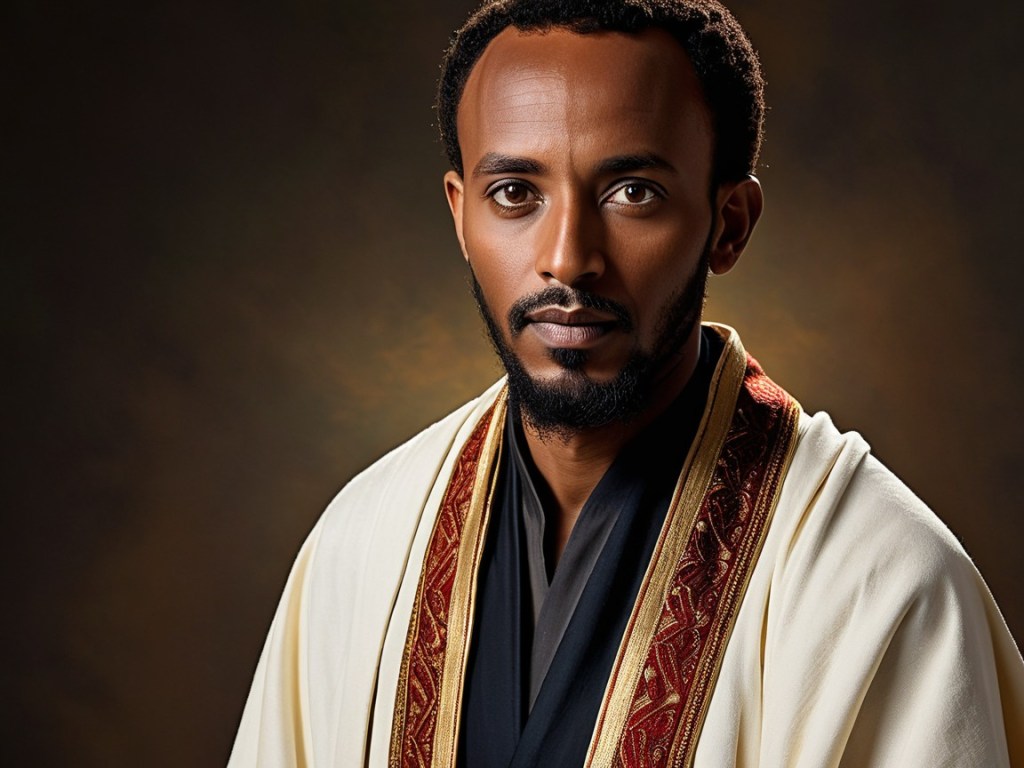
As he journeyed to Damascus, a light from heaven shone around him,
It was at that moment that Paul stopped making God’s light grow dim,
He was a Pharisee, Christians, he was zealous to trim,
God humbled him, God’s humbling aims to lift your self-esteem.
Paul preached God’s Word fearlessly,
No shame in the Good News, he preached it relentlessly,
With God’s power, he did not preach it carelessly,
Studying it diligently, he preached it intellectually.
By faith, Paul endured hardships for Christ’s sake,
Opposed, persecuted, they tried to cut his ministry like a slice of cake,
He held onto it, connected on it, like a head on a neck,
He fought the good fight, finished the race, and left nothing at stake.
Paul wrote many epistles, exhorting people,
Representing the perceived complex truth, in a way so simple,
He was willing to be crippled, for the Gospel not to cripple,
To this day, his work has an effect that’s still ripple.
Hebrews 11:32-35 (KJV) – “32 And what shall I more say? For the time would fail me to tell of Gedeon, and of Barak, and of Samson, and of Jephthae; of David also, and Samuel, and of the prophets: 33 Who through faith subdued kingdoms, wrought righteousness, obtained promises, stopped the mouths of lions. 34 Quenched the violence of fire, escaped the edge of the sword, out of weakness were made strong, waxed valiant in fight, turned to flight the armies of the aliens. 35 Women received their dead raised to life again: and others were tortured, not accepting deliverance; that they might obtain a better resurrection.”
Introduction
“From among the most bitter and relentless persecutors of the church of Christ, arose the ablest defender and most successful herald of the gospel. With the apostolic brotherhood of the chosen twelve, who had companied with Christ from his baptism even to his ascension, was numbered one who had never seen the Lord while he dwelt among men, and who had heard his name uttered only in unbelief and contempt. But beneath the blindness and bigotry of the zealot and the Pharisee, Infinite Wisdom discerned a heart loyal to truth and duty. And the voice from Heaven made itself heard above the clamors of pride and prejudice. In the promulgation of the gospel, Divine Providence would unite with the zeal and devotion of the Galilean peasants, the fiery vigor and intellectual power of a rabbi of Jerusalem. To lead the battle against pagan philosophy and Jewish formalism, was chosen one who had himself witnessed the debasing power of heathen worship, and endured the spiritual bondage of Pharisaic exaction.” – Sketches from the Life of Paul, Page 9.1, Ellen G. White.
“Saul of Tarsus was a Jew, not only by descent, but by the stronger ties of lifelong training, patriotic devotion, and religious faith. Though a Roman citizen, born in a Gentile city, he was educated in Jerusalem by the most eminent of the rabbis, and diligently instructed in all the laws and traditions of the Fathers. Thus he shared, to the fullest extent, the hopes and aspirations, the lofty pride and unyielding prejudice, of his nation. He declares himself to have been “a Hebrew of the Hebrews; as touching the law, a Pharisee; concerning zeal, persecuting the church; touching the righteousness which is in the law, blameless.” He was regarded by the Jewish leaders as a young man of great promise, and high hopes were cherished concerning him as an able and zealous defender of the ancient faith.” – Sketches from the Life of Paul, Page 10.1, Ellen G. White.
The Apostle Paul stands as a towering figure in the annals of Christian history, his life and works leaving an indelible mark on the faith he fervently propagated. Renowned for his zealous missionary journeys, his profound theological insights, and his unwavering commitment to the Gospel, Paul’s life is a testament to the transformative power of faith. The faith chapter of Hebrews 11 extols the deeds of the faithful, chronicling the extraordinary feats accomplished by those who trusted in God. In this context, Paul’s faith emerges as a pivotal force that not only shaped his destiny but also the trajectory of early Christianity.
Paul, originally known as Saul of Tarsus, was born into a Jewish family in the city of Tarsus in Cilicia (Acts 21:39, 22:3). The name Saul is of Hebrew origin. The name means “asked for” or “prayed for,” reflecting his Jewish heritage and the expectations of his parents. A Roman citizen by birth (Acts 22:28), Saul was well-versed in Jewish law and tradition, having studied under the esteemed Rabbi Gamaliel in Jerusalem (Acts 22:3). His early life was marked by a fervent commitment to Judaism and a zealous persecution of the fledgling Christian movement, which he viewed as a heretical sect threatening the purity of Jewish faith (Acts 8:3; Galatians 1:13-14).
Saul’s dramatic conversion on the road to Damascus (Acts 9:3-6) stands as a pivotal moment in his life and in the history of Christianity. As he neared Damascus with an intent to arrest Christians, a blinding light from heaven suddenly enveloped him, and he heard the voice of Jesus questioning his persecution. This divine encounter left Saul blind for three days, during which time he neither ate nor drank. It was Ananias, a disciple in Damascus, who, following a divine directive, laid hands on Saul, restoring his sight and baptizing him (Acts 9:10-18).
Following his conversion, Saul adopted the name Paul. The name Paul is of Latin origin. The name means “small” or “humble,” which may reflect his newfound humility and mission to the Gentiles. God did not force Paul to keep his Jewish name, Saul. In some cultures, people want to dictate the name that you are supposed to use just to keep the laws of tradition.
Paul embarked on an unparalleled missionary career. His journeys took him across the Roman Empire, where he established churches, preached the Gospel, and wrote epistles that would become foundational texts for Christian doctrine. His letters, such as those to the Romans, Corinthians, Galatians, and Ephesians, provide profound theological insights and practical guidance, addressing issues of faith, ethics, and community life.
Paul’s life was marked by significant hardships and persecutions, yet he remained steadfast in his mission. He endured beatings, imprisonment, shipwrecks, and various forms of opposition (2 Corinthians 11:23-28). Despite these trials, Paul’s faith in Christ never wavered. He famously declared, “I can do all things through Christ which strengtheneth me” (Philippians 4:13), encapsulating his reliance on divine strength.
Ultimately, Paul’s unwavering faith and relentless efforts culminated in his martyrdom in Rome. Tradition holds that he was beheaded under Emperor Nero’s persecution of Christians around AD 64-67. Given that Paul was likely born around AD 5-10, he would have been approximately 55-65 years old at the time of his death. His legacy, enshrined in his epistles and the Acts of the Apostles, continues to inspire and instruct believers worldwide.
In examining the faith of Paul, one finds a life profoundly transformed by a divine encounter, driven by an unshakeable commitment to spreading the Gospel. His journey from a persecutor of Christians to a pivotal leader of the faith underscores the transformative power of belief and the enduring impact of unwavering faith in God’s promises.
Paul’s Conversion and Commission
Acts 9:3-18 (KJ21) – “1 And Saul, yet breathing out threatenings and slaughter against the disciples of the Lord, went unto the high priest, 2 and asked of him letters to the synagogues at Damascus, that if he found any who were of this Way, whether they were men or women, he might bring them bound unto Jerusalem. 3 And as he journeyed he came near Damascus, and suddenly there shone round about him a light from heaven. 4 And he fell to the earth and heard a voice saying unto him, “Saul, Saul, why persecutest thou Me?” 5 And he said, “Who art Thou, Lord?” And the Lord said, “I am Jesus whom thou persecutest; it is hard for thee to kick against the goads.” 6 And he, trembling and astonished, said, “Lord, what wilt Thou have me to do?” And the Lord said unto him, “Arise and go into the city, and it shall be told thee what thou must do.” 7 And the men who journeyed with him stood speechless, hearing a voice but seeing no man. 8 And Saul arose from the earth, and when his eyes were opened, he could see no man; but they led him by the hand and brought him into Damascus. 9 And he was three days without sight, and neither did he eat nor drink. 10 And there was a certain disciple at Damascus named Ananias. And the Lord said to him in a vision, “Ananias.” And he said, “Behold, I am here, Lord.” 11 And the Lord said unto him, “Arise and go into the street which is called Straight, and inquire in the house of Judas for the one called Saul of Tarsus; for behold, he prayeth 12 and hath seen in a vision a man named Ananias coming in and putting his hand on him, that he might receive his sight.” 13 Then Ananias answered, “Lord, I have heard from many of this man, and how much evil he hath done to Thy saints in Jerusalem. 14 And here he hath authority from the chief priests to bind all who call on Thy name.” 15 But the Lord said unto him, “Go thy way, for he is a chosen vessel unto Me, to bear My name before the Gentiles and kings and the children of Israel. 16 For I will show him what great things he must suffer for My name’s sake.” 17 And Ananias went his way and entered into the house, and putting his hands on him said, “Brother Saul, the Lord, even Jesus who appeared unto thee on the way as thou camest, hath sent me, that thou mightest receive thy sight and be filled with the Holy Ghost.” 18 And immediately there fell from his eyes something like scales, and he received sight forthwith, and arose and was baptized.”
Saul was going to Damascus to persecute Christians, as was his custom. While on his way to that sinful mission, he encountered God. A light shone from heaven causing him to fall on the earth. Jesus talked to him and asked him why he was persecuting Him by persecuting Christians. Saul was frightened and he asked Jesus what he was supposed to do. Jesus told him to arise and continue his journey to Damascus and he will be told what to do when he reaches there.
Saul was originally heading to Damascus before encountering Jesus, but he was going there to sin. When he met Jesus on the way, Jesus did not tell him to change his direction. Instead, He gave him a new assignment at the same place where he was going.
You might be heading to the right place but for the wrong purpose. For example, some people go to church to show off the new dress they bought, a new hairstyle, or a new car. Church is the right place to go to but when it is mingled with the wrong purpose it ends up being fruitless or less fruitful than it ought to be.
When you encounter Christ, He will either change your direction or give you a new purpose in the direction you are heading. For example, one might be a criminal and going to commit a robbery while his purpose was to be a preacher. In that case, God changes the direction of that person completely. One might be a musician but singing songs that glorify sin, in that case, God calls upon that person to maintain the same direction of music but to change the content they are singing.
Saul was made blind at that moment. The men who were with him were speechless because they heard a voice, but they could not see who was speaking. Jesus did it while they were there so that they too could have a chance to witness His power and that they may get converted as well. If they chose not to be converted, they would hold no one accountable because they were present at the scene where Jesus Himself spoke. Those people held Paul by the hand and took him to Damascus.
For three days and three nights, Saul had no physical sight. Neither did he eat or drink anything. For that short period, his sense of sight and taste were deprived of physical necessities. One reason God did that to him was so that he could become less acquainted with the physical and more in tune with the spiritual.
When we close our eyes during prayer, we are deprived of seeing the physical things that are around us. Therefore, we become more aligned with the spiritual than the physical. When we fast and pray, our physical bodies are deprived, thus we become more focused on the spiritual and less on the physical. Therefore, our mind goes to a higher dimension as it is uplifted to realize that there is life beyond what is perceived with the five physical senses.
The Lord appeared to Ananias in a vision. He gave Ananias a mission to go into the street called Straight and inquire in the house of Judah a man called Saul of Tarsus. God told Ananias that Saul was praying at that place. God told Ananias that Saul had seen a man called Ananias in a vision putting his hand on him and causing him to receive his sight.
Ananias told God that he had heard how dangerous Saul was and how he persecuted followers of Christ. God told Ananias to go (and fear not) because Saul was His chosen vessel, and He was going to bear God’s name before unbelievers (the Gentiles) and believers (the children of Israel) (Acts 9:13).
The Lord told Ananias that He would also show Saul what great things he must suffer for His name’s sake (Acts 9:16). Ananias went and met with Saul and told him that it was Jesus who had sent him to minister to him (Saul) that Saul should receive his sight and get filled with the Holy Ghost (Acts 9:17). Immediately scales fell from Paul’s eyes, and thus he received sight and got baptized (Acts 9:18).
This moment of conversion might have been the moment when Saul’s name was changed to Paul. 2 Corinthians 5:17 (AMP) – “Therefore if a anyone is in Christ [that is, grafted in, joined to Him by faith in Him as Savior], he is a new creature [reborn and renewed by the Holy Spirit]; the old things [the previous moral and spiritual condition] have passed away. Behold, new things have come [because spiritual awakening brings a new life].”
When Saul received the Holy Ghost at the time of His Baptism, He became a new person. When one becomes a new person, everything about him becomes new, sometimes even his name. God changed Abram’s name to Abraham when He gave Abram a new covenant (Genesis 17:4-5). Thus, this might have been the moment when Saul’s name was changed to Paul because that was when his life was turned around by God and made brand new.
The Bible does not specify an exact moment when Saul’s name was changed to Paul. Instead, the transition happens gradually in the text. Maybe his name was not even changed. He may have had two names, Saul, when associating with the Jews and Paul when associating with the Romans. Saul is first referred to as Paul in Acts 13:9:
“But Saul, who was also known as Paul, filled with the Holy Spirit, fixed his gaze on him” (Acts 13:9, NASB).
This verse occurs during Saul’s first missionary journey, when he is in Cyprus. After this point, he is consistently referred to as Paul in the narrative. The name change is often understood as symbolic of his new mission and identity as an apostle to the Gentiles.
In Hebrew, the name Saul (שָׁאוּל, Sha’ul) means “asked for” or “prayed for.” This name was fitting for Saul of Tarsus, as he was likely named after the first king of Israel, King Saul, who was also from the tribe of Benjamin. The name Paul (Παῦλος, Paulos) is of Latin origin and means “small” or “humble.” This name reflects a more modest identity, which aligns with Paul’s mission and ministry to the Gentiles, emphasizing humility and servitude.
Paul’s parents might have named him Saul because they were looking forward for their son to be a king or a great man in society. Every time someone called Saul’s name it reminded him of King Saul and as a result it made him feel great about himself as it was the name of the king. This feeling might have led to pride which caused him to commit sinful acts like persecuting Christians as his heart was infiltrated with pride.
Whenever he used the name Paul, it caused him to realize how small he was before God, and it brought a sense of humility to his heart and to realize that he is dependent on God in everything that he does. It is when we acknowledge our insufficiency and our need for God that we can achieve lofty heights of greatness.
God was looking forward for Paul to be a great man in society but not necessarily a king. He was to use him in other ways. Paul ended up writing about half of the books of the New Testament which are read to this day. Therefore, it is fair to conclude that He ended up being great, in the purpose that God intended him to.
Preaching the Gospel Fearlessly
Paul fearlessly preached the Gospel, despite facing opposition, persecution, and imprisonment.
Acts 20:24 (KJV) – “But none of these things move me, neither count I my life dear unto myself, so that I might finish my course with joy, and the ministry, which I have received of the Lord Jesus, to testify the gospel of the grace of God.”
After Paul had stayed for three days and nights without eating, he ate some food and he felt strengthened. He did not delay. He moved by faith and started preaching the gospel immediately. Witnessing should start immediately after the experience of salvation. Newly converted people usually shy away from witnessing, citing that they have insufficient knowledge to share. No human being has enough knowledge of God.
One might think they know God so much because they have read the Bible four hundred and forty-one times, only to read it again and recognize that there are still many things that they do not know yet. God is infinite, we cannot exhaust Him. You should share the little that you know with others. No single converted person knows everything about God and no single unconverted person knows nothing about God.
Therefore, all who have been made disciples are called to go out and make new disciples for Christ (Matthew 28:19). You will increase in knowledge, understanding and wisdom as you witness. So, do not delay, start immediately and fearlessly.
Acts 20:22-24 (KJV) – “22 And now, behold, I go bound in the spirit unto Jerusalem, not knowing the things that shall befall me there. 23 Save that the Holy Ghost witnesseth in every city, saying that bonds and afflictions abide me. 24 But none of these things move me, neither count I my life dear unto myself, so that I might finish my course with joy, and the ministry, which I have received of the Lord Jesus, to testify the gospel of the grace of God.”
In Acts 20:22-24, Paul went to Jerusalem knowing very well of the danger that he would encounter there. People do something because they are aware of the rewards that they will get. It is not easy for someone to do something knowing that they are going to face danger. Paul did not relent even after knowing what was going to befall him in Jerusalem. Instead, he said, “None of these things move me.” My friend Steve said, “As long as you are on the right, and you know you are on the right, there is nothing to fear.”
Wicked people are the ones who should fear because sin shakes, and it causes instability. Righteous people should be as bold as a lion because truth always stands firm. You can destroy the messenger, but you cannot destroy the truth. As a messenger of truth, you should have confidence in that knowledge. People might harm you, but they won’t destroy you. Messengers of truth have been persecuted but we still study about them and the truth that they taught many years after they died. Nothing could move Paul. Nothing could stop him.
Enduring Hardships for the Sake of Christ
Paul endured numerous hardships, including beatings, imprisonment, and shipwrecks, for the sake of Christ and the Gospel.
2 Corinthians 11:23-29 (AMP) – “23 Are they [self-proclaimed] servants of Christ?—I am speaking as if I were out of my mind—I am more so [for I exceed them]; with far more labors, with far more imprisonments, beaten times without number, and often in danger of death. 24 Five times I received from the Jews thirty-nine lashes. 25 Three times I was beaten with rods; once I was stoned; three times I was shipwrecked; a night and a day [I have spent] adrift on the sea; 26 many times on journeys, [exposed to] dangers from rivers, dangers from bandits, dangers from my own countrymen, dangers from Gentiles, dangers in the city, dangers in the wilderness, dangers on the sea, dangers among those posing as believers; 27 in labor and hardship, often unable to sleep, in hunger and thirst, often driven to fasting [for lack of food], in cold and exposure [without adequate clothing]. 28 Besides those external things, there is the daily [inescapable] pressure of my concern for all the churches. 29 Who is weak [and I do not feel his weakness]? Who is made to sin [and I am not on fire with sorrow and concern]?”
In this particular text, Paul recounts the severe challenges he has gone through while spreading the gospel. He talks of how he constantly risks his life to preach the truth. He says that his life was endangered both by believers and unbelievers, by foreigners and his own countrymen. No place was safe for him, be it in the city, wilderness or even on the sea. Despite all this external torment, what drives him is his concern for all the churches. He wanted people to receive Jesus and get saved more than he wanted them to be safe and comfortable.
In many countries, people risk their lives to come up with revolutions that are going to bring change to that country. In many instances, they are imprisoned, tortured while some are killed. The beauty is that despite all that, their efforts do not go fruitless. Their efforts bear fruit. Our country Kenya was under single-party rule. Through the people’s activism, multiparty democracy was introduced in 1992. We have had other subsequent revolutions that have positively changed how things work.
Unfortunately, I rarely see Christians move with that level of passion for God as people do for politics and fighting for their rights. If we would spread the gospel fearlessly like that, God’s will, will be done on earth as it is in heaven.
Pastor Benard Ombori said that he wishes people were zealous in spreading God’s message the way they are zealous in political protests. He said that Christ might come soon if people expressed that level of zeal because one reason why Jesus has not yet come is because He wants more people to get converted. Paul did not consider the external suffering, the fire that was internally burning in him was greater than the external persecution.
These are the instances when Apostle Paul was persecuted:
Stoning at Lystra
Acts 14:19-20 (KJ21) – “19 And there came thither certain Jews from Antioch and Iconium, who persuaded the people; and having stoned Paul, drew him out of the city, supposing he had been dead. 20 However, as the disciples stood round about him, he rose up and came into the city. And the next day he departed with Barnabas to Derbe.”
Paul was stoned by his own people (the Jews) and left for dead. The Bible tells us that after stoning him they thought he had died. This means that the stoning was so severe. However, despite that, he did not give up. He continued spreading the good news. The goodness of the good news should drive one to endure the evil of the world.
Beaten and Imprisoned at Philippi
Acts 16:22-24 (KJ21) – “22 And the multitude rose up together against them; and the magistrates rent off their clothes and commanded that they be beaten. 23 And when they had laid many stripes upon them, they cast them into prison, charging the jailer to keep them safely. 24 Having received such a charge, he thrust them into the inner prison and made their feet fast in the stocks.”
The multitude rose up against Paul and Silas. The Bible does not tell us how many there were. It is quite painful when one person beats you. Imagine many people beating you. It is like ‘mob justice’ that is done to thieves and robbers. Some thieves stopped stealing after they encountered mob justice.
After they were severely beaten, they were not taken to hospital, they were taken to prison. In many countries today, the respect for human rights will cause the authorities to take a criminal to hospital first before they take them to prison. Paul and Silas were beaten and imprisoned. When they were thrown in prison, their feet were fastened in the stocks so that they would not escape.
Persecution at Thessalonica
Acts 17:5-10 (AMP) – “5 But the [unbelieving] Jews became jealous and taking along some thugs from the lowlifes in the marketplace, they formed a mob and set the city in an uproar; and attacking Jason’s house, tried to bring Paul and Silas out to the people. 6 But when they failed to find them, they dragged Jason and some brothers before the city authorities, shouting, “These men who have turned the world upside down have come here too; 7 and Jason has welcomed them into his house [and protected them]. And they all are saying things contrary to the decrees of Caesar, [actually] claiming that there is another king, Jesus.” 8 They stirred up the crowd and the city authorities who heard these things. 9 And when they had taken security (bail) from Jason and the others, they let them go. 10 The brothers immediately sent Paul and Silas away by night to Berea; and when they arrived, they entered the synagogue of the Jews.”
Reading Acts 17:5-10 and Acts 16:22-24 we see that mob justice was a common thing for Paul. Paul faced opposition from the Jews. The unbelieving Jews became jealous and took some thugs from the marketplace and formed a mob. They attacked Jason’s house so that they could bring Paul and Silas out to the people. However, they failed to find them. Instead, they accused Jason of hiding Paul and Silas in his house and protecting them.
When Paul and Silas were released at night to head to Berea, they did not rest. When they arrived, they entered the synagogue of the Jews. The Word of God can do wonders inside you that no other power can do. One of the key ingredients of success is persistence. When God’s Word is working in you, you will be successful because it will stir up persistence in you that you won’t stop until you achieve your goal.
No Christian can say that they have achieved their goal, no matter how lofty their achievements are. This is because God calls us to have no limits in our service to Him. Our work on this earth should end when we die. When you wake up and realize that you are alive, it is a moment to recognize that you still have more work to do.
Persecution at Berea
Acts 17:13-14 (AMP) – “13 But when the Jews of Thessalonica learned that the Word of God [concerning eternal salvation through faith in Christ] had also been preached by Paul at Berea, they came there too, agitating and disturbing the crowds. 14 So at that time the brothers immediately sent Paul away to go as far as the sea; but Silas and Timothy remained there [at Berea].”
Jews from Thessalonica stirred up the crowd against Paul when they learned that God’s Word had also been preached by Paul in Berea. They did not want the people of Berea to receive God’s Word. Satan does everything to block the Word of God from reaching people because he knows how powerful and liberating God’s Word is.
The Devil wants people to remain powerless, intimidated and in captivity. He wants them to be so tormented so that they keep on sinning. Once they indulge in sin, sin traps them and they find it very difficult to get out of that trap. The Jews went to Berea agitating and disturbing the crowds. Immediately, the fellow believers (brothers) of Berea sent Paul away to go as far as the sea while Timothy and Silas remained there.
Opposition in Corinth
Acts 18:5-6 (AMP) – “5 When Silas and Timothy came down from Macedonia, Paul began devoting himself completely to [preaching] the Word and solemnly testifying to the Jews that Jesus is the Christ (the Messiah, the Anointed). 6 But since the Jews kept resisting and opposing him and blaspheming [God], he shook out his robe and said to them, ‘Your blood [be] on your own heads! I am innocent [of it]. From now on I will go to the Gentiles.’”
Paul faced opposition from the Jews numerous times. Sometimes the opposition he would face would involve harsh persecutions. In Acts 18:5-6, Paul responds to the opposition and blasphemy from the Jews by declaring his intent to turn his focus to preaching to the Gentiles. God is long suffering but when He sees that He has given a person many chances and that person is becoming more rebellious instead of repenting, He brings judgment to that person. Paul was patient with the Jews but when he saw how rebellious they were, he decided to shift his focus to the Gentiles.
There are people out there who are more than willing to listen to the message God has given you. There are people out there who are willing to buy your product or service. There are people out there who are willing to love you wholeheartedly. Do not force people to listen to you who do not want to. Do not force people to buy your product or service who show contempt for what you are selling. Do not force people to love you who have chosen to hate you.
As a Christian, love them but do not force them. When they come asking for help, do your duty as a Christian to help them, but do not waste time trying to persuade them. This is because when you spend so much time trying to persuade them, you are depriving the audience that really needs what you are offering from getting what you are offering. Serve everybody but give priority to those who need and want you most.
Acts 18:12-13 (AMP) – “12 But when Gallio was proconsul of Achaia, the Jews unitedly attacked Paul and brought him before the judgment seat, 13 declaring, ‘This man is persuading people to worship God in violation of the law.’”
In Acts 18:12-13, the Jews in Achaia brought Paul before Gallio. Gallio was the Roman proconsul of Achaia. They accused Paul of persuading people to worship God in ways that were contrary to the law. This event reflects the constant opposition Paul faced during his ministry.
Arrest and Trial in Jerusalem
Acts 21:27-36 (AMP) – “27 When the seven days [of purification] were almost over, the Jews from [the province of] Asia [Minor], seeing Paul in the temple, began stirring up the crowd and they seized him, 28 shouting, ‘Men of Israel, help us! This is the man who teaches all men everywhere against our people and the Law and this place; and besides, he has brought Greeks into the temple and has defiled this holy place.’ 29 For they had previously seen Trophimus the Ephesian in the city with Paul, and they assumed that he had brought the man into the temple. 30 Then the whole city was provoked and confused, and the people rushed together; they seized Paul and dragged him out of the temple, and immediately the gates were closed. 31 Now while they were trying to kill him, word came to the commander of the [Roman] garrison that all Jerusalem was in a state of upheaval. 32 So he immediately took soldiers and centurions and ran down among them. When the people saw the commander and the soldiers, they stopped beating Paul. 33 Then the commander came up and arrested Paul and ordered that he be bound with two chains; then he asked who he was and what he had done. 34 But some in the crowd were shouting one thing and others something else, and since he could not determine the facts because of the uproar, he ordered that Paul be taken to the barracks. 35 When Paul got to the steps, he was carried by the soldiers because of the violence of the mob; 36 for the majority of the people kept following them, shouting, ‘Away with him! [Kill him!]’”
Many of the Jews were discriminative. They had accused Jesus of mingling with sinners and non-Jews and they accused Paul of the same thing. Many of the Jews did not want to mingle with other nations. Therefore, they accused Paul of defiling the holy temple by bringing in Greeks. This discrimination came as a result of misunderstanding the gospel. Misunderstanding the gospel will cause the same amount of harm or more than what will be caused by lack of reading the gospel.
Unfortunately, the misunderstanding of the gospel that the Jews had shown of not wanting to mingle with other people is shown with some Christians today. Members of certain churches seclude themselves and do not want to mingle with members of other churches or religions because they think that their church is right while the others are wrong. It might be true that their church follows the whole Bible doctrine to the latter but that gives no one the right to be discriminative to others.
They brought the accusation of defiling the temple to Paul because they had previously seen Trophimus the Ephesian in the city with Paul and they assumed that Paul had brought the man into the temple. The people in the city were provoked and confused and they rushed together and seized Paul and drugged him out of the temple. Immediately after that, the gates were closed. When they were trying to kill Paul, word came to the commander of the Roman garrison that the entire Jerusalem was in a chaotic state.
Therefore, the commander immediately took soldiers and centurions and ran down among them. When the people saw the commander and soldiers, they stopped beating Paul. The commander came and arrested Paul and ordered that he should be bound with two chains. He arrested Paul because he thought that Paul was the one in the wrong as the majority was against him. As a Christian, sometimes you may seem that you are losing when spreading the gospel not because you do not have the right facts but because the majority of people have hard-headedly and hard-heartedly chosen to follow error and to block truth.
The commander went ahead and asked Paul who he was and what he had done. The Bible does not record Paul responding. Instead, it records the people responding on behalf of him.
Matthew 5:37 (KJ21) – “But let your communication be, ‘Yea, yea’ or ‘Nay, nay’; for whatsoever is more than these cometh of evil.”
When you feel that you really want to justify and prove that you are righteous, keep in mind that the feeling you are having is an evil feeling. This is why Jesus would keep silent when false accusations were leveled against him. Paul kept silent too.
Normally, Satan uses such situations to corner you so that you can get agitated and sin through your lips or through your actions. Someone may come and attack you and tell you something that is very offensive against Christianity. This may make you angry and in turn you resolve to retaliate with words that will create more pain attacking that person and his religion. Some Christians win in such arguments and after they win, they feel victorious and ignorantly think that God is happy with them because they have valiantly defended Him.
God needs no one to defend Him for He can defend Himself. Sometimes people may accuse you falsely and you resolve to swear (by God’s name, or your mum’s name or anyone else’s name) in a bid to prove that you did not do what they accused you of. Wanting to prove that you are a good person is a feeling of pride because you want to exalt yourself above that which they falsely think of you. Don’t exalt yourself, God will exalt you.
When Paul was asked what he had done, the people answered on his behalf. However, some shouted one thing while others shouted another thing. Paul keeping quiet and letting people accuse him falsely worked in his favor. Since the commander could not determine the facts as the people were shouting, he ordered that Paul should be taken to the barracks. When Paul got to the steps, he was carried by the soldiers because of the violence of the mob. The majority of people, kept following them shouting that Paul should be killed.
Acts 21:37-40 (AMP) – “37 Just as Paul was about to be taken into the barracks, he asked the commander, ‘May I say something to you?’ And the man replied, ‘Do you know Greek? 38 Then you are not—as I assumed—the Egyptian who some time ago stirred up a rebellion and led those 4,000 men of the Assassins out into the wilderness?’ 39 Paul said, ‘I am a Jew from Tarsus in Cilicia, a citizen of no insignificant city; and I beg you, allow me to speak to the people.’ 40 When the commander had given him permission, Paul, standing on the steps, motioned to the people with his hand; and when there was a great hush, he spoke to them in the Hebrew dialect (Aramaic), saying:”
When Paul was about to be taken to the barracks, he asked the commander if he could say something to him. The commander thought that Paul wants to defend himself. He was hoping that Paul was not the Egyptian who sometime back stirred up a rebellion and led 4,000 men of the assassins into the wilderness. Out of the mistreatment of the people, the commander automatically thought that Paul had done something wrong. Unfortunately, in the world that we are living in, people respect you when they see other people respect you and they disrespect you when they see others disrespecting you. Paul told him that he is a Jew from Tarsus in Cilicia and begged the commander to allow him to speak to the people. Fortunately, the commander allowed him.
This is what Paul said:
Acts 22:1-21 (AMP) – “1 ‘Brothers and fathers (kinsmen), hear my defense which I now offer to you.’ 2 When they heard that he was addressing them in the Hebrew dialect, they became even more quiet. And he continued, 3 ‘I am a Jew, born in Tarsus of Cilicia, but brought up in this city [at the feet] of Gamaliel, and educated [thoroughly] in the law of our fathers, being ardent and passionate for God just as all of you are today. 4 I persecuted and pursued the followers of this Way to the death, binding them with chains and putting [followers of Jesus] both men and women into prisons, 5 as the high priest and all the Council of the elders (Sanhedrin) can testify [because from them I received letters to the brothers, and I was on my way to Damascus in order to bring those [believers] who were there to Jerusalem [in chains] to be punished].’ 6 But as I was on my way, approaching Damascus about noontime, a great blaze of light suddenly flashed from heaven and shone around me. 7 And I fell to the ground and heard a voice saying to me, ‘Saul, Saul, why are you persecuting Me?’ 8 And I replied, ‘Who are You, Lord?’ And He said to me, ‘I am Jesus the Nazarene, whom you are persecuting.’ 9 Now those who were with me saw the light, but did not understand the voice of the One who was speaking to me. 10 And I asked, ‘What shall I do, Lord?’ And the Lord answered me, ‘Get up and go into Damascus, and there you will be told all that is appointed and destined for you to do.’ 11 But since I could not see because of the glorious intensity of that light, I was led by the hand by those who were with me and came into Damascus. 12 And one Ananias, a devout man according to the standard of the Law, and well spoken of by all the Jews who lived there, 13 came to see me, and standing near said to me, ‘Brother Saul, receive your sight!’ And at that very moment I recovered my sight and looked up at him. 14 And he said, ‘The God of our fathers has appointed you to know His will and to [progressively] understand His plan with clarity and power, and to see the Righteous One (Jesus Christ, the Messiah) and to hear a message from His [own] mouth. 15 For you will be His witness to all men testifying of what you have seen and heard. 16 Now why do you delay? Get up and be baptized, and wash away your sins by calling on His name.’ 17 Then it happened when I had come back to Jerusalem and was praying in the temple [enclosure], that I fell into a trance (vision); 18 and I saw Him saying to me, ‘Hurry and get out of Jerusalem quickly, because they will not accept your testimony about Me.’ 19 And I said, ‘Lord, they themselves know [without any doubt] that in every synagogue I used to imprison and beat those who believed in You and Your message of salvation. 20 And when the blood of Your witness Stephen was being shed, I also was standing nearby, approving and consenting to his death, and guarding the coats of those who were killing him.’ 21 And the Lord said to me, ‘Go, I will send you far away to the Gentiles.’’”
“Paul declared that in his unconverted state he had known Christ, not by personal acquaintance, but merely by the conception which he, in common with others, cherished concerning the character and work of the Messiah to come. He had rejected Jesus of Nazareth as an impostor because He did not fulfill this conception. But now Paul’s views of Christ and His mission were far more spiritual and exalted, for he had been converted. The apostle asserted that he did not present to them Christ after the flesh. Herod had seen Christ in the days of His humanity; Annas had seen Him; Pilate and the priests and rulers had seen Him; the Roman soldiers had seen Him. But they had not seen Him with the eye of faith; they had not seen Him as the glorified Redeemer. To apprehend Christ by faith, to have a spiritual knowledge of Him, was more to be desired than a personal acquaintance with Him as He appeared on the earth. The communion with Christ which Paul now enjoyed was more intimate, more enduring, than a mere earthly and human companionship.” – Acts of the Apostles, Page 452.1, Ellen G. White.
When Paul was given a chance to speak, he took that opportunity to witness about his encounter with Christ. The Commander and the people thought that Paul wanted to defend himself. He did not defend himself by saying how right he was. He did not even urge them to pull back from punishing him as they were planning to. He spoke of his journey to Christ, giving a testimony of the type of person he was before he met Jesus on his way to Damascus to persecute Christians. Jesus had done a special work in Paul that he thought well of others and sought to benefit them at the present moment when those he was caring for wanted to kill him.
After listening to this speech, what did the crowd do?
Acts 22:22-29 (AMP) – “22 The crowd listened to him up to this statement, and then they raised their voices and said, ‘Away with such a fellow from the earth, for he should not be allowed to live!’ 23 And as they shouted and threw off their cloaks and tossed dust into the air, 24 the commander ordered that Paul be brought into the barracks, saying that he should be examined by scourging, so that he might find out the reason for the outcry against him. 25 But when they stretched him out with thongs (the scourging ropes), Paul said to the centurion who was standing by, ‘Is it legal for you to scourge a Roman citizen who has not been tried?’ 26 When the centurion heard this, he went to the commander and said to him, ‘What are you about to do? This man is a Roman citizen!’ 27 The commander came and asked Paul, ‘Tell me, are you a Roman citizen?’ And he said, ‘Yes.’ 28 The commander replied, ‘I acquired this citizenship for a large sum of money.’ Paul said, ‘But I was actually born a citizen.’ 29 Therefore those who were about to examine him immediately backed away, and the commander also was afraid when he realized that Paul was a Roman citizen and that he had put him in chains.”
After listening to that speech, the crowd shouted that Paul should be killed. They shouted, threw off their cloaks and tossed dust into the air. As they did that, the commander ordered that Paul be brought into the barracks, saying that he should be examined by scourging, so that he might find out the reason for the outcry against him. When they stretched him out with scourging ropes, Paul asked the centurion who was standing by if it was legal for him to scourge a Roman citizen who had not been tried. This shows that Paul was educated in Roman law as well as God’s law.
As Christians, we should be educated in a wide range of studies, especially in those things pertaining to us. In that education, we should put the Bible as the foundation for that education. Many Christians do a great error when they set worldly education in the same respect with the Bible. Some do a grievous harm when they place it higher than the Bible.
People will spend so much time studying for a worldly exam than they spend studying the Bible. Other devoted Christians block themselves from acquiring other knowledge when they have the opportunity to do so because they want to stick to reading the Bible alone. Paul was educated in the Jewish and Roman Laws. Daniel and his friends (Hananiah, Mishael and Azariah) were educated in the Word of God and in the Babylonian education as well.
The Babylonians were unbelievers but Daniel and his friends did not neglect their education. For those who are not properly rooted in God’s truth may endanger themselves when trying to learn other things. They may not be able to know and discern truth from error since they are not so familiar with the truth. Therefore, when they find a doctrine or a philosophy that sounds sensible, they are highly likely going to follow it. Daniel and his friends learned God’s truth first before they learnt other things.
Parents and guardians should teach their children the Word of God before they enroll them in school. Unfortunately, many parents enroll their children to school before teaching them the Word of God. This behavior comes automatically mainly because those parents prioritized worldly education before God’s education and since it somehow ‘worked’ for them, they pass on the same system to their kids. This trait leads to lack of faith in society which results to powerless churches and by large a powerless world.
If God’s Word was prioritized more than the science of the world, we would have more ground breaking scientific inventions than we currently have. We would have more material wealth than we currently have. In other words, the quality of life would be higher than it currently is. Lack of faith in God has caused the majority of the problems in society. Not only has it caused the majority of the problems, it has also blocked many from coming up with solutions that are going to solve the current problems.
Herbert W. Armstrong said that the Bible does not contain all knowledge in detail but it is the foundation of all knowledge. Scientific and other secular books written by men may and highly likely contain errors. Someone who has neglected Bible study and follows such books may not be able to discern between what is true and what is false. This person may struggle a lot in trial and error because they are busy applying principles and theories that do not work. They may also apply principles that will do damage to them as individuals and to society at large.
Ask yourself, why it is that very few of the most educated professors in any field have come up with significant inventions. No theological modern professor has authored a huge number of writings in diverse topics as Ellen G. White. Ellen G. White was a grade three dropout. Majority of the great inventors of the world were not very educated people. A good number of them did not even have university degrees. Majority of the people who have founded unicorns (billion-dollar) technology enterprises are not technology or business professors.
Worldly education without God does not amount to much. If you study God’s Word and set it as the foundation of all other education, you will achieve unfathomable greatness. If you can be an engineer or a doctor or in any other non-theological career who has prioritized the Bible more than any other study, you will do great achievements in that field of study more than those who spend hours and days studying secular work.
Ancient Chinese general, military strategist and Philosopher Sun Tzu said, “If you know the enemy and know yourself, you need not fear the result of a hundred battles.” Daniel and his friends knew themselves (through the study of God’s Word) and knew the enemy, therefore, they were excellent and more knowledgeable than everyone else in the Babylonian kingdom. Paul knew God’s Word, he also knew the Roman constitution, and therefore, he was able to acquire freedom from being imprisoned or killed or both.
The commander and the centurion pulled back when they heard that Paul was a Roman citizen and he was born as a Roman citizen. The knowledge that Paul had was highly beneficial in that situation. If he did not have that knowledge, he would have probably been imprisoned and killed. Another lesson we learn here is that children of God are not supposed to limit themselves based on their original heritage. Paul did not limit himself to the original Jewish heritage. He did not choose to be born a Roman citizen but he did not denounce it. Instead, he embraced it and used it to get the rights that Roman citizens would get.
God’s original idea for social interactions before sin was for the entire world to live as one community. Divisions predominantly came at the time when people were building the city and the tower of Babel. They were going against God’s will. They wanted to build a city that would contain them and prevent them from being scattered to other parts of the world (Genesis 11:4). God gave Adam a command to multiply, replenish the earth and subdue it (Genesis 1:28).
God wants everyone to travel the whole world. One reason God brought numerous languages is for those people (who wanted to be confined in that one city) to go all over the world (replenish the earth). However, since human beings are naturally sinful while many of them are enslaved in sin, they took that opportunity to segregate themselves and create boundaries and borders. Therefore, cities and nations with borders were introduced.
For example, people speaking the Greek language would come together and form Greece. God always wants us to get out of our comfort zones and He is always championing for that. He desires us to make an effort in learning new languages because it is beneficial to know more than one language.
In His love, God has given some people the gift of speaking in tongues so that they can spread His message to the world. Tongues in this case means reasonable and logical languages (not some strange confusing language that the one speaking and the one listening do not understand). One may not be gifted with speaking in tongues but the beauty is anyone can ask God for that gift or for whatever gift He wishes to have. Solomon asked God for wisdom and understanding and God gave it to him.
It is good to ask God for the gifts which you admire that He has not naturally endowed you with. Do not listen to people who tell you that certain things you have to be born with. God may give them to you and He may fail to but if He fails, let it not be because you did not ask. I asked God for a singing voice and He gave it to me. I asked God for the gift of discernment and He gave it to me. Many things I have asked for, God has given me even in adulthood. I believe some of the things He has not given me yet, He will give me if I persist in asking. Even if He does not give me, it is still okay because He knows what is best for me. Not only was Paul knowledgeable on Roman Law and other education besides the Bible, he could also speak in various tongues (1 Corinthians 14:18).
Paul’s tongue speaking gift and knowledge on diverse subjects gave him the ability to break boundaries and reach more people with God’s message. Someone may have a good message but fail to know how to reach an older audience because they do not have the knowledge of how to approach an older person. Therefore, that insufficiency in knowledge may block him from reaching people of an older audience.
Someone may have the right message but he does not know how to transmit it to the opposite gender or to a teenager or to someone from a different culture. Get out of your comfort zone and try to socialize with as many people as possible. When you do this, you will learn on how to reach diverse people.
God tells us to go and teach all nations (Matthew 28:19). He does not specify on the people we should reach and teach. Therefore, make it your life aim to have the skills and capacity to teach everyone regardless of age, race, language, ethnicity or any other dividing factor. Paul had knowledge and he embraced his Roman nationality but did not embrace the ungodly ways of the Romans.
As you travel and visit various cultures, embrace what is Godly in that culture that is not common in your culture. For example, two different times while walking on the way home, I met Islamic strangers (who have now become friends) who offered to assist me in carrying my luggage. I asked myself, “how comes I rarely see Christians doing that?” My friend and church mate Arnold does that all the time. I am trying to embrace that habit.
I once saw someone applauding my friend Dennis Nthumbi for picking up children around his residential area with his Range Rover and taking them to Sunday school. I do not go to the same church with Dennis, neither are we from the same Christian denomination. But I am trying to embrace that. at.
As a Christian, you are a universal citizen because you are a child of God, the Creator of the universe. This means that you have the entire universe as an inheritance. Your citizenship goes far beyond that which is written in your identification card or your passport. So, do not hold only to the citizenship of your heritage in the name of patriotism and fail to acquire others when given opportunity. The only patriotism we are obliged to show is to God, not countries and tribes. Paul had multiple citizenships. His parents were Jewish but he was born a Roman citizen. If he was not a Roman citizen, they would have imprisoned him. They did not imprison him because he was a Roman citizen.
Another thing we can see is that Paul tactfully disbursed that information. When the Jews were shouting that he should get killed, he did not tell them that he was a Roman citizen. After the centurion had him away from the Jews is when Paul told him. This shows us that we need to know whom to give what information. Do not tell everything to everyone. Say the right things to the right people. If he had said he was a Roman citizen, the Jews might have looked for another way to harm him. Paul used his Roman citizenship as his secret weapon on that particular day.
Imprisonment in Caesarea
Acts 24:1-27 (AMP) – “1 Five days later, the high priest Ananias came down [from Jerusalem to Caesarea] with some elders and an attorney named Tertullus [acting as spokesman and counsel]. They presented to the governor their [formal] charges against Paul. 2 After Paul had been summoned, Tertullus began the complaint [against him], saying to the governor: “Since through you we have attained great peace, and since by your foresight reforms are being carried out for this nation, 3 in every way and in every place, most excellent Felix, we acknowledge this with all gratitude. 4 But so that I do not weary you further, I beg you to grant us, by your kindness, a brief hearing. 5 For we have found this man to be a public menace and one who instigates dissension among all the Jews throughout the world, and a ringleader of the [heretical] sect of the Nazarenes. 6 He even tried to desecrate the temple, but we took him into custody [and we intended to judge him by our Law, 7 but Lysias the commander came, and with great force took him out of our hands, 8 and ordered his accusers to come before you.] By interrogating him yourself concerning all these matters you will be able to determine [the truth about] these things with which we charge him.” 9 The Jews also joined in the attack, declaring and insisting that these things were so. 10 When the governor nodded for him to speak, Paul answered, “Knowing that for many years you have been a judge over this nation, I make my defense cheerfully and with good courage. 11 As you can easily verify, it has been no more than twelve days since I went up to Jerusalem to worship. 12 Neither in the temple, nor in the synagogues, nor elsewhere in the city did they find me carrying on a discussion or disputing with anybody or causing a crowd to gather. 13 Nor can they present evidence to you to prove what they now bring against me. 14 But I confess this to you, that according to the Way, which they call a [divisive and heretical] sect, I do worship and serve the God of our fathers, [confidently] believing everything that is in accordance with the Law [of Moses] and that is written in the Prophets; 15 having [the same] hope in God which these men cherish themselves, that there shall certainly be a resurrection of [the dead], both of the righteous and of the wicked. 16 In view of this, I also do my best and strive always to have a clear conscience before God and before men. 17 Now after several years I came [to Jerusalem] to bring to my people charitable contributions and offerings. 18 They found me in the temple presenting these offerings, after I had undergone [the rites of] purification, without any crowd or uproar. But there were some Jews from [the west coast province of] Asia [Minor], 19 who ought to have been here before you to present their charges, if they have anything against me. 20 Or else let these men tell what crime they found [me guilty of] when I stood before the Council (Sanhedrin, Jewish High Court), 21 other than for this one statement which I had shouted out as I stood among them, ‘For the resurrection of the dead I am on trial before you today.’ 22 But Felix, having a rather accurate understanding about the Way, put them off, saying, “When Lysias the commander comes down, I will decide your case.” 23 Then he ordered the centurion to keep Paul in custody, but to let him have some freedom, and [he told the centurion] not to stop any of his friends from providing for his needs. 24 Several days later Felix came with his wife Drusilla, who was a Jewess. He sent for Paul and listened to him talk about faith in Christ Jesus. 25 But as he was discussing righteousness, self-control [honorable behavior, personal integrity], and the judgment to come, Felix became frightened and said, “Go away for now, and when I find [a convenient] time I will send for you.” 26 At the same time he was also hoping to get money from Paul [as a bribe]; so he continued to send for him quite often and talked with him. 27 But after two years had passed, Felix was succeeded [in office] by Porcius Festus; and wishing to do the Jews a favor, Felix left Paul imprisoned.”
In Acts 23:12-13 more than forty Jews came together and said that they would not eat or drink until they killed Paul. Learning of that conspiracy, Paul’s nephew informs Paul, who sends him to the Roman commander to report the plot (Acts 23:16-17). The Roman commander is informed and, concerned for Paul’s safety, arranges for Paul to be transferred to Governor Felix in Caesarea under heavy guard (Acts 23:18-24). A letter is sent along with Paul, explaining the situation and the charges against him (Acts 23:25-30). Paul is delivered to Felix and kept in Herod’s palace under guard until his accusers arrive to present their case (Acts 23:31-35).
Five days later, Ananias the High Priest came down from Jerusalem to Caesarea together with an attorney named Tertullus (Acts 24:1). Jointly, they presented to Felix (the governor) their charges against Paul. When Paul was summoned, Tertullus began making accusations against Paul.
Tertullus accused Paul of being a public menace, instigating dissension among the all the Jews around the world. He accused Paul of being a ring leader of the heretical sect of the Nazarenes (Acts 24:5). He also accused Paul of trying to desecrate the temple (Matthew 24:6). After Tertullus had said these things, the Jews joined in the attack saying that the accusations made against Paul were true (Acts 24:9).
The accusations against Paul were based on several incidents and misunderstandings, as detailed in earlier chapters of Acts:
Public Menace and Instigating Dissension: This accusation stems from Paul’s extensive missionary journeys and preaching, which often led to controversy and sometimes disturbances in various cities. Jewish leaders perceived Paul’s message about Jesus and the inclusion of Gentiles as disruptive to their traditions and authority.
Ringleader of the Sect of the Nazarenes: This label aimed to portray Christianity as a heretical offshoot of Judaism. The term “Nazarenes” was used to describe followers of Jesus of Nazareth. By calling Paul a ringleader, they sought to emphasize that he was a key figure in this movement, which they viewed as a threat.
Desecrating the Temple: This accusation was based on a specific incident recorded in Acts 21:27-29. Some Jews from Asia saw Paul in the Temple and wrongly assumed he had brought Gentiles into the inner courts, which was prohibited. They had seen Paul earlier in the city with Trophimus, a Gentile, and mistakenly concluded that Paul had brought him into the Temple, causing a commotion.
Paul denied stirring up riots, stating that he had been in Jerusalem for only a short time and had not caused any disturbances in the Temple, synagogues, or the city (Acts 24:11-13). Paul admits to following “the Way” (an early term for Christianity) but emphasizes that this was in accordance with the Jewish faith and the Scriptures (Acts 24:14-15). Paul told Felix that he does his best and strives always to have a clear conscience before God and men (Acts 24:16).
As a Christian you should do your best to have a clear conscience before God and men. Majority of Christians do their best to have a clear conscience before men, very few do their best to have a clear conscience before God. This behavior shows a lack of faith. We do not care much about pleasing God because we do not see Him. We only care about pleasing men so that we can have a good reputation among them.
Some people will host parties at their homes or take their friends to restaurants but fail to return tithes and offerings. Some people will buy food on Sabbath for their friends or meet their business associates to discuss business, instead of keeping the Sabbath holy as God has commanded them. Pleasing God should always come first. Do not hide your Christianity to please your friends. When you hide your Christianity to please your friends, they might like you but you will not have a clear conscience before God.
On the other hand, some people want to please God but they disregard men. For example, one may lock themselves in their house praying and reading the Bible, but they do not want to join others in fellowship. Their worship is bound in selfishness while true worship needs to be bound on selflessness. It is a blessing to receive but it is more blessed to give than to receive. Attending church services and Bible study sessions with other people is giving. Participating in them is giving more. Strive to give more,
In the story of the Good Samaritan (Luke 10:25-37), Jesus told the expert of the law (who was testing him) what he must do to inherit eternal life. Jesus explained to the law expert who his neighbor was by giving him that story. He narrated how a man was attacked by robbers on his way from Jerusalem to Jericho and was left half dead on the road.
A priest came and saw him and left him there. A Levite did the same thing. Not only did they leave him, they passed by on the other side (Luke 10:31-32). The person who helped the man was a Samaritan (Luke 10:33-35). The priest and the Levite were allegedly people of God. However, they left the man on the road without helping him, probably because they were busy to go and conduct church duties. They tried to have a clear conscience before God without caring for their fellow men.
The men accusing Paul of going against religious practices wanting to kill him were trying to have a clear conscience before God in exchange for tormenting their fellow man. True love for God and man is inseparable, you cannot love one without loving the other.
Paul asserts that he was in the Temple to worship and bring offerings, not to profane it. He points out that he was ceremonially clean and was not causing any disruption when he was seized (Acts 24:17-18). Paul argues that his accusers cannot prove their charges and that his actions were in line with Jewish religious practices. He maintains that the only point of contention is his proclamation of the resurrection of the dead, which was a divisive issue between the Pharisees and Sadducees within Judaism (Acts 24:20-21).
Felix had a good grasp of the early Christian movement, known as “The Way.” He deferred making a decision about Paul’s case until Lysias, the Roman commander who had initially handled Paul’s arrest, could be present to provide additional information (Acts 24:22).
Felix allowed Paul some degree of freedom while he was in custody, including access to his friends and resources (Acts 24:23). This was a relatively lenient sentence for a prisoner and it indicated that Felix did not see Paul as a significant threat. Felix, accompanied by his Jewish wife Drusilla, invited Paul to speak to them. Paul took this opportunity to share his message about faith in Jesus Christ (Acts 24:24).
Paul treated God’s message with high level astuteness. He tried his best not to waste any single opportunity to spread the gospel. All Christians, of all ages, in all fields of work should do the same. Wherever you are and whatever situation you face, strive to spread God’s Word.
Paul’s discussion of righteousness, self-control, and future judgment made Felix uneasy or frightened. This discomfort led Felix to delay further discussion, indicating he was disturbed by the moral and ethical implications of Paul’s message (Acts 24:25).
The truth sometimes makes people uneasy and frightened. However, its aim is not merely to make people feel uncomfortable. It aim is to make people gain comfort, thus, it bids them to change their ways. Felix did not want to change his ways. Therefore, he felt uneasy or frightened. Therefore, he delayed further discussions, indicating that he was disturbed by the message. By treating the truth as a locked gate instead of an open gate, he deliberately chose not to move by faith.
Felix’s frequent meetings with Paul were motivated by a desire for a bribe. He hoped Paul would offer money to secure his release, which was a common practice in the Roman legal system (Acts 24:26). Paul did not offer Felix a bribe. He truly acted as the light of the world. He did not care how long he was going to remain in prison, he only cared about shining God’s light to everybody including Felix the governor. After two years, Felix was replaced by Festus. Felix chose to leave Paul in prison, possibly to have favor with the Jewish leaders who were opposed to Paul, rather than making a final decision on the case (Acts 24:27).
Journey to Rome
On the journey to Rome, Paul faced several significant challenges and problems, as detailed in Acts 27:1-28:16. Here’s a summary of those problems:
Setting Sail and Initial Difficulties:
Acts 27:1-2 (AMP) – “1 When it was determined that we would sail for Italy, they turned Paul and some other prisoners over to a centurion of the Augustan Regiment named Julius. 2 And embarking on a ship of Adramyttium, which was about to sail to the ports along the coast of Asia, we put to sea, accompanied by Aristarchus, a Macedonian from Thessalonica.”
Acts 27:4 (AMP) – “Putting out to sea from there, we sailed under the shelter of Cyprus because the winds were against us.”
Paul and his companions faced difficult sailing conditions and had to navigate against strong winds. The strong winds did not stop them, they kept on sailing.
Stormy Weather and Shipwreck:
Acts 27:14 (AMP) – “But soon afterward a violent wind, called Euraquilo [a northeaster, a tempestuous windstorm like a typhoon], came rushing down from the island”
Acts 27:18 (AMP) – “Since we were exceedingly tossed about by the storm, the next day they began to throw the cargo overboard.”
Acts 27:20 (AMP) – “Since neither sun nor stars appeared for many days and no small storm was assailing us, from then on all hope of our being saved was gradually abandoned.”
Acts 27:27-29 (AMP) – “27 But when the fourteenth night had come, as we were being driven about in the Adriatic Sea, about midnight the sailors began to surmise that they were approaching some land. 28 They took soundings and found it to be twenty fathoms; and a little farther on they took another sounding and found it to be fifteen fathoms. 29 And fearing that we might run aground somewhere on the rocky coast, they let out four anchors from the stern and wished for daybreak.”
“For fourteen days they drifted under a sunless and starless heaven. The apostle, though himself suffering physically, had words of hope for the darkest hour, a helping hand in every emergency. He grasped by faith the arm of Infinite Power, and his heart was stayed upon God. He had no fears for himself; he knew that God would preserve him to witness at Rome for the truth of Christ. But his heart yearned with pity for the poor souls around him, sinful, degraded, and unprepared to die. As he earnestly pleaded with God to spare their lives, it was revealed to him that his prayer was granted.” – Acts of the Apostles, Page 442.2, Ellen G. White.
“Taking advantage of a lull in the tempest, Paul stood forth on the deck and, lifting up his voice, said: “Sirs, ye should have hearkened unto me, and not have loosed from Crete, and to have gained this harm and loss. And now I exhort you to be of good cheer: for there shall be no loss of any man’s life among you, but of the ship. For there stood by me this night the angel of God, whose I am, and whom I serve, saying, Fear not, Paul; thou must be brought before Caesar: and, lo, God hath given thee all them that sail with thee. Wherefore, sirs, be of good cheer: for I believe God, that it shall be even as it was told me. Howbeit we must be cast upon a certain island.”” – Acts of the Apostles, Page 443.1, Ellen G. White.
“At these words, hope revived. Passengers and crew roused from their apathy. There was much yet to be done, and every effort within their power must be put forth to avert destruction.” – Acts of the Apostles, Page 443.2, Ellen G. White.
When the south wind blew softly, they thought that they had obtained their goal. Therefore, they weighed anchor and sailed along Crete, hugging the coast (Acts 27:13). Soon afterward a violent wind, called Euraquilo [a northeaster, a tempestuous windstorm like a typhoon], came rushing down from the island.
When the ship was caught in the wind and they could not head against the wind [to gain stability], they gave up and were driven along (Acts 27:15). When you see your efforts are fruitless, relax and let God take control. In some situations, there is nothing you can do. Therefore, do not stress yourself to do what you cannot do. Let God navigate the ship.
They ran under the shelter of a small island called Clauda, and with great difficulty they were able to get the ship’s skiff on the deck and secure it (Acts 27:16). After hoisting the skiff [on board], they used support lines [for frapping] to undergird and brace the ship’s hull; and fearing that they might run aground on the shallows of Syrtis [off the north coast of Africa], they let down the sea anchor and lowered the sails and were driven along [backwards with the bow into the wind] (Acts 27:17).
On the next day, as they were being violently tossed about by the storm [and taking on water], they began to jettison the cargo (Acts 27:18). On the third day they threw the ship’s tackle (spare lines, blocks, miscellaneous equipment) overboard with their own hands [to further reduce the weight] (Acts 27:19). Since neither sun nor stars appeared for many days, and no small storm kept raging about them, from then on, all hope of them being saved was [growing worse and worse and] gradually abandoned (Acts 27:20).
Faith is the assurance of things hoped for (Hebrews 11:1, ESV). When you embark on God’s mission by faith, you are hoping for good things that the Word of God promises. You start getting discouraged when you encounter bad things. This may make you to sometimes question your mission, whether it is right or wrong. Your faith and hope get more shaken when things keep on getting worse instead of getting better. You commit yourself to God as you are trusting for a job. However, the job you are looking for might fail to come immediately.
Sometimes, you will realize that the closer you are moving to God the more your financial situation gets worse, getting more rejections when applying to jobs and things in your life are just going the opposite of your expectations. Such a situation is what Paul faced when he kept on encountering large storms with the sun, moon and stars not appearing for many days.
A severe storm, known as a Northeaster, caused great distress, and the ship was in imminent danger of being wrecked. The crew threw cargo overboard to lighten the ship, and there was a loss of hope for survival. In Acts 27:27-29 Paul, along with other prisoners, were being transported to Rome by ship under the guard of a Roman centurion named Julius. During the voyage, they encountered a violent storm that lasted many days, leading to a desperate situation.
Acts 27:27 talks about the fourteenth night. This indicates that the storm had been raging for two weeks, a considerable time at sea, highlighting the intensity and duration of their ordeal. The Adriatic Sea refers to the central Mediterranean area, not just the modern Adriatic Sea between Italy and the Balkans. The experienced sailors sensed they were nearing land. This could have been due to changes in the sound of the waves, the smell of the air, or other nautical signs.
In Acts 27:28 it states that they took soundings. This was a method used by sailors to measure the depth of the water by dropping a weighted line marked at intervals into the sea. One fathom is six feet. Initially, the depth was 120 feet (20 fathoms), and then it decreased to 90 feet (15 fathoms), indicating they were getting closer to shore.
In Acts 27:29, the decreasing depth suggested they were near land, but in the darkness, they couldn’t see well enough to navigate safely. The fear was that they would crash into rocks or reefs. Anchors were dropped from the back of the ship to slow down and stabilize it, preventing it from being driven onto the rocks by the storm. They hoped for daylight to better assess their situation and navigate to safety.
The crew’s actions reflect their desperation and determination to survive. Despite the terrifying circumstances, they took practical steps to prevent disaster. Their actions show faith in action. Throughout Acts 27, it’s evident that Paul had faith in God’s promise that he would reach Rome. His calmness and assurance likely influenced and encouraged those around him. The passage illustrates the balance between human effort (the sailors’ actions) and divine protection (Paul’s faith in God’s promise). It highlights that in times of crisis, faith is crucial.
Shipwreck and Survival
Acts 27:41 (AMP) – “But striking a sandbar where two seas met, the ship ran aground; and the bow stuck fast and remained immovable, but the stern began to break up due to the force of the waves.”
Acts 27:44 (AMP) – “And the soldiers’ plan was to kill the prisoners, so that none of them would swim away and escape; but the centurion, wanting to bring Paul safely through, stopped them from their intention and commanded that those who could swim should jump overboard first and get to land, and the rest should follow, some on planks and others on various things from the ship. And so it was that all were brought safely to land.”
The ship ran aground and began to break apart. The soldiers initially planned to kill the prisoners to prevent their escape, but Paul’s centurion intervened, ensuring everyone’s safety.
Arrival on Malta and Further Challenges:
Acts 28:1-6 (AMP) – “1 After we were safe [on land], we found out that the island was called Malta. 2 And the natives showed us extraordinary kindness and hospitality; for they kindled a fire and welcomed us all, since it had begun to rain and was cold. 3 But when Paul had gathered a bundle of sticks and laid them on the fire, a viper crawled out because of the heat and fastened itself on his hand. 4 When the natives saw the creature hanging from his hand, they began saying to one another, “Undoubtedly this man is a murderer, and though he has been saved from the sea, Justice [the avenging goddess] has not permitted him to live.” 5 Then Paul [simply] shook the creature off into the fire and suffered no ill effects. 6 But they stood watching and expecting him to swell up or suddenly drop dead. But after they had waited a long time and had seen nothing unusual happen to him, they changed their minds and began saying that he was a god.”
In Malta, Paul and the other prisoners were warmly invited by the inhabitants. When Paul had gathered a bundle of sticks and laid them on the fire, a viper crawled out because of the heat and bit him, fastening itself on his hand. When the natives saw that, they thought that Paul encountered that snake because he was a murderer and he was going to face judgment and die as a result of his evil actions.
Normally, when people see something evil happening to you, they think it is a result of something wrong that you have done. Facing affliction, especially as a Christian, can be really tough. People will question the God you worship. Some may lose faith and hope in God once they see the problems you are facing. When people see you going through financial struggles as a Christian, most people will assume that you are lazy (waiting for manna from heaven). You might be working so hard but people will not see it because they cannot see the results.
Once you get married and you fail to have children, most people will assume that you are under a curse. As a lady, some might think that you have had so many previous abortions that is why you are not able to give birth. In cases where a couple fails to have children, the majority of the time the lady is the one who usually gets judged even though the man might be the problem.
I believe that is why (most times) when God wants to transition His chosen person from a low rank to a higher rank, He takes them through a wilderness experience like He did with the Israelites. God does not want people to get embarrassed. Satan is the one who wants you to get embarrassed.
God takes them through the wilderness (a place of isolation) so that they may grow spiritually. Because that experience is not always pleasant (since learning is not always exciting). He does not want others to see the problems that His people are going through. Therefore, He isolates them. He may not take everyone through an experience of isolation. Sometimes God may allow people to see the problems that you are going through so that they can witness Him lifting you.
John 9:1-3 (NIV) – “1As He went along, He saw a man blind from birth. 2 His disciples asked Him, “Rabbi, who sinned, this man or his parents, that he was born blind?” 3 “Neither this man nor his parents sinned,” said Jesus, “but this happened so that the works of God might be displayed in him.”
The disciples thought that the man was born blind because either he or his parents sinned. We have been wired to base our beliefs on bad things happening only to those who do evil as a repayment for their sins. While this is true to a large extent, it is not always true. Sometimes, bad things can happen to fairly decent people. Jesus told His disciples that the blind man and his parents’ sin was not the reason why the man was born blind. The reason the man was born blind was for the works of God to be displayed in him.
God knew what the inhabitants of Malta were thinking concerning Paul. Therefore, He had to ensure that He turns Paul’s shame to fame so that His name gets glorified. They were secretly waiting for him to die when they saw the snake on him. People like to assume that they can accurately predict your life.
Some might see you being financially broke and think that is how your life is going to end. Some might see you failing in school and think you will end up as a failure. Some might see you being single and think that you will die single. Some might see you abusing drugs and alcohol and think that your life will end up in havoc. God wants to prove all these people wrong. That is why He keeps on calling you to come to Him. After they waited for Paul to die, Paul surprised them by not dying. They ended up saying that Paul was a god. God will surprise those people who are looking down on you when you go to Him and stick with Him.
Arrival in Rome and Final Issues:
Acts 28:16 (AMP) – “When we entered Rome, Paul was allowed to stay by himself [in rented quarters] with the soldier who was guarding him.”
While Paul was allowed to live in relative freedom in Rome, he was still under guard and awaiting further legal proceedings.
In summary, Paul’s journey to Rome was marked by severe weather, shipwreck, survival challenges, and the initial local misunderstanding of his situation on Malta. Despite these trials, Paul remained steadfast in his mission and continued to proclaim the message of Jesus Christ.
Imprisoned Frequently
2 Corinthians 11:23 (AMP) – “Are they [self-proclaimed] servants of Christ?—I am speaking as if I were out of my mind—I am more so [for I exceed them]; with far more labors, with far more imprisonments, beaten times without number, and often in danger of death.”
Paul questions the false prophets and deceitful workers who were challenging Paul’s authority by claiming to be servants of Jesus Christ. Paul is highlighting the affliction he has gone through by being a servant of Christ. One of them is being denied his freedom as he was imprisoned frequently.
Christ is the only one who gives you freedom and He gives you that freedom through His Word. The Devil will try to steal that freedom from you and he will be successful only if you allow him. The prison walls could not deprive Paul of the freedom that Christ had given him. They would throw him in prison to stop him from spreading God’s message.
Paul would take that opportunity to spread God’s message to the people in prison. The prison cells could not stop Paul from glorifying and praising God. People thought that Paul would stop spreading God’s message once they killed him. After killing him, Paul’s letters spread faster and further. The letter to the Corinthians is no longer the letter to the Corinthians, it is a letter to all of us. The letters to the saints at Ephesus and Philippi are no longer letters to them because they are now dead, they are letters to all of us.
In other words, Paul’s writings have spread to all nations and to all generations. By denying Paul the freedom to preach, they ended up giving Paul more freedom. Attempting to render Paul’s efforts fruitless resulted in their own efforts being fruitless while Paul’s efforts became more fruitful. Whoever is used by Satan to render your efforts fruitless will make your efforts more fruitful.
Whipped with 39 Lashes
2 Corinthians 11:24 (AMP) – “24 Five times I received from the Jews thirty-nine lashes. 25 Three times I was beaten with rods, once I was stoned. Three times I was shipwrecked, a night and a day I have spent adrift on the sea.”
Paul was beaten with thirty-nine lashes, five times. Three times he was beaten with rods and stoned once. He was shipwrecked three times and spent a night and a day adrift on the sea. Receiving forty lashes was a standard Jewish punishment, according to Deuteronomy 25:3. The lashes were not to exceed forty at a go. Therefore, in a bid not to go beyond forty, they gave Paul thirty-nine lashes.
Deuteronomy 25:1-3 (KJV) – “1 If there be a controversy between men, and they come unto judgment, that the judges may judge them; then they shall justify the righteous, and condemn the wicked. 2 And it shall be, if the wicked man be worthy to be beaten, that the judge shall cause him to lie down, and to be beaten before his face, according to his fault, by a certain number. 3 Forty stripes he may give him, and not exceed: lest, if he should exceed, and beat him above these with many stripes, then thy brother should seem vile unto thee.”
In many African countries and in some other parts of the world, it is quite common to see children being beaten for mistakes they have made. It used to be the same in Western (European) society till laws got changed and corporal punishment was prohibited. However, in most of those instances, the beatings are usually as a result of love, especially when it is from the parents to the children. However, it is rare to see a parent or a teacher beating a child thirty-nine lashes.
I have never seen a parent stoning a child. Paul’s punishments were severe because they were driven by hate and not by love. They were aiming to kill him. Therefore, they would be happy if he died. The reason why schools and parents beat children is for them not to repeat the mistakes that they had done. Once you get beaten, you would feel the pain and when you remember how painful that beating was, you will be afraid to do that mistake again.
In class eight (called grade eight or year eight in some countries) we would get beaten in school if we would have lower marks than the marks we had the previous exams. We were told to chant ‘No dropping’ and we would get beaten while we chanted ‘no dropping.’ In some school subjects, one would get beaten for failing what the teacher would term as an easy question even though that person passed the entire exam paper.
Prior to doing the final exam paper at the end of the year (known as Kenya Certificate of Primary Education), meant to transition us to secondary school, I had counted how many lashes I was left with before finishing primary school. It was around January when I was counting the lashes left and we were finishing class eight in November. The lashes remaining ranged from one hundred to three hundred. The lashes were somehow beneficial because they would make one work harder and have good behavior.
The Late Pop Star Michael Jackson said that his father would beat them thoroughly while they were practicing as the Jackson five if they made a mistake during practice. I guess those beatings resulted in them enhancing their singing skills. I’m not saying corporal punishment is the solution. What I am saying is, punishments have been used on people to make them alter their course of action.
Therefore, when the Jews gave Paul thirty-nine lashes five times, they were expecting him to stop spreading the gospel. Paul’s drive was so relentless that he did not stop. He kept on spreading the gospel. Instead of stopping him, the thirty-nine lashes motivated him to continue with God’s mission.
Exodus 20:8 (KJV) says, “Remember the Sabbath day.”
The same commandment, Exodus 20:11 tells us that God created the universe in six days. The vast universe created by God shows His expansive love. No man has been able to fully explore heaven and earth. In other words, no man has been able to fully explore God’s love. Therefore, when the Bible tells us to remember the Sabbath day. We should always remember God’s love as we should always remember the Sabbath.
Paul remembered God’s love more than he remembered the pain and suffering that were caused by the thirty-nine lashes that were generously awarded to him five times. When embarking on your God-given purpose, you ought to remember the love of God more than you remember the small pain that you are encountering. The pain you are going through may seem big but when compared to God’s love, it is very small. Therefore, remember the Sabbath day, and keep it holy (Exodus 20:8).
Perils and Hardships
2 Corinthians 11:26-29 (AMP) – “26 Many times on journeys, [exposed to] danger from rivers, danger from bandits, danger from my own countrymen, danger from the Gentiles, danger in the city, danger in the wilderness, danger on the sea, danger among those posing as believers; 27 in labor and hardship, often unable to sleep, in hunger and thirst, often [driven to] fasting [for lack of food], in cold and exposure [without adequate clothing]. 28 Besides those external things, there is the daily [inescapable] pressure of my concern for all the churches. 29 Who is weak, and I do not feel [his] weakness? Who is made to sin, and I am not on fire [with sorrow and concern]?”
Paul lists the various external dangers and hardships he faced. While evangelizing, he encountered danger everywhere. No place and no group of people seemed completely safe for him. He would encounter danger on the sea and danger on land.
Paul would encounter danger from unbelievers and danger from those posing as believers (who are always more than the true believers). Paul would encounter danger from foreigners and danger from his own countrymen. He would encounter danger from bandits and danger from seemingly decent people. That is what the world feels like for a genuine child of God.
James 4:4 (KJV) – “Ye adulterers and adulteresses, know ye not that the friendship of the world is enmity with God? Whosoever therefore will be a friend of the world is the enemy of God.”
As a child of God, you cannot be friends with the world. You can be friends with people of the world but you cannot be friends with the ways of the world. As the light of the world, you should know that darkness does not welcome light as it is always in conflict with light. Light has to intentionally shine in darkness to overcome that unwelcoming darkness. As the salt of the earth, you are to add flavor to the earth. You should know that tasteless food in itself feels that it is okay and nothing needs to be added to it. However, when salt is added to it, the food becomes tastier to the taster.
The darkness that has clouded the world will constantly fight your light. The good news is that no matter how great the darkness is, it will not defeat your light unless you shut down your light. As I am writing this, my bulb light is on because I need extra light. It will stay on until I switch it off. The dangers you face in this world as a child of God may scare you, but they should not stop you. The world is not safe but when you dwell in the shelter of the Most High and abide under the shadow of the almighty, be rest assured that you are secure.
In 2 Corinthians 11:28, Paul says that despite the external danger being a lot and seemingly strong, the concern (internal care) that he has for the churches is more. 1 John 4:4 (KJV) – “Ye are of God, little children, and have overcome them: because greater is He that is in you, than He that is in the world.” Christ in you is greater than all the external forces. Where is Christ? Do you need to travel a long distance to look for Christ? Revelation 3:20 (KJV) – “Behold, I stand at the door, and knock: if any man hear my voice, and open the door, I will come in to him, and will sup with him, and he with Me.”
Christ is right at the door of your heart. You need to welcome Christ to dwell in you. Jesus is a gentleman. He does not enter by force. He enters by invitation. When Christ is in you, His Word shall abide in you. When Christ abides in you and His Word abides in you, you shall have internal power that is stronger than all the external forces. Nothing shall stop you because Satan cannot stop God’s Word for it is God’s Word that created Satan.
Treated with Contempt
2 Corinthians 12:7-10 (AMP) – “7 Or did I [perhaps] sin by humbling myself so that you might be exalted and honored, because I preached God’s gospel to you free of charge? 8 I robbed other churches by accepting [more than their share of] financial support for my ministry to you. 9 And when I was with you and ran short [financially], I did not burden any of you; for what I needed was fully supplied by the brothers (Silas and Timothy) who came from Macedonia (the church at Philippi). So I kept myself from being a burden to you in any way, and will continue to do so. 10 As the truth of Christ is in me, my boast [of independence] will not be silenced in the regions of Achaia (southern Greece).”
In the above passage, Paul was speaking to the Corinthians (the people at Corinth). Corinth was an important city in ancient Greece. It was renowned for its wealth, commerce, philosophy and strategic military position. It was also known for its vibrant cultural life. It was a melting pot of various cultures, making it a diverse and cosmopolitan city. During the classical period (5th – 4th Centuries BC), Corinth was known for its artistic and architectural contributions, including the development of the Corinthian order of classical architecture.
Ancient Corinth would be likened to modern day Dubai, Singapore, Hong Kong and the city of Athens in Greece. Dubai, Singapore, and Hong Kong share similarities in terms of their economic significance, strategic locations, and roles as major trade and commercial hubs. Athens, as a historical counterpart, reflects the cultural and historical legacy of ancient Corinth within the context of modern Greece.
The city of Corinth was famous for its temple to Aphrodite, the Greek goddess of love, and it was known for its licentious and hedonistic lifestyle, which earned it a reputation of moral laxity. I believe that is why Paul wrote the famous love chapter in 1 Corinthians 13 so as to guide the Corinthians on what true love is and do away with the false beliefs that they had about love in their traditions.
Corinth was destroyed by the Romans in 146 BC but rebuilt by Julius Caesar in 44 BC. Thus, it became a Roman colony. It flourished as a major city in the Roman Empire and retained its commercial significance. The population was diverse, consisting of Romans, Greeks and other ethnic groups, contributing to a rich cultural and social tapestry. Corinth was famous for hosting the isthmian games, one of the major Panhellenic festivals of ancient Greece, second only to the Olympics in importance. These games featured athletic and musical competitions.
The church in Corinth was established by Apostle Paul during his second missionary journey, around AD 50-52. Paul spent about 18 months in Corinth, teaching and preaching the gospel, as detailed in Acts 18. The congregation was diverse, comprising Jews, Greeks, Romans, and people from various social classes. This diversity sometimes led to significant challenges within the church. Corinth’s cosmopolitan nature and diverse population presented both opportunities and challenges for spreading the gospel.
The Corinthians struggled with various moral and ethical issues, including divisions, immorality, and disputes over spiritual gifts. 1st and 2nd Corinthians provide valuable insights into the early Christian community’s struggles, including divisions, immorality, disputes over spiritual gifts and questions about doctrine. There were factions within the church, with numbers aligning themselves with different leaders (Paul, Apollos, and Cephas). Paul urged them to stop those divisions and be united in Christ.
The Church had misunderstandings and abuses of spiritual gifts, especially speaking in tongues and prophecy. Paul provides guidance on the proper use of these gifts in 1 Corinthians from chapter 12 to 14. In 1 Corinthians, Paul addressed various issues within the church, including immorality, lawsuits among believers, marriage and the proper use of spiritual gifts. Paul defends his apostleship, expresses his love and concern for the Corinthians, and addresses their repentance and reconciliation. He discusses his sufferings and the nature of true Christian ministry.
Keeping this context in mind, let’s reread 2 Corinthians 12:7-10. In the text (2 Corinthians 12:7-10) Paul asks the Corinthians a rhetorical question. He asked them if he sinned when he humbled himself by preaching God’s gospel free of charge. Some members of the Corinthian church were critical of Paul and questioned his authority as an apostle. They compared him unfavorably to other apostles and teachers who had come to Corinth and who perhaps presented themselves in a more impressive or authoritative manner. These critics, sometimes referred to as “super-apostles,” accused Paul of being weak, unimpressive in speech, and questioned his legitimacy because he did not demand financial support like other teachers.
Human beings carry a false belief that good things are always hard to find and extremely costly. I believe that is why some Jews who were used to offering costly animal sacrifices found it hard to believe in Jesus. Jesus’ death and resurrection put an end to all those costly animal sacrifices. The goal is more important than the cost and the technicality it takes to achieve that goal. If there is an easier but legal and moral way to achieve it easily, use that option.
For example, if your goal is to reach a certain physical destination and you find driving an automatic vehicle or using a driverless vehicle easier than using a manual car, go ahead and use that automatic or driverless vehicle. No one will give you an award for reaching there using a more complex vehicle to drive unless it is a race competition for manual vehicles. If you want to design something and what you want to design can be designed by a tool that is simpler to use than the old traditional design tools, go ahead and use it.
While some people are busy fighting positive change, others have embraced it and have reached their desired goals easily. For example, while some people are still finding it hard to embrace artificial intelligence, others have embraced it and are producing more output than before, and making more money than before.
I encourage the people who work in my company to use artificial intelligence where they can use it. For example, instead of spending a long-time writing thousands of lines of code, they can use it to do a faster and more efficient work. But, many members in my teams are still finding it hard to adapt to the new technology.
My goal is to produce more in a short time span and bless more people. Wanting something that is difficult to get has caused many people to get into bad relationships and to fall into scams. You try so hard to get the attention of someone who is not interested in you or who is using manipulative tactics on you because you think they have so much to offer by virtue of how they treat you. Ever since you were born you have been deceived to believe that good things do not come easily. Therefore, you automatically assume something is good because it is hard to obtain.
In an interview with Spice FM radio, Leah Okero, the Kenya Country Director for Village Enterprise (a Non-Governmental Organization which helps the poorest people in African countries start businesses) said, “I find this story sad at the same time funny. As narrated by our business mentors, when they get into the village, sometimes those people run away from them because they are thinking this program is too good to be true.”
Village Enterprise has a program where they go deep into African villages, particularly marginalized areas. They use local mentors to train people on entrepreneurship and they give them money in form of grants to start businesses. Since the people in some of those areas are accustomed to life being difficult, when they are approached with that program, they think it is too good to be true. Therefore, they run away.
Adam and Eve had the Tree of Life right in the midst of the garden but they chose to eat from the Tree of the Knowledge of Good and Evil. From the beginning of the world, even before sin, we can see that it is a common thing for people to run away from the good and go to the bad.
Some people know this. Therefore, they pretend to be hard to find so that you may be psychologically and subconsciously manipulated to think that they have so much to offer. Many scammers use this tactic. Many women are stuck in abusive relationships because of that. Many men have wasted a lot of money and time trying to impress the lady of their dreams while the lady does not like them back.
Adam did not do anything to get Eve and Eve did not do anything to get Adam. God gave them to each other free of charge. Adam was busy obeying God’s commandments, living in the purpose that God had given him when God saw that it was not good for him to be alone (Genesis 2:18).
When Abraham’s faithful servant Eleazar was sent to look for a wife for Isaac, he did not tell God to give him what is hard to obtain. He asked God to give him someone who would give him and his camels water to drink. In other words, someone who kept God’s commandments. Everything was meant to be easy. Sin is what caused everything to be hard. Jesus came to seek and to save that which was lost (Luke 19:10). He came to restore.
By the power of Jesus, what was previously hard has been restored and has been made to be easy. While some people are still finding it hard to believe in Jesus because it seems so easy, others have made good use of that opportunity and have inherited eternal life as a result. The Corinthians could not believe that such a message is given to them free of charge. The best preachers are not always the most flamboyant ones and the richest ones. They can be humble and modest looking people. People might ignore them because they do not display a flashy lifestyle and are easy to access.
The inhabitants of Corinth had sunk deep in sin because of their practices. They were used to everything in their glamorous city being expensive, as is the same case today, with beautiful ultra-modern cities because that is the way the world functions. The world functions that way because sin has made every good thing difficult to get. Riches are difficult to get for most people. Good quality secular education is difficult to get. Simple scientific principles are presented with complex terms, making it difficult to understand them. Mathematical calculations appear to be so difficult just by looking at them and they are taught in a way that makes them seem complex.
Matthew 5:8 (KJV) – “Blessed are the pure in heart for they shall see God.” Purity of mind/heart shall make us see things that are not easily seen or have never been seen, the same way it will make you see God who has never been seen (John 1:18, 1 John 4:12). Purity of mind will make you see things that are hidden. Mysteries will be revealed to you. The good news is God is the only one who can make your mind pure.
When your mind is made pure, you will be able to understand things that you did not understand before. Therefore, the most technical science will be extremely easy for you to grasp. The reason why you do not understand some things is because your mind is not fully pure. The reason why you have a poor memory is because you have an impure mind. As God purifies the mind, the mind is uplifted so that its capacity can reach to infinite heights, as heaven is from earth. When your mind is purified, it will be highly productive.
More people will be blessed by your service as you will provide the highest quality service and material riches are going to come easily (even though that should not be your goal when seeking God to purify your mind). Lack of confidence and lack of self-esteem are caused by an impure mind. Purity of mind will boost your confidence and self-esteem. The city of Corinth was built by people who were infiltrated and saturated with impurities in their minds as the majority of them did not know God. Therefore, they had to work so hard to get material wealth which they used to build that magnificent city.
The scarcity of access to resources in that city caused most things to be very expensive. One determining factor on the price of a commodity is the rarity of that comm. Thus, the rarer something is, the more expensive it is. People who have embraced the world, do not know where God has placed His resources since God is the Creator of the world and they are far from Him. Since the Devil loves no one, he cannot show them where those resources are.
Satan has nothing to give. He pretends to give them in exchange of their lives or the lives of their loved ones or both. In fact, those whom the Devil pretends to give are those who have knowingly made a covenant with him. He pretends to give them while he takes back more than what he gave them. However, not many people have made a covenant with the Devil, they just serve him unknowingly. By serving Satan either knowingly or unknowingly, you subject yourself to a life of oppression.
The Corinthians were used to this oppression. The false teachers who came to them did nothing much to get them out of that oppression. They made the gospel too expensive for them to access. They took advantage of their wealth and charged them money in exchange for the gospel. Paul saw this and aimed to free them from that oppression. Therefore, he brought the gospel to them free of charge.
Some could hear that Paul was a better teacher and preacher than the ones they knew but could not understand why he was not charging them for that gospel. In this age, we have preachers who charge expensive fees for their events and price their books highly.
People think that whatever they are offering is the best because what they are offering is extravagantly priced. That is not always the case. There are many good materials that can be accessed at very low costs. For example, one can access numerous versions of the Bible on the internet for free. One can access books by Ellen G. White on the internet for free or through the Ellen G. White mobile application. One can access YouTube sermons by genuine preachers like Pastor Randy Skeete on the internet for free.
It is best when preachers offer their services for free so that they can access more people. However, it is not bad when they charge for certain services they conduct. Some churches offered Paul money to preach to them. However, a preacher should not be governed by money. Instead, he should be governed by the love of the people of God and he should be willing to go to great lengths to give them the light that will take them out of darkness.
Paul did not refuse when the churches offered him money. He accepted that money and used that money to minister to some churches free of charge. For example, the church at Corinth. Out of their own will, other churches gave him more than he expected. He did not ask them for it, they just gave him. However, there are others that might have given him less than he expected but he did not complain. He was also willing to go and preach to others free of charge and he would offer them the same quality of service that he gave the ones paying him money.
Pastor Anthony Mwangi, also known as Pastor T, said that when he was a gospel musician, he was invited to sing free of charge in a certain church. He said even though that church did not give him money, that was where he met his wife. How much money would one compare to such a gift? People have spent lots of money in a bid to get the right spouse but still they have not been able to. You never know the blessing that awaits you when doing God’s work. Do not hesitate to go where God tells you to go.
2 Corinthians 11:9 (AMP) – “And when I was with you and ran short [financially], I did not burden any of you; for what I needed was fully supplied by the brothers (Silas and Timothy) who came from Macedonia (the church at Philippi). So I kept myself from being a burden to you in any way, and will continue to do so.”
Paul said that when he ran short financially as he was with the people of Corinth, he did not burden them. What he needed was fully supplied by the brothers Silas and Timothy who came from the church at Philippi in Macedonia. He tried his best not to be a burden to them. As a Christian, try your best not to be a burden to others because Jesus is not a burden to you.
Jesus says in Matthew 11:30 (KJV) – “For My yoke is easy, and My burden is light.” Jesus’ burden is lighter than the lightest feather. His yoke is easier than a,e,I,o,u, the vowels of the alphabet. Therefore, do your best to make association with you to be ultra-easy. Go the extra mile in giving the best service in whatever line of service God has called you to.
Matthew 5:41 (KJV) – “And whosoever shall compel thee to go a mile, go with him twain.” Pastor Randy Skeete said that, when invited into a home to live with the inhabitants of the home while on mission, he would wash his plate after he ate. Do more than what you are called to do and what you are expected to do. Many people do not do that because they think others will think lowly of them if they do that. You should care more about what God thinks of you than what others think of you.
Plot to Kill Paul
Acts 9:23-25 (AMP) – “23 After considerable time had passed [about three years or so], the Jews plotted together to kill him, 24 but their plot became known to Saul. They were also watching the city’s gates day and night so they could kill him; 25 but his disciples took him at night and let him down through an opening in the wall, lowering him in a large basket.”
Acts 23:12-24 (AMP) – “12 Now when day came, the Jews formed a conspiracy and bound themselves under an oath (curse), saying that they would not eat or drink until they had killed Paul. 13 There were more than forty [men] who formed this plot [and swore this oath]. 14 They went to the chief priests and elders and said, “We have bound ourselves under a solemn oath not to taste anything [neither food nor drink] until we have killed Paul. 15 So now you, along with the Council (Sanhedrin, Jewish High Court), notify the commander to bring Paul down to you, as if you were going to investigate his case more thoroughly. But we are ready to kill him before he comes near [the place].” 16 But the son of Paul’s sister heard of their [planned] ambush, and he went to the barracks and told Paul. 17 Then Paul, calling in one of the centurions, said, “Take this young man to the commander, for he has something to tell him.” 18 So he took him and led him to the commander and said, “Paul the prisoner called for me and asked me to bring this young man to you, because he has something to tell you.” 19 The commander took him by the hand and stepping aside, began to ask him privately, “What is it that you have to tell me?” 20 And he said, “The Jews have agreed to ask you to bring Paul down to the Council (Sanhedrin, Jewish High Court) tomorrow, as if they were going to interrogate him more thoroughly. 21 But do not listen to them, for more than forty of them are lying in wait for him, and they have bound themselves with an oath not to eat or drink until they have killed him. Even now they are ready, just waiting for your promise.” 22 So the commander let the young man leave, instructing him, “Do not tell anyone that you have given me this information.” 23 Then summoning two of the centurions, he said, “Have two hundred soldiers ready by the third hour of the night (9:00 p.m.) to go as far as Caesarea, with seventy horsemen and two hundred spearmen; 24 also provide mounts for Paul to ride, and bring him safely to Felix the governor.”
In these two texts (Acts 9:23-25 and Acts 23:12-24), the Jews plotted to kill Paul. In Acts 9:23-25, the Jews plot to kill Paul does not succeed as Paul gets helped by his disciples to escape that dangerous plan. Paul’s disciples took him at night and let him down through an opening in the wall, lowering him in a large basket. As prayerful as he was, Paul did not help himself. He was helped by his disciples. His disciples mean his followers. It means his mentees. Here we see the beauty of fellowship and the bountiful fruits of mentorship.
Paul was of great help to his disciples as he fellowshipped with them and mentored them. He benefited them greatly through teaching them God’s Word and engaging with them to carry out God’s service. You might have mentored many people but one new person comes to you to get mentored. Do not neglect them. Do not shun them away and comfort yourself that you have already mentored enough people. No matter how much you have done, as long as you are alive, what you have done is never enough. It is only God who can decide whether what you have done is enough or not. You cannot make this decision by yourself.
Sometimes, people may come to us to get help or mentorship and we see them as a bother because we want to spend a peaceful life minding our own business. You should not mind your own business. Instead, you should mind God’s business because God’s business is your business. God’s business does not revolve around you. It revolves around others.
Carefully evaluating my life, I decided to pay close attention to those people who show me love even though I may not be naturally inclined to them. God has taught me, there is a reason why you really love some people and there is a reason why some people really love you. Both are meant to benefit you.
Snubbing people who are inclined to you because you are not inclined to them and you do not see how they are going to benefit you, is a very narrow and shallow way of viewing life. A lady may be interested in you as a man, don’t snub her or treat her badly because you are not interested in her. Talk to her and treat her with respect. Help her where you can. Find how the two of you can benefit each other. If she asks you to be her man, communicate to her gently that you do not share the same interest.
The same should also apply when a man is interested in a lady who is not interested in him. The man may not be your type. Do not treat him with contempt because he is not your type. He may be leading you to the one who is your type. He may be leading you to doors of the most coveted blessings that you are constantly praying for.
I intentionally chose to be attentive to those people who show me love. This is because through careful consideration, I realized that those people who I did not expect to benefit me ended up being the most beneficial people in my life. I believe it is the same with you. Those people who have helped you the most are those who you did not expect to receive help from. I am trying to perfect this trait because I have still not been able to fully perfect it due to the carnality that is in me.
I got the grand ideas of EduPollz (an academic survey software) and WukPollz (an industry survey software) through interaction with Dr. Godwin Kisero, a man who I met in a bus while heading home. At that time, I did not even know he has the Doctor title as he is a PhD holder. I did not know that he was going to assist me in my business because the conversation was quite casual and fun.
Burhan Abdallah used to greet me all the time in my neighborhood. I would respond to his greetings and this would go on for years. We were just casual friends and I never knew when he would help me or if at all he would help me. His help came in handy when he taught me various things concerning driving and simple vehicle mechanics. He taught me how to park a car in reverse. He also taught me how to change a car tire among other things. All these he taught me free of charge.
I met another friend called Abdullahi in 2018 at the Blue Economy Conference that was held at the Kenyatta International Convention Centre in Nairobi, Kenya. After the Governor of Mombasa County (at the time) Hassan Ali Joho had finished speaking, Abdullahi approached me and requested if I can take a photo of him with the governor. He made this request to me because I had a smartphone and he had none at the time. Even though he was a stranger, I agreed. Afterward, he ended up giving me numerous helpful connections and giving me lots of businesses in the Information Technology sector.
“The Hebrews had entered Canaan, but they had not subdued it; and to human appearance the struggle to gain possession of the land must be long and difficult. It was inhabited by a powerful race, who stood ready to oppose the invasion of their territory. The various tribes were bound together by the fear of a common danger. Their horses and iron battle chariots, their knowledge of the country, and their training in war, would give them great advantage. Furthermore, the country was guarded by fortresses—“cities great and fenced up to heaven.” Deuteronomy 9:1. Only in the assurance of a strength not their own could the Israelites hope for success in the impending conflict.” – Patriarchs and Prophets, Page 487.1, Ellen G. White.
“God had made it their privilege and their duty to enter the land at the time of His appointment, but through their willful neglect that permission had been withdrawn. Satan had gained his object in preventing them from entering Canaan; and now he urged them on to do the very thing, in the face of the divine prohibition, which they had refused to do when God required it. Thus the great deceiver gained the victory by leading them to rebellion the second time. They had distrusted the power of God to work with their efforts in gaining possession of Canaan; yet now they presumed upon their own strength to accomplish the work independent of divine aid. “We have sinned against the Lord,” they cried; “we will go up and fight, according to all that the Lord our God commanded us.” Deuteronomy 1:41. So terribly blinded had they become by transgression. The Lord had never commanded them to “go up and fight.” It was not His purpose that they should gain the land by warfare, but by strict obedience to His commands.” – Patriarchs and Prophets, Page 392.3, Ellen G. White.
People struggle as a result of not listening to God’s voice. One thing that God is telling you now is that you need to help others. You will receive more aid if you help more people. This does not mean that you should expect the people whom you have helped to help you back. It doesn’t always happen that way. God is the one who will recompense you and He may use other people to help you.
Being kind to others is a Biblical way of helping someone. One of the best ways to help people is by teaching them God’s Word because God’s Word is all they need. God’s Word has solutions to all their problems and your problems too. The beauty about teaching God’s Word is you can teach everyone who is willing because nobody has the monopoly of truth. No human being or angel can say they know and understand the Bible fully.
I view it as a highly blessed opportunity to be a teacher of the Word of God. Through reading my blog, Jared Okoth (a fellow teacher at Nairobi South Seventh Day Adventist Church) has really come in handy in helping me in various ways. He shows me great respect and presents me with opportunities to minister. Whenever I need someone to tag along when going for ministry, I can call him, and he is always willing to help. I have received many great benefits from people to whom I have ministered to. Time would fail me to mention all here.
I have directly mentored various people career wise. I can’t list them all. I have also mentored a few teenagers and children in church. All my mentees, together with their families have proved to be a wonderful blessing to me. I have received innumerable blessings and privileges both material and spiritual through sharing God’s Word and mentoring people.
Persecution in Antioch of Pisidi
Acts 13:50 (AMP) – “But the Jews incited the devout, prominent women and the leading men of the city, and instigated persecution against Paul and Barnabas, and drove them forcibly out of their district.”
Many people would prefer if one person goes against them rather than when a whole group of people gangs up against them. One influential person or a few people can incite many people against you and an entire community ends up hating you. We see this happening among politicians. A politician can incite an entire community against another politician by using false accusations and people will believe.
Therefore, it is important to do proper research before you believe an accusation. Secondly, the body of Christ is a body of love. No matter what one has done, we have no reason to hate them. We have no reason not to help them when they come for help. We have no reason not to forgive them whether they seek for forgiveness or not.
The Jews incited the devout, prominent people of the city of Antioch against Paul and Barnabas causing them to be driven out of the city. Paul and Barnabas knew that the Jews were against them and they probably knew that they would incite people against them but that did not stop them from doing God’s work. Being driven out of the city did not stop them from ministering for they went ahead to minister to other cities.
Small opposition has caused many to stop the work that Jesus Christ has given to them. I was banned from WhatsApp three times for excessive sharing of my blog articles. I did not give up, I joined telegram and opened two accounts with two phone numbers. In one of the accounts, I was recently banned from posting in groups. I am still posting in the groups in the other account. If I get banned too, God will provide another alternative.
Persecution in Iconium
Acts 14:5-6 (AMP) – “5 When there was an attempt by both the Gentiles and the Jews, together with their rulers, to shamefully mistreat and to stone them, 6 they, aware of the situation, escaped to Lystra and Derbe, [taking refuge in the] cities of Lycaonia, and the neighboring region.”
Paul and Barnabas went to Iconium after running away from Antioch. Their experience at Antioch did not stop them from preaching the Word in Iconium. A Christian should use the fires of opposition as an ignition to light up stronger fire that would light up and heat up the body of Christ (church). Opposition should be used as fuel and grease to move a stagnated vehicle or to make that vehicle move faster.
When they spoke in Iconium, a great multitude of the Jews and the Greeks believed (Acts 14:1). However, the unbelieving Jews stirred up the Gentiles against Paul and Barnabas. Despite that opposition, they continued preaching in that city boldly (Acts 14:3). This caused a division among those who believed in the word they preached and those who did not (Acts 14:4).
As a result, Paul and Barnabas faced great opposition. It is tough to be fought by an unbeliever. It is tough to be fought by a believer. It is tougher to be fought by both of them. The Jews and Gentiles together with their leaders attempted to stone Paul and Barnabas in Iconium. When Paul and Barnabas saw that, they escaped to Lystra and Derbe, and took refuge in the cities of Lycaonia and the neighboring region. The world never lacks places to take refuge in. However, when taking refuge when faced with opposition, avoid taking refuge in isolation. Satan can use that isolation to finish you. Take refuge where there are other people and use that opportunity to spread the gospel to them.
Arrest in Philippi
Acts 16:16-40 (AMP) – “16 It happened that as we were on our way to the place of prayer, we were met by a slave-girl who had a spirit of divination [that is, a demonic spirit claiming to foretell the future and discover hidden knowledge], and she brought her owners a good profit by fortune-telling. 17 She followed after Paul and us and kept screaming and shouting, “These men are servants of the Most High God! They are proclaiming to you the way of salvation!” 18 She continued doing this for several days. Then Paul, being greatly annoyed and worn out, turned and said to the spirit [inside her], “I command you in the name of Jesus Christ [as His representative] to come out of her!” And it came out at that very moment. 19 But when her owners saw that their hope of profit was gone, they seized Paul and Silas and dragged them before the authorities in the market place [where trials were held], 20 and when they had brought them before the chief magistrates, they said, “These men, who are Jews, are throwing our city into confusion and causing trouble. 21 They are publicly teaching customs which are unlawful for us, as Romans, to accept or observe.” 22 The crowd also joined in the attack against them, and the chief magistrates tore their robes off them and ordered that Paul and Silas be beaten with rods. 23 After striking them many times [with the rods], they threw them into prison, commanding the jailer to guard them securely. 24 He, having received such a [strict] command, threw them into the inner prison (dungeon) and fastened their feet in the stocks [in an agonizing position]. 25 But about midnight when Paul and Silas were praying and singing hymns of praise to God, and the prisoners were listening to them; 26 suddenly there was a great earthquake, so [powerful] that the very foundations of the prison were shaken and at once all the doors were opened and everyone’s chains were unfastened. 27 When the jailer, shaken out of sleep, saw the prison doors open, he drew his sword and was about to kill himself, thinking that the prisoners had escaped. 28 But Paul shouted, saying, “Do not hurt yourself, we are all here!” 29 Then the jailer called for torches and rushed in, and trembling with fear he fell down before Paul and Silas, 30 and after he brought them out [of the inner prison], he said, “Sirs, what must I do to be saved?” 31 And they answered, “Believe in the Lord Jesus [as your personal Savior and entrust yourself to Him] and you will be saved, you and your household [if they also believe].” 32 And they spoke the word of the Lord [concerning eternal salvation through faith in Christ] to him and to all who were in his house. 33 And he took them that very hour of the night and washed their bloody wounds, and immediately he was baptized, he and all his household. 34 Then he brought them into his house and set food before them, and rejoiced greatly, since he had believed in God with his entire family [accepting with joy what had been made known to them about the Christ]. 35 Now when day came, the chief magistrates sent their officers, saying, “Release those men.” 36 And the jailer repeated the words to Paul, saying, “The chief magistrates have sent word to release you; so come out now and go in peace.” 37 But Paul said to them, “They have beaten us in public without a trial, men who are Romans, and have thrown us into prison; and now they are sending us out secretly? No! Let them come here themselves and bring us out!” 38 The officers reported this message to the chief magistrates, and when they heard that the prisoners were Romans, they were frightened; 39 so they came [to the prison] and appealed to them [with apologies], and when they brought them out, they kept begging them to leave the city. 40 So they left the prison and went to Lydia’s house; and when they had seen the brothers and sisters, they encouraged and comforted them, and left.”
Paul and Silas met a slave-girl who had a spirit of divination when they were on their way to the place of prayer (Acts 16:16). The girl followed the two men of God, shouting that they were servants of the Most High God (Acts 16:17). She did that for several days (Acts 16:18).
Paul became greatly annoyed and worn out because of that. Thus, he commanded the spirit to get out of her (Acts 16:18). Her Roman owners were angry that their hope for profit was gone. Therefore, they seized Paul and Silas and took them to the chief magistrates. They accused them of causing confusion and trouble and teaching customs that were unlawful to them as Romans (Acts 16:19-21).
The chief magistrates tore their robes and ordered that they should be beaten with rods, and the crowd also joined in the attacks against them (Acts 16:22). When they were thrown in prison, they prayed and sang hymns of praise to God. Suddenly there was a great earthquake which was so powerful that the very foundations of the prison were shaken and at once all the doors were opened and everyone’s chain was unfastened (Acts 16:26). That act literally showed how the power of God sets the captives free.
The foundations of the prisons were shaken. It is easy to shake a building but it is not easy to shake the foundation of that building. The power of God shook the foundations of the Roman prisons. No foundation of the enemy can stand. That is why those who have chosen not to allow God to build their houses (involve God in everything) are doing it in vain (Psalm 127:1-2).
The jailer was afraid that he would lose his life because all the prisoners had escaped. Paul comforted the prison warden and told him not to be afraid. What is interesting in this story is that Paul and Silas did not rush to get out of prison like the other prisoners. Instead, they remained to minister to the jailer. God’s work was more important for them than getting out of prison. They esteemed God’s mission to be highly beneficial than leaving the affliction that they were going through at the moment.
When the jailer asked what he would do to be saved, they told him to believe in the Lord Jesus and he would be saved (Acts 16:31). Paul and Silas went the extra mile to preach the Word of God in the jailer’s home (Acts 16:32). The jailer showed compassion to them. He took them, washed their bloody wounds and got baptized together with his entire household (Acts 16:33-34). He then took them to his house, gave them food and rejoiced greatly because they had accepted and believed in Jesus.
In Acts 16:37, the chief magistrate ordered the release of Paul and Silas. After being beaten and imprisoned without a trial, Paul and Silas, who were Roman citizens, protested their treatment when the authorities tried to release them quietly. Paul demanded that the magistrates, who had violated their rights, come and personally escort them out of prison. The magistrates, frightened upon realizing their mistake, came and apologized, then escorted Paul and Silas out while pleading with them to leave the city. After their release, Paul and Silas visited Lydia’s house, where they encouraged the believers before departing from Philippi.
By insisting on a public acknowledgment of their wrongful treatment, Paul and Silas showed faith that God would protect them and bring justice, despite the risk of further repercussions. They showed courage in adversity by trusting that God was in control of their situation, allowing them to act boldly and assert their rights as Roman citizens. Paul and Silas’s refusal to leave secretly highlighted their commitment to transparency and integrity. They demonstrated faith that God honors those who act justly and truthfully.
By making the authorities publicly acknowledge their wrongdoing, they were not only standing up for their own rights but also bearing witness to the truth and justice of God’s kingdom. Their actions would have been a powerful example to the new believers in Philippi, showing that faith in God empowers one to stand up against injustice. After being released, they immediately went to encourage and comfort the believers, demonstrating faith that their suffering had a purpose in strengthening the church community.
Throughout their ordeal, Paul and Silas maintained their faith that God was sovereign over the situation. This is seen in their singing hymns and praying while in prison, even before the earthquake occurred. Their release and the public apology from the authorities served a greater purpose in protecting the fledgling church in Philippi and ensuring its continued growth without fear of unjust persecution.
Accusations Before Gallio
Acts 18:12-17 (AMP) – “12 But when Gallio was proconsul of Achaia (southern Greece), the Jews made a united attack on Paul and brought him before the judgment seat, 13 declaring, “This man is persuading people to worship God in violation of the law [of Moses].” 14 But when Paul was about to reply, Gallio said to the Jews, “If it were a matter of some misdemeanor or serious crime, O Jews, I would have reason to put up with you; 15 but since it is merely a question [of doctrine within your religion] about words and names and your own law, see to it yourselves; I am unwilling to judge these matters.” 16 And he drove them away from the judgment seat. 17 Then the Greeks all seized Sosthenes, the leader of the synagogue, and began beating him right in front of the judgment seat; but Gallio paid no attention to any of this.”
In Acts 18:12-17, while Gallio was the proconsul of Achaia, the Jews brought Paul before him, accusing him of persuading people to worship God contrary to the Jewish law. Before Paul could defend himself, Gallio dismissed the case, stating it was an internal matter of Jewish law and not a crime under Roman law. Gallio then drove the accusers away from the judgment seat. Subsequently, the Greeks seized Sosthenes, the synagogue leader, and beat him in front of Gallio, who ignored the incident.
Gallio’s dismissal of the case set a precedent that disputes over Jewish religious law were not under Roman jurisdiction, providing some protection for early Christian preaching. The incident highlights the tension between the Jewish community and the growing Christian movement, as well as the general disorder in the region.
By refusing to judge the case, Gallio inadvertently protected Paul, allowing him to continue his mission without Roman interference. This time round, Paul escaped punishment because what he had done was not a crime under Roman law and Gallio was not well conversant with Jewish law and was not interested in it either.
Imprisonment in Rome
Acts 28:16-31 (AMP) – “16 When we entered Rome, Paul was allowed to stay by himself [in rented quarters] with the soldier who was guarding him. 17 Three days later he called together the leaders of the Jews; and when they had gathered, he said to them, “Kinsmen, though I have done nothing against our people or against the customs of our fathers, yet I was turned over as a prisoner from Jerusalem into the hands of the Romans. 18 After they had interrogated me, they were ready to release me because I was not guilty of any offense deserving death. 19 But when the Jews objected [to my release], I was forced to appeal to Caesar (Emperor Nero), not because I had any charge to make against my nation. 20 For this reason I have asked to see you and talk with you, since it is for the sake of the hope of Israel (the Messiah, the resurrection) that I am bound with this chain.” 21 They said to him, “We have not received [any] letters about you from Judea, nor have any of the [Jewish] brothers come here and reported or said anything bad about you. 22 But we would like to hear from you what your views are [that is, exactly what you believe]; for in regard to this sect (Christianity), we are fully aware that it is denounced everywhere.” 23 When they had set a day for Paul, they came to his lodging in large numbers. And he carefully explained [Christianity] to them from morning until evening, solemnly testifying about the kingdom of God and trying to persuade them concerning Jesus, both from the Law of Moses and from the [writings of the] Prophets. 24 Some were persuaded by what he said, but others would not believe. 25 They disagreed among themselves and they began to leave after Paul had made one last statement: “The Holy Spirit rightly spoke through Isaiah the prophet to your fathers, saying, 26 ‘Go to this people and say, “You will keep on hearing, but will not understand,
You will keep on seeing, but will not perceive; 27 “For the heart (the understanding, the soul) of this people has become dull (calloused), And with their ears they scarcely hear, And they have shut their eyes [to the truth]; Otherwise they might see with their eyes, And hear with their ears, And understand with their heart and return [to Me], And I would heal them.”’ 28 Therefore let it be known to you that [this message of] the salvation of God has been sent to the Gentiles; they indeed will listen!” 29 [And when he had said these things, the Jews left, arguing among themselves.] 30 And Paul lived there for two full years [at his own expense] in his own rented lodging and welcomed all who came to him, 31 preaching and proclaiming the kingdom of God and teaching about the Lord Jesus Christ with all openness and boldness, unhindered and unrestrained.”
This is the history of events prior to Paul’s house arrest in Rome:
Acts 21:27-36 – Paul is arrested in Jerusalem:
- Acts 21:27-30: Paul is seized by a mob in the temple in Jerusalem.
- Acts 21:31-33: The Roman commander intervenes and arrests Paul to prevent a riot.
- Acts 21:34-36: Paul is taken into custody by the Romans.
Acts 23:11-35 – Paul is transferred to Caesarea:
- Acts 23:11: The Lord assures Paul that he will testify in Rome.
- Acts 23:12-22: A plot to kill Paul is discovered.
- Acts 23:23-35: Paul is sent to Caesarea under heavy guard to stand trial before Governor Felix.
Acts 25:1-12 – Paul’s appeal to Caesar:
- Acts 25:6-12: Paul, realizing that he is not getting a fair trial and to avoid being handed over to the Jews, appeals to Caesar, which is his right as a Roman citizen.
Acts 27:1-28:16 – Paul’s journey to Rome:
- Acts 27: Paul’s journey by sea, including the shipwreck.
- Acts 28:1-16: Paul’s arrival in Rome.
When Paul was imprisoned in Rome, he called the leaders of the Jews and told them what he was doing was for the hope of Israel. They told him that they would like to hear his views on his beliefs because at that time Christianity was denounced everywhere. When they had set a day for Paul, they went to his lodging in large numbers. Paul carefully explained Christianity to them from morning until evening, solemnly testifying about the kingdom of God and trying to persuade them concerning Jesus, both from the Law of Moses and from the writings of the Prophets (Acts 28:33). Some believed but others did not.
They began to leave when Paul quoted Isaiah 6:9-10. Isaiah 6:9-10 (KJV) says, “9 And he said, Go, and tell this people, Hear ye indeed, but understand not; and see ye indeed, but perceive not. 10 Make the heart of this people fat, and make their ears heavy, and shut their eyes; lest they see with their eyes, and hear with their ears, and understand with their heart, and convert, and be healed.”
Paul used this quotation to address the Jewish leaders in Rome, emphasizing their spiritual insensitivity and their refusal to accept the message of salvation. By citing Isaiah, Paul highlighted the continuity of this theme from the Old Testament to his own time, pointing out that the rejection of God’s message by the Jews would lead to its acceptance by the Gentiles.
The message that Paul was preaching to them seemed unbearable to them. So they left, leaving Paul under house arrest for two more years. Truth may sound unbearable but running away from it will not make it sound bearable. Running away from truth because it is unbearable will only make it more unbearable because when one runs away from it, he is creating conflict against it and when you go against the truth, life will be unbearable for you. Truth is bearable because God does not want to pull us away from Him. He wants us to pull closer to Him. The more you align yourself with truth, the more bearable your life will be.
When Paul abode at that place for two more years, he welcomed whoever visited him. To them he preached and proclaimed the Kingdom of God and taught about the Lord Jesus Christ. Normally, when we visit people in prison, we go there to give because they are in a vulnerable position as they cannot provide certain things for themselves since they lack the freedom to work and buy things. However, Paul was different. When people visited him in prison, he was the one who gave. What he gave them was immeasurable and it was what they needed most whether they knew it or not. Joseph used his gift of dream interpretation to serve various people in prison. A child of God always has something to give.
2 Timothy 1:16-17 (KJV) – “The Lord give mercy unto the house of Onesiphorus; for he oft refreshed me, and was not ashamed of my chain: But, when he was in Rome, he sought me out very diligently, and found me.”
Onesiphorus was not ashamed of Paul when he was imprisoned. Many Christians shun people who are widely known to be sinners. Some would want to interact with them but in secret when no one is watching so that they do not get a bad name among their peers. Sin brings shame and it can lead one to isolation as a result of that shame.
Sinners need Jesus Christ to take them out of that shame. Jesus Christ is not physically on earth with us but He uses human agents to take sinners out of that shame. When we shun away from sinners or feel ashamed to associate with them, we deny them and ourselves the blessedness of being part of the body of Christ.
2 Timothy 1:8 (KJV) – “Be not thou therefore ashamed of the testimony of our Lord, nor of me his prisoner: but be thou partaker of the afflictions of the gospel according to the power of God.”
Paul was imprisoned many times but in 2 Timothy 1:8, he did not acknowledge the prisons that had imprisoned him. He did not say that he was a prisoner of Rome or Caesarea. Instead, he said that he was a prisoner of Jesus Christ. When you are a prisoner of Jesus Christ you are free. Paul could not stop the authorities from arresting and imprisoning him. However, he did not stop spreading God’s Word regardless of his situation. Being a prisoner in Christ is the best imprisonment. Being addicted to Christ is the best addiction. You need to allow Christ to have total control of you all the time.
Establishing Churches and Discipling Believers
Acts 14:21-22 (KJV) – “21 And when they had preached the gospel to that city, and had taught many, they returned again to Lystra, and to Iconium, and Antioch, 22 Confirming the souls of the disciples, and exhorting them to continue in the faith, and that we must through much tribulation enter into the kingdom of God.”
Paul traveled extensively, establishing churches and discipling believers, demonstrating his unwavering faith in spreading the Gospel. In Acts 14:21-22, he was with Barnabas. They had faced opposition in Lystra, Iconium and Antioch. Persecution has accompanied the opposition they faced. Barnabas and Paul were driven forcefully out of Antioch (Acts 13:50). Together, they encountered an attempt to get mistreated and stoned in Iconium (Acts 14:5-6). This caused them to escape to Lystra. Paul was stoned, and together with Barnabas they were chased from Lystra (Acts 14:19-20).
The Bible records that they went back to Lystra, Iconium and Antioch. Lystra was the last point where they had encountered persecution but the Bible records it first in the list when mentioning the places that Paul and Barnabas returned to. Immediately after talking about their persecution in Acts 13:50 – Acts 14:20, the Bible talks about their return in the subsequent verses.
It is human nature to dread the places that one has encountered pain. Picture a place where you met thieves, or bullies or just had a terrible experience. The last thing on your mind is to go back to that place. You try to avoid that place at all costs. If you have something important and urgent that needs you to go back there you can even cancel it. The Bible says that love does not seek its own (1 Corinthians 13:5). The Bible also says that loves bears all things, hopes all things and endures all things (1 Corinthians 13:7).
Christ-like love was shown when Paul and Barnabas went back to the exact same places that caused them pain. They did not wait to heal first. They had run from Lystra to Derbe. They preached the gospel in Derbe city and taught many then returned back to Lystra. It is like they received healing from God through the preaching and teaching they did in Derbe. Earnest service to God that is in accordance with God’s Word can do better than all earthly physicians and psychiatrists.
Some people are still hurting and cannot go back to church because of something they encountered thirty years ago. Paul’s love for God and for his brethren made him go back to them despite the terrible situations that he had encountered. When you want to give up on God, ask yourself, how much do you love God? When you want to give up on other people, ask yourself, how much do you love them? Paul delighted in ministry. Paul delighted in making more disciples for Christ.
Paul discipled many individuals throughout his ministry. Here are some of the people he discipled:
Timothy
Acts 16:1-3 (KJV) – “1 Then came he to Derbe and Lystra: and, behold, a certain disciple was there, named Timotheus, the son of a certain woman, which was a Jewess, and believed; but his father was a Greek: 2 Which was well reported of by the brethren that were at Lystra and Iconium. 3 Him would Paul have to go forth with him; and took and circumcised him because of the Jews which were in those quarters: for they knew all that his father was a Greek.”
1 Timothy 1:2 (KJV) – “Unto Timothy, my own son in the faith: Grace, mercy, and peace, from God our Father and Jesus Christ our Lord.”
Titus
Titus 1:4 (KJV) – “To Titus, mine own son after the common faith: Grace, mercy, and peace, from God the Father and the Lord Jesus Christ our Saviour.”
Onesimus
Philemon 1:10 (KJV) – “I beseech thee for my son Onesimus, whom I have begotten in my bonds.”
Silas (Silvanus)
Acts 15:40 (KJV) – “And Paul chose Silas, and departed, being recommended by the brethren unto the grace of God.”
2 Corinthians 1:19 (KJV) – “For the Son of God, Jesus Christ, who was preached among you by us, even by me and Silvanus and Timotheus, was not yea and nay, but in Him was yea.”
Luke
Colossians 4:14 (KJV) – “Luke, the beloved physician, and Demas, greet you.”
2 Timothy 4:11 (KJV) – “Only Luke is with me. Take Mark, and bring him with thee: for he is profitable to me for the ministry.”
Priscilla and Aquila
Acts 18:1-3 (KJV) – “After these things Paul departed from Athens, and came to Corinth; And found a certain Jew named Aquila, born in Pontus, lately come from Italy, with his wife Priscilla; (because that Claudius had commanded all Jews to depart from Rome:) and came unto them. And because he was of the same craft, he abode with them, and wrought: for by their occupation they were tentmakers.”
Romans 16:3 (KJV) – “Greet Priscilla and Aquila my helpers in Christ Jesus.”
Immediately after you are baptized, Christ gives you a commission. The commission is to go out there and make more disciples for Him (Matthew 28:19-20). Build as many churches as possible and make as many disciples as possible. If you are a teacher in church one highly profitable work you can do for your students is to make them to be teachers as well. They may not have the gift of speaking but they can use their various gifts to teach people about God. The best way to teach them is through your life example. Go to extents that are beyond your comfort zone.
When God calls you to go to a place, do not fear going there because you are not familiar with that place. Do not be afraid because you have a shortage in finances. Do not be afraid because of terrible things that you have heard concerning that place. Go there and make more disciples. Do not leave church because of human beings, they are not the ones who died on the cross for you.
Build as many churches as possible. If you have a huge piece of land, dedicate a small portion of it for the church. In residential estates built by Muslims, it is a common thing to see them building mosques in those estates. Christian real estate developers should duplicate this model and build a church in every residential estate they build. If it is a commercial building, one can set a special room for a church. If you are building a private home, have a special prayer room in that house. Build a church before you build your house. Put God first, literally.
Embracing Many Things for the Gospel
1 Corinthians 9:19-23 (KJ21) – “19 For though I am free from all men, yet have I made myself servant unto all, that I might gain the more. 20 And unto the Jews I became as a Jew, that I might win the Jews; to those who are under the law, as under the law, that I might win those who are under the law; 21 to those who are outside the law, as outside the law (being not outside the law of God, but under the law of Christ), that I might win those who are outside the law. 22 To the weak I became as weak, that I might win the weak; I am made all things to all men, that I might by all means save some. 23 And this I do for the Gospel’s sake, that I might be partaker thereof with you.”
Paul became many things so that he could win people for Christ. To those who are weak, he became weak. In humility, even though Christ had given him freedom, he made himself servant to all men. To the Jews he became a Jew. To those who are under the law, he acted as if he was under the law so that he would win those who were under the law.
A good number of ‘Devoted’ Christians love segregating themselves from ‘sinners’. Sometimes it is out of good intention since they do not want to engage themselves with people who will negatively influence them. People who consider themselves sinners avoid interacting with those who are seen as holy because sometimes they feel that they are way below them. These two groups of believers and unbelievers have ways that are so parallel to each other that makes them not to freely associate with each other.
Both groups are unwilling to accommodate one another. Humility is not natural to unbelievers. However, humility should be natural to believers. One evening Pastor Morris Ndolo came to church dressed in a very elegant suit. Earlier on during the day I had seen him in church dressed casually. Being one of those very few men who notice details, I complimented him then went ahead to ask him what caused the change of style. He told me that he had dressed casually in the morning because he was ministering to children, and he wanted to be at their level. However, he wore that suit in the evening because he was ministering to adults.
You can be eloquent and have articulate words and what you are saying might be the entire truth. However, the message you are spreading will be of no value if those you are ministering to do not understand you or relate to you. The best way for people to relate with you is by being humble and coming down to their level.
Pastor Stephen Rundo told me that together with Pastor Kigundu Ndwiga, they used to do car racing, mostly on Sunday so that they could win certain people to Christ. They found out what those people were interested in and used that to lead them to salvation. True to their ambition, they won them.
Pastor Stephen Rundo does many wonderful things. He tries to follow up on basketball, football among other sports so that he can have something to talk about with someone whom he is targeting to lead to salvation. It is a highly effective strategy when one starts ministering to someone from a lower level, slowly bringing them to a higher level.
The man or woman who believes in God but is not so strong in the faith can use such strategies. They can find people who are at their level and grow with them slowly. Such will result in Christians who are united with a bond that is tighter than a drumline’s rhythm, more unbreakable than a superhero’s shield, and as epic as a cosmic dance-off under the stars.
Paul the Tentmaker
2 Thessalonians 3:8 (AMP) – “Nor did we eat anyone’s bread without paying for it, but with labor and hardship we worked night and day [to pay our own way] so that we would not be a financial burden on any of you [for our support].”
Paul worked day and night so that he would not be a financial burden to people. Serving God does not only mean preaching at the pulpit and teaching. You can do various other things to serve God. Sometimes, I hear modern pastors being criticized for opening businesses. People have the wrong perception of the gospel when they say that an ordained person of God should be only involved in preaching the gospel at the pulpit and doing pastoral duties.
This perception has caused many genuine spiritual people to live in limitation. They can barely cater for their needs. Therefore, they become a burden to people. Many of them bring shame to the gospel because how can you preach that God is the provider while He has not provided for you? If you introspect their lives, you will realize that God gave them many opportunities to make more than enough money to be more than comfortable, but they threw them under the table because they falsely believe that money making activities are for the Devil and his people.
This ideology causes Satan’s people to take over in every area in the world and it causes Christians to be under subjection to the power and control of the enemy. Satan has ruled in his sphere, and he wants to rule in the Church by advocating for a doctrine of limitation. He has been quite successful in his endeavors. For example, when I went to preach in Karura Seventh Day Adventist School, one student asked me in the afternoon Bible study session (I’m paraphrasing), “You tell us to only listen to gospel music, but gospel music is usually low quality, it is not grammy level.” I did not understand what he meant at that time but now I understand.
Sometimes one may want to listen to gospel songs, but their choice is limited, as there are not very many gospel songs distributed out there compared to secular. I analyzed and I realized that there are very many super talented gospel musicians particularly in my denomination (The Seventh Day Adventist denomination) who are doing a really good job in sitting on their talents. They limit the reach of their music to churches of the same denomination within their countries or regions alone. If you ask them, they will tell you that they are doing it for God and they are not doing it for money or fame.
Many will tell you that they are comfortable with what they are doing, and they do not want to become so big. Such behavior may look noble, but it has caused more harm than we can collectively imagine. God has called us to minister to all nations (Matthew 28:19), and to reach to the uttermost parts of the earth. The people of the world have done that in their endeavors, that is why evil is dominating.
We are the ones supposed to dominate, but we have allowed ourselves to be dominated (Genesis 1:28). I have seen this behavior with very many highly and multitalented Christians. We have great Christian poets that are not known, great Christian preachers that are scarcely known. Some of them do not need to do much, they just need to open a YouTube Channel and get into other social media channels and work hard to distribute their content.
Doing that will lead more people to God. It will also help them to gain more money and if they do not want that money, they can give it to the church. If they do that, the church will grow exponentially, and Christ’s message will be more widespread than it is now. However, we have misunderstood the gospel because we have been taught by teachers who have misunderstood it, who were also taught by teachers that did not properly understand it.
The same people who are saying that they are not doing it for money are working extremely hard at their employment jobs and have less time to spend with God. They are always praying to God to give them a promotion or to increase their salaries so that their lives can be better. If they were truly not looking for money, they should leave their jobs and serve God full time. Paul worked hard so that he could have adequate finances for himself and for other people. He did not want to be a financial burden to others.
What job did Paul do?
Acts 18:1-3 (AMP) – “1 After this Paul left Athens and went to Corinth. 2 There he met a Jew named Aquila, a native of Pontus, who had recently come from Italy with his wife, Priscilla, because [the Roman Emperor] Claudius had issued an edict that all the Jews were to leave Rome. Paul went to see them, 3 and because he was of the same trade, he stayed with them; and they worked together for they were tent-makers.”
Paul was a tent maker, and he associated with fellow tent makers such as Aquila and Priscilla. He also associated himself with apostles like him. In other words, he associated himself with other people who were involved in the spheres he was involved in.
It is important to associate yourself with people in your industry. It will give you more knowledge of the industry. If you are multitalented, associate yourself with various people from the various talents that you have. God wants you to socialize with as many people as possible. One easy way to build your social capital is by associating with people whom you have the same interests and talents as you are in. It is easy because you have a common ground on the topics to talk about.
Writing Epistles of Encouragement and Instruction
Romans 1:11-12 (KJV) – “11 For I long to see you, that I may impart unto you some spiritual gift, to the end ye may be established; 12 That is, that I may be comforted together with you by the mutual faith both of you and me.”
Paul wrote numerous epistles to encourage, instruct, and edify believers, reflecting his deep faith and understanding of Christian doctrine. A Christian should never run short of encouragement or instruction whether you are experienced in a matter or not. Christians often shy away from giving people encouragement and instructions on things that they are not experienced in. On your own, you do not have experience on everything. Therefore, your knowledge may be scarce in that particular area.
The good news is that when you align yourself with God, you align yourself with the one who has experience in everything. He imparts His vast experience to your little experience. As a result, you are fully experienced just like Him. This means that you are fully equipped to give advice in anything. The secret is when someone shares with you a problem that you have not yet encountered, pray before you solve that problem.
Joseph gave interpretations of dreams to dreams that he had never dreamt. Daniel did the same thing. Moses led the Israelites out of Egypt without prior experience in doing that. Paul gave people solid and profound instructions on marriage and he was not married. Some people tell me that I do not appear to be very smart. Some say I look naïve. It is good to be underrated than overrated because being underrated gives you room to exceed expectations.
One day when coming from choir practice, someone told me, “I read your devotional articles, and when I read them, I ask myself, is this really Alex?” What he meant is that he finds the writings so profound. He was right. It is not me; it is God.
Philippians 4:13 (KJV) – “I can do all things through Christ which strengtheneth me.” You can do all things through Christ who strengthens you because God is the one doing what He has told you to do. Ellen G. White says, “His biddings are enablings.” Pastor Randy Skeete said that the power to obey the command is in the command.
On your own, you cannot do anything (John 15:5, Acts 17:28). With Christ, you can do all things because He is above all things (Colossians 1:16-17; Psalm 113:4-6). It is like being in kindergarten and having an earthly parent who has a Doctor of Philosophy (PhD) degree in mathematics. On your own, you struggle with your math assignment (finding the answer to questions like 1+1 and 2+2).
If you do that assignment on your own without help, you might end up getting some questions wrong or everything wrong. However, when your parent does it for you, you will get everything right. God has more mathematical knowledge than all mathematical professors combined, past, present and future. He has exceedingly (understatement) great knowledge, wisdom, and understanding in everything. As a result, He is able to do for you, what you cannot do for yourself. That is why the phrase, “God helps those who help themselves” is erroneous because God helps those who cannot help themselves.
Praying for the Churches and Fellow Believers
Ephesians 1:15-16 (KJV) – “15 Wherefore I also, after I heard of your faith in the Lord Jesus, and love unto all the saints, 16 Cease not to give thanks for you, making mention of you in my prayers.”
Paul fervently prayed for the churches and fellow believers, demonstrating his reliance on God and concern for their spiritual well-being. How often do you pray for others? How often do you pray for your country? How often do you pray for your church? How often do you mention others in prayer, including those who have hurt you the most? Pray for others. Job’s captivity was turned away when he prayed for his friends (Job 42:10). Sometimes God does not answer our prayers because of how selfish they sound. Practice selflessness even in your prayers.
Maintaining Joy and Gratitude in All Circumstances
Philippians 4:11-13 (KJV) – “11 Not that I speak in respect of want: for I have learned, in whatsoever state I am, therewith to be content. 12 I know both how to be abased, and I know how to abound: everywhere and in all things I am instructed both to be full and to be hungry, both to abound and to suffer need. 13 I can do all things through Christ which strengtheneth me.”
Through these actions and teachings, Paul exemplified profound faith in Jesus Christ, demonstrating unwavering commitment, perseverance, and reliance on God’s grace and power. He learned that in whatever state he is in to be content. Being content does not mean to be mediocre. It does not mean to set low goals. It does not mean to have a low ambition and it does not mean to do the bare minimum.
The Greek word used for content in Philippians 4:11 is autarkēs. The full meaning of this word implies a sense of inner peace and satisfaction, a condition where one is not dependent on external factors for happiness or fulfillment. When Paul says that he has learnt how to be content in all situations it means that he has learnt how to be happy and satisfied in all circumstances. We need to be grateful to God in all situations. Paul says in Philippians 4:4 (KJV), “Rejoice in the Lord, always.” There is no right time to rejoice in God, we should rejoice in God all the time.
Happiness and peace are fruits of the Holy Spirit, which are planted inside us by God. That means one cannot find happiness and peace by external factors. Human beings chase people and material possessions hoping to get happiness from them. Once they get them, they get excited but it does not take long before that excitement ends.
Sometimes, they chase someone or something too much, only to realize that they have spent so much time chasing the wrong person or the wrong thing. You should be happy and satisfied even when you have not yet achieved your goal. That is what Paul means by being content. When you are happy when doing your duties, you will be more productive than one who is working when stressed and angry.
Paul has been in situations of abundance (to abound) and lack (to be abased). Therefore, when he is giving us this advice, he is talking from experience. He goes on to say that he can do all things through Christ who strengthens him (Philippians 4:13). When you are with God, you have the ability to do all things regardless of the situation you are facing.
Suffering Joyfully for Christ’s Sake
2 Corinthians 12:10 (KJV) – “Therefore I take pleasure in infirmities, in reproaches, in necessities, in persecutions, in distresses for Christ’s sake: for when I am weak, then am I strong.”
Paul did not say he enjoys suffering. He said he enjoys suffering for Christ’s sake. Many of us suffer because of our own sinful choices. When you suffer as a result of a sin you have committed, you should take that opportunity to reflect and to seek God to make you a better person. Suffering as a consequence of a sin you have done is brought to you so that you hate sin and change your ways.
Most suffering is brought by sin but sometimes one can suffer as a result of something righteous that they have done. The reason for such suffering is because we live in a sinful world with sinners surrounding us. As you are doing right, one may afflict you because they do not like what you are doing. God in His love watches over such affliction and blesses you more if you manage to overcome than He would if you had not gone through that suffering.
Encountering affliction as a result of being righteous is a blessing in disguise. Paul knew this and that is why he rejoiced when he faced adversity for Christ’s sake. He sees it as an opportunity to strengthen him, not to weaken him.
When you are doing body exercises, the experience is not always pleasurable because you are subjected to carry out strenuous exercises that stretch your muscles and make you feel weak and tired. The next week or the next day, when you try the same exercises, you realize that they have become easier. For example, if you were lifting 2.5 kilograms of weight, you realize that you have gained more strength to lift five kilograms of weight. Those exercises which make you feel weak have resulted in making you stronger.
Paul delights in affliction because the affliction that has made him feel weak has caused him to be stronger. It has given him the strength to face tougher circumstances which have made him spiritually, mentally and emotionally stronger. As a result, he is able to be more productive. He is able to serve God with more agility and power.
Modeling Christ like Love and Humility
Philippians 2:3-4 (KJV) – “3 Let nothing be done through strife or vainglory; but in lowliness of mind let each esteem other better than themselves. 4 Look not every man on his own things, but every man also on the things of others.”
Christ-like love is perfect love. It is a love that considers others and esteems others better than themselves. Christ-like love is sacrificial. As Christians we are followers of Christ, so we need to do things as He did. We need to love our neighbors as we love ourselves (Mark 12:31). Everything we carry out should be for the benefit of others. If you live like that, God will superabundantly bless you. However, if you choose to live in selfishness, you will barely progress from where you are.
Philippians 2:8-11 (KJV) – “8 And being found in fashion as a man, He humbled himself, and became obedient unto death, even the death of the cross. 9 Wherefore God also hath highly exalted Him, and given Him a name which is above every name: 10 That at the name of Jesus every knee should bow, of things in heaven, and things in earth, and things under the earth; 11 And that every tongue should confess that Jesus Christ is Lord, to the glory of God the Father.”
Christ portrayed humility even in the most humiliating death, the death of the cross. As a result, He was highly exalted and given a name which is above every other name, that at the name of Jesus every knee shall bow. Love and humility are ingredients to positive progress. Have perfect love and perfect humility just as God has.
Demonstrating Forgiveness and Restoration
Colossians 3:13 (KJV) – “Forbearing one another, and forgiving one another, if any man have a quarrel against any: even as Christ forgave you, so also do ye.”
Paul preached forgiveness and forbearance because he also forgave and was long suffering to others. Paul did not pay evil for evil. He paid evil for good. When someone hears Jesus Christ’s words about loving one’s enemy, someone would say that it was easy for Jesus to do so because Jesus is God. That is why people show little interest in modeling the character of the Great Immanuel. Christ preached that we ought to love our enemies and pray for them.
Paul modeled that by loving his enemies and forgiving them. God forgives all sins. A child of God made in the image of God, who listens to the Word of God, with the power of God working in him will be able to forgive all wrongs done to him. Unforgiveness harms the soul. Forgiveness cures the soul. Unforgiveness blocks the channel of blessings to you. Forgiveness unblocks the channel of blessings to you. Some illnesses that people get are a result of refusing to forgive others. Forgiveness benefits you as well as the person who has wronged you.
Remaining Steadfast in Faith Amidst Trials
2 Timothy 4:7-8 (KJV) – “7 I have fought a good fight, I have finished my course, I have kept the faith: 8 Henceforth there is laid up for me a crown of righteousness, which the Lord, the righteous judge, shall give me at that day: and not to me only, but unto all them also that love His appearing.”
Paul remained steadfast in his faith amidst trials and tribulations, trusting in God’s faithfulness and the hope of eternal glory. Being a prisoner of the Lord Jesus gave Paul the freedom to do all good things and be a blessing to his fellow men even when facing the worst circumstances.
The fight that Paul fought for the cause of God was good because he repaid good for the evil that was done to him. When you exchange evil for evil, you are engaging in an evil fight but when you exchange good for good and good for evil, you are engaging in a good fight. When you fight the good fight, finish your course and keep the faith, God has laid up for you a crown of righteousness because He is the righteous judge.
Encouraging Believers to Stand Firm in the Faith
Ephesians 6:13 (KJV) – “Wherefore take unto you the whole armour of God, that ye may be able to withstand in the evil day, and having done all, to stand.”
Paul encouraged believers to stand firm in the faith, equipping them with spiritual armor and exhorting them to persevere in spiritual warfare. My friend, Pastor Stephen Rundo told me (I’m paraphrasing), “It does not matter what you do, as long as you keep standing.” God wants you to keep standing. When you fall, you take back the whole armor of God and stand back on your feet again. No guilt should stop you. No discouragement should stop you. No backbiting should stop you. No backstabbing should stop you. No insults should stop you. No assault should stop you. No chains should stop you. Keep standing. Stand firm in the Lord your God.
Commitment to Preaching the Whole Counsel of God
Acts 20:27 (KJV) – “For I have not shunned to declare unto you all the counsel of God.”
Preachers should preach the whole truth. They should not be selective in their messages by choosing what to preach and what not to. While the gospel is meant to make one prosperous, some preachers only preach prosperity and they do not preach about sin. Some preachers only preach about the last day events and they preach nothing else. Some only preach on the topic of grace. Paul preached the whole counsel of God. Christ preached everything as well. As followers of Christ, we should preach the whole Bible and not just the parts we like. God is one whole being. We should represent Him exactly as He is and not just some parts.
Exhorting Believers to Grow in Faith and Love
Ephesians 4:1-3 (KJV) – “1 I therefore, the prisoner of the Lord, beseech you that ye walk worthy of the vocation wherewith ye are called, 2 With all lowliness and meekness, with longsuffering, forbearing one another in love; 3 Endeavouring to keep the unity of the Spirit in the bond of peace.”
Paul exhorted believers to grow in faith and love, encouraging them to walk worthy of their calling and to pursue spiritual maturity. He strongly encouraged them to walk with humility because the pride of this world needs to be countered with humility, not with pride, as many attempt to do. He encouraged them to be patient with others. God is patient with us even though we are highly impatient with others. We sin and go back to Him to ask for forgiveness for the same sin and He still forgives us because He is patient.
Faith in God is shown in patience. Love is also shown in patience (1 Corinthians 13:4). Paul exhorted believers to endeavor to keep the unity of the Spirit in the bond of peace. Unity is best cultivated when we have a genuine interest in our hearts of benefitting the other person. This pulls the heart of the other person close to ours and as hearts are knitted for the cause of God, God receives the glory.
Rejoicing in the Salvation of Others
1 Thessalonians 2:19-20 (KJV) – “19 For what is our hope, or joy, or crown of rejoicing? Are not even ye in the presence of our Lord Jesus Christ at His coming? 20 For ye are our glory and joy.”
1 Thessalonians 5:8-10 (KJV) – “8 But let us, who are of the day, be sober, putting on the breastplate of faith and love; and for an helmet, the hope of salvation. 9 For God hath not appointed us to wrath, but to obtain salvation by our Lord Jesus Christ, 10 Who died for us, that, whether we wake or sleep, we should live together with Him.”
Paul rejoiced in the salvation of others, celebrating the work of God in transforming lives and bringing people into the kingdom. He calls others his glory and joy (1 Thessalonians 2:20). The most precious possession that God has is us. Therefore, we who are followers of Jesus Christ, ought to have other people as our most precious possession. This includes those who view and treat us like trash. Our righteous conduct towards them will do a great work in washing the hard long-lived stains in their hearts.
1 Thessalonians 5:9 says that God has not appointed us to wrath. God has not appointed us to pain. God has not appointed us to punishments. God seeks to redeem us. Jesus wants us to get the salvation that He freely gives us. God gets sad when He has to punish people because that is not His nature. He will be glad when we all go to heaven. Therefore, we should all be glad when more brothers and sisters make it to heaven.
Submitting to God’s Will and Guidance
Acts 21:14 (KJV) – “And when he would not be persuaded, we ceased, saying, The will of the Lord be done.”
Acts 16:6-10 (KJ21) – “6 Now when they had gone throughout Phrygia and the region of Galatia, and were forbidden by the Holy Ghost to preach the Word in Asia, 7 after they had come to Mysia, they assayed to go into Bithynia, but the Spirit suffered them not. 8 And they passing by Mysia came down to Troas. 9 And a vision appeared to Paul in the night: There stood a man of Macedonia and prayed him, saying, “Come over into Macedonia and help us.” 10 And after he had seen the vision, immediately we endeavored to go into Macedonia, assuredly gathering that the Lord had called us to preach the Gospel unto them.
Paul exhibited submission to God’s will and direction, seeking His guidance and obeying His leading in his ministry endeavors.”
Sharing the Gospel with Boldness
Romans 1:16 (KJV) – “For I am not ashamed of the gospel of Christ: for it is the power of God unto salvation to everyone that believeth; to the Jew first, and also to the Greek.”
Paul boldly shared the Gospel with others, proclaiming the good news of Jesus Christ and His redeeming work. We are usually ashamed of that which is bad. We should not be ashamed of the good news because the good news is good. Good News (Gospel) means the news of success, the news of prosperity in all areas of life, the news of restoration, the news of redemption, the news that leads to greatness among other good, noble and righteous attributes.
How can we be ashamed of something as good and distinguished as that? Those who are ashamed of the gospel, are ashamed of it because they do not know it well. Some assume that they know it but they do not know it. Normally, we tie the gospel to those who preach it. Therefore, if you used to hate the Christian leader in your school or you used to think lowly of him, you are inclined to hate the gospel or think lowly of it. If you don’t like how a certain pastor dresses, you use his image to dress the gospel.
The gospel is what it is and not what we perceive it to be. Study the Word of God for yourself and allow the Holy Spirit to teach you. If you do so, you will not be ashamed of it. It will be the first thing in your casual conversations. You shall find it difficult to have a conversation with someone without mentioning God or a Bible verse.
In one of our fellowships, Pastor Alando talked about someone who mentions God when making business presentations even to people who are not Christians. She said that person would mention the verse that he got that idea he is presenting from. I find that as a noble thing to emulate and I am trying to embrace it.
When you know and understand the gospel, you shall find pleasure in going where there is fellowship more than where there is ‘fun’ because you find fun in fellowship. The way you use your leisure time to go to the friend with the best gossip, when you understand the gospel, you will devote your leisure time to spend it with God. You shall be a seven-days Christian and not just a seventh day Christian.
The Bible says, “O taste and see that the Lord is good: blessed is the man that trusteth in Him (Psalm 34:8, KJV).”
You need to experience Jesus Christ for yourself because no human being is fully equipped to properly explain Jesus to you. When you experience Jesus for yourself, you will preach and teach about Him with boldness, just like Paul did.
Committing to Personal Growth and Transformation
Paul committed to personal growth and transformation, striving to become more like Christ in character and conduct.
Philippians 3:13-14 (KJV) – “13 Brethren, I count not myself to have apprehended: but this one thing I do, forgetting those things which are behind, and reaching forth unto those things which are before, 14 I press toward the mark for the prize of the high calling of God in Christ Jesus.”
The original Greek word used for “apprehended” in Philippians 3:13 is κατελάβον (katalabon), which is a form of the verb καταλαμβάνω (katalambanō).
Meaning of καταλαμβάνω (katalambanō):
- To lay hold of, seize, or grasp: It implies the action of taking possession or making something one’s own.
- To apprehend or attain: It can also mean to comprehend, understand, or attain a goal.
- To overtake: In some contexts, it can mean to overtake or catch up with.
Paul acknowledges that he has not understood everything even though he had spent so much time studying God’s Word. No matter how much time you spend studying God’s Word, you cannot understand it fully. This should not discourage you from studying it. It should give you the urge to keep on studying it. The Word of God has neither beginning nor end. For it is God’s Word that created the beginning and end. God’s Word is infinite.
Paul says even though he does not understand everything, the little that he has understood, he applies (“this one thing I do”). What does he do? He forgets those things which are behind and reaches forth to those things which are before. He presses toward the mark for the prize of the high calling of God in Christ Jesus. You should not dwell on the past whether good or bad. When you dwell on the bad that has happened in the past, you make your life sadder and hence you are unable to move on. Therefore, you stagnate or capsize.
When you dwell on the good that has happened in the past i.e. the achievements you have made, you become reluctant to do more. So, you end up doing less in your lifetime than you have ability to do. How does Paul reach out to those things which are before? He does that by pressing toward the mark for the prize of the high calling of God in Christ Jesus.
Paul is committed to personal growth and the best way to foster personal growth is by fostering spiritual growth. Spiritual growth will take care of all other facets of your life. Some people do not do body exercises because of lack of motivation. Spiritual growth will give you that motivation. Some cannot resist unhealthy foods because of lack of self-control. Spiritual growth will give you that self-control. As you press toward the mark of the high calling of God, every area of your life will go higher.
Practicing Generosity and Selflessness
2 Corinthians 9:6-7 (KJV) – “But this I say, He which soweth sparingly shall reap also sparingly; and he which soweth bountifully shall reap also bountifully. Every man according as he purposeth in his heart, so let him give; not grudgingly, or of necessity: for God loveth a cheerful giver.”
Paul practiced generosity and selflessness, encouraging believers to share with those in need and to be rich in good works. In everything you do to a person, ask yourself if you are giving to that person or you are taking away from that person. Giving needs to be according to God’s commandments. One may generously offer alcoholic drinks to a person out of a good heart and ignorantly thinks that he has given to that person. The reality is that he has taken away from that person, what he has given is taking away the health of that person.
One can ask you for money to gamble or smoke cigarettes and you generously give them. This is not giving, this is taking away. Generously giving your boyfriend or girlfriend sex before marriage is not giving it is taking away. One may wonder why he is giving and receiving curses instead of receiving blessings. That person should reflect on the kind of gifts he gives, if he is truly giving or if he is taking away. If he/she is taking away, that person should be quick to repent and ask God to guide them on how to give and on what to give.
True giving should not expect something in return. Giving that expects something in return is exchange or trade, it is not giving. To have and apply this understanding is quite difficult for the carnal mind. Very few people in this world give without expecting something in return. We only greet those who greet us. We are only kind to those who show kindness to us.
If someone greets us or talks to us with contempt, we respond with contempt. As a result of our selfish nature, we are always in the habit of reciprocation and exchange. Therefore, we exchange darkness with darkness instead of exchanging darkness with light. By the course of our faithless actions, the world becomes darker while we are called as Christians to make it brighter.
Sin moves a person further away from God. Normally, as a human being, when someone moves far away from you, you move far away from them. When someone does not say hi to you, you don’t say hi to them. Jesus Christ showed utmost generosity on the cross when He died for our sins. Instead of moving far away from us, He did something for us that we not only deserved but something that we absolutely did not ask for. No human being gave Jesus the suggestion of dying on the cross.
Many Christians will say they love their enemies because they do not have the feeling of hate for their enemies in their hearts. Some Christians will say that they love their enemies because they are willing to help their enemies whenever their foes seek help. If our enemies do not seek help from us, we would not bother approaching them with help. This is usually a result of the ego we harbor in our hearts as human beings. We do not want to lower our ego. We want to uplift ourselves.
Jesus went out of His way and did for us something so great that we did not ask for. It is like buying your dream car for your worst enemy without him asking for it. Or building your dream house for your worst enemy while you have not built a house for yourself.
When you uplift yourself, people may give you the small respect that you desire but it won’t be much compared to when God lifts you. God tells you to humble yourself so that He can uplift you. This is because He wants to uplift you in a way that you cannot uplift yourself. Do not despair when people treat you with contempt and do not try hard to prove to them that you are higher than they think you are.
Be kind to those who are unkind to you. When you do that, two things may happen. They may get converted by virtue of your example and start being kind to you. Secondly, they may take advantage and treat you with more contempt. Either of these two events happening will turn out to your favor. Those who will get converted and treat you well will turn out to your favor as you won’t receive the unkindness that you used to encounter. If they take advantage and treat you with more contempt, it will also turn to your favor. What will happen is, as they lower the value of you in their minds, God will use that opportunity to lift you to a level that they never imagined.
We can see this in the story of the rich man and Lazarus. Lazarus was always begging at the table of the rich man. Every day he would go to beg and as he begged, the rich man treated him with more contempt. In the afterlife, Lazarus was highly exalted and God placed him at a level that was way beyond the level of the rich man.
Jesus humbled Himself and became obedient to the most humiliating death, the death of the cross (Philippians 2:8). While still alive, many people treated Him with contempt as He treated them with love. After He died and resurrected, He ascended to heaven to a place that is unfathomably above. A place where those who mistreated him cannot reach with their combined efforts and minds. Besides that, He was given a name above every name, that every knee in every place shall bow at the sound of His name (Philippians 2:9-11).
When you are humble on this earth, you will be exalted in the afterlife like Lazarus and Jesus. You will be exalted on this earth and in this life as well. This is the reason: God desires to save everyone, as He does not want anyone to perish (2 Peter 3:9). Because God does not want anyone to perish, He will exalt you in front of them, so that when they see the height that God has lifted His humble servant, they too will humble themselves and get converted.
Rejoicing in the Hope of the Resurrection
1 Corinthians 15:20-22 (KJV) – “20 But now is Christ risen from the dead, and become the firstfruits of them that slept. 21 For since by man came death, by man came also the resurrection of the dead. 22 For as in Adam all die, even so in Christ shall all be made alive.”
Paul rejoiced in the hope of the resurrection and the promise of eternal life through Jesus Christ. When death came, man was saddened. God created man to enjoy His creation. By interacting with God’s creation, man became happy. God warned Adam and Eve that if they eat from the Tree of the Knowledge of Good and Evil they will surely die. Death creates a time limit which results in shortening the happiness that man is meant to gain.
Romans 6:23 tells us that the wages of sin is death. In other words, the wages of sin is shortened happiness. One of the fruits of the Holy Spirit is joy. Through Adam, man’s happiness was cut short. Through Christ, that joy that was once cut short was reclaimed. Christ symbolized this through His resurrection. When Jesus died, those who loved Him were saddened by His death. He died on Friday and people were expecting to have an entire weekend full of doom and gloom.
No sooner had the Sabbath ended, than Christ rose again on Sunday (Matthew 28:1). In other words, while they were still mourning Jesus, He rose again faster than they had expected. People cry when someone dies because they think that it will take a long time before they see that person again. Some think that they will never see that person again. The hope of the resurrection is that those people who have died in Christ will rise again. Not only will they rise again, but they will rise sooner than we expect, just as Jesus did.
Fulfilling His Ministry with Diligence
Acts 20:24 (KJV) – “But none of these things move me, neither count I my life dear unto myself, so that I might finish my course with joy, and the ministry, which I have received of the Lord Jesus, to testify the gospel of the grace of God.”
Paul diligently fulfilled his ministry, striving to preach the Gospel to both Jews and Gentiles, laboring tirelessly to bring others to faith in Christ. Are you diligent enough on God’s work? Or do you just do the bare minimum? Paul was extremely diligent that he held God’s work dearly than he held his life. Fear of losing one’s life has made many Christians not to serve God diligently as they should. Some of us fear going to preach to some places because of the weather conditions. The question is, who created the weather?
Some fear going to preach because of the inabilities we have, the same way Moses feared because of his inability to be fluent in speech. God asked Moses, “Who has made man’s mouth? (Exodus 4:11)” Who gives men the ability to do the things that they do? Some fear because of hostile communities. Pray to God to take away all the fear that you have and replace it with faith. Fear will block you from being a blessing to those you are meant to be a blessing to but faith will enable you to bless more people than you ever thought you would bless.
Paul says that the ministry he has received is of the Lord Jesus. The work you are ordained to do is not your own, it is God’s. Therefore, God will provide everything you need to accomplish it. Your job is to be diligent in it. As you collaborate with God in doing his work, you become more selfless and happier.
Maintaining Confidence in God’s Provision
Philippians 4:19 (KJV) – “But my God shall supply all your need according to His riches in glory by Christ Jesus.”
Throughout his ministry, Paul maintained confidence in God’s provision, trusting in God’s faithfulness to meet all his needs. God will supply all that you need when you need it. Therefore, as a Christian it is pointless to worry. You need to know that what you have at the moment is all you need. Be content and have peace of mind as you strive to help others.
Peace of mind will enable you to be more productive in your endeavors and your output will be of a higher quality. God’s riches are infinite. He can never run out of supply since He has the ability to create more. The parts of this earth that human beings have explored are less than the unexplored parts. All of them are owned by God. He shall supply what you need if you can only trust Him.
Leaving a Legacy of Faith and Service
2 Timothy 4:7-8 (KJV) – “I have fought a good fight, I have finished my course, I have kept the faith: Henceforth there is laid up for me a crown of righteousness, which the Lord, the righteous judge, shall give me at that day: and not to me only, but unto all them also that love His appearing.”
Paul left a lasting legacy of faith and service, inspiring countless believers through his example and teachings. Ask yourself if you die today or if Jesus comes back are you able to say you have fought the good fight? Fighting a good fight for a Christian means being in the habit of adding value to others. You do not need to have much money to add value to others as many are deceived to believe.
You need to know your gift or gifts and know how you can use them to add value to others. Adding value to others should be done daily. It can be something as simple as giving someone a compliment. It can be done through sharing a Bible verse on social media or in someone’s inbox. It can even be greeting a stranger. It can be lessening the work of someone. Aim to add value to someone in all that you do, all the time. Fight the good fight.
Final Words of Encouragement and Exhortation
2 Timothy 4:6 (KJV) – “For I am now ready to be offered, and the time of my departure is at hand.”
In his final letters, Paul offered words of encouragement and exhortation to his fellow believers, urging them to stand firm in the faith and to persevere in godliness. Like Jesus, Paul informed people when he was about to leave. He told them this to prepare them to carry out the remaining work. He constantly encouraged them. Encouragement is a very simple thing to do but it goes a long way. Learn to be in the habit of encouraging others.
Entrusting His Work to Faithful Disciples
Paul entrusted his work to faithful disciples, passing on the torch of ministry to future generations of believers.
2 Timothy 2:2 (KJV) – “And the things that thou hast heard of me among many witnesses, the same commit thou to faithful men, who shall be able to teach others also.”
The Bible tells us to do unto others as we would like them to do unto us (Matthew 7:12). Paul is telling his disciples to make more disciples. As you have been taught the truth, you need to teach others as well. One of the highest achievements a pastor can make is not merely to convert someone, but to make another pastor. When I say another pastor, I do not necessarily mean someone who has studied theology and officially ordained. I mean someone who goes out there and uses his gifts to preach the gospel. We get excited when people get converted and are baptized in the faith.
Our excitement should not stop there because that is just the beginning, not the end. After they are converted, we should do our best to make sure they are disciples and are also working to convert others. Our job is to make more leaders, not more followers. Our aim should be that those leaders whom we’ve made surpass our achievements. A teacher feels more fulfilled when the student they have taught ends up being greater than them.
Receiving a Crown of Righteousness
At the end of his earthly journey, Paul looked forward to receiving a crown of righteousness from the Lord, as a reward for his faithful service and enduring faith.
2 Timothy 4:8 (KJV) – “Henceforth there is laid up for me a crown of righteousness, which the Lord, the righteous judge, shall give me at that day: and not to me only, but unto all them also that love His appearing.”
God shall give a crown of righteousness to all His faithful and righteous people. Paul was confident that by God’s grace, he shall receive a crown of righteousness. The crown we are going to receive is like an award for overcoming sin. 1 Corinthians 9:24 (KJV) – “Know ye not that they which run in a race run all, but one receiveth the prize? So run, that ye may obtain.”
When trying to obtain other rewards, it seems like the reward is running away from you. It often seems like you are chasing the wind. Rewards of the world as glorious as they may seem are nothing compared to the final reward that God is going to reward us with. The beauty about God’s reward is that it runs towards you as you run toward it. In fact, it runs faster toward you than you run to it. The father to the prodigal son ran to meet him when the son was still afar off on the way. He got to where the son was before the son got to where the father was.
Since we are used to things of the world being hard to find, we believe that is the same case with things of God. Heaven is more glorious than the most glorious place on earth. All our imaginations combined cannot fathom the glory and the beauty of heaven. The good news is God wants us to go to heaven more than we want to. Therefore, He has made it absolutely easy for us through His loving grace. He just wants us to humble ourselves and give our lives to Him. It is humility before God that is going to uplift us.
Revelation 22:12 (KJV) – “And, behold, I come quickly; and My reward is with Me, to give every man according as his work shall be.”
GOD BLESS YOU!
Prayer
Heavenly Father, Thank You for the life and testimony of the Apostle Paul, who showed unwavering faith and commitment to You. Help me to see Your light and be transformed by it daily. Teach me to submit to Your will, endure challenges with grace, and encourage others in their faith journey. Fill my heart with joy and gratitude, even in difficult circumstances. Guide me to love selflessly, stand firm in faith, and boldly share Your truth. May I leave a legacy of faith that brings glory to You. In Jesus’ name, Amen.
Activity
- Encourage someone in their faith journey. Write or share a heartfelt message, scripture, or prayer with a fellow believer. Check in on someone you know who might be struggling in their faith or life and remind them of God’s promises.
- Model selflessness and generosity. Identify a need in your community or church and take practical steps to meet it—whether by giving your time, resources, or emotional support. Volunteer for a cause that aligns with Christ’s mission of love and compassion.
- Commit to joyful gratitude. Each day, write down three things you’re thankful for, even in challenging situations. Consider sharing your gratitude with others, inspiring them to adopt a similar perspective.
- Pray for others. Dedicate time to pray specifically for the spiritual growth and well-being of your family, friends, or church members. Include prayers for global believers enduring persecution, just as Paul often prayed for churches far away.
- Deepen your knowledge of God’s Word. Choose a letter written by Paul, such as Philippians or Romans, and study it thoroughly. Reflect on how his teachings can shape your perspective and actions.
- Embrace Christlike humility and love. Practice humility by putting others’ needs before your own. Find one opportunity this week to show love through acts of service, especially to someone you don’t naturally connect with.
- Stand firm in faith. Identify an area in your life where doubt or fear challenges your faith. Memorize and meditate on scriptures that remind you of God’s faithfulness, such as 2 Timothy 1:7 or Romans 8:28.
- Share the gospel boldly. Take a step to share your testimony or invite someone to learn more about Jesus. If you’re hesitant, start by praying for courage and clarity.
- Practice joyful worship in all circumstances. No matter what challenges arise this week, intentionally choose to worship God through song, prayer, or even writing a psalm of your own, expressing your trust and love for Him.
- Leave a legacy of faith. Consider the example you’re setting for those around you—family, friends, or colleagues. Take steps to mentor someone younger in their faith, offering guidance and encouragement just as Paul discipled others.
Author: Mark Alex
BUY MY EBOOK: A FAITH FUELED LIFE: I RUN ON FAITH AND I’M NEVER RUNNING LOW
A FAITH FUELED LIFE: I RUN ON FAITH AND I’M NEVER RUNNING LOW (Amazon): https://amzn.to/4atSjuO
A FAITH FUELED LIFE: I RUN ON FAITH AND I’M NEVER RUNNING LOW (Google Play): https://bit.ly/4i9fXQp
Email: gettruthgetlife@gmail.com
Phone Number: +254710633247
My LinkedIn Profile: https://www.linkedin.com/in/mark-alex-0b87a9109/
PayPal: gettruthgetlife@gmail.com
Revolut: revolut.me/markalex92


Leave a Reply