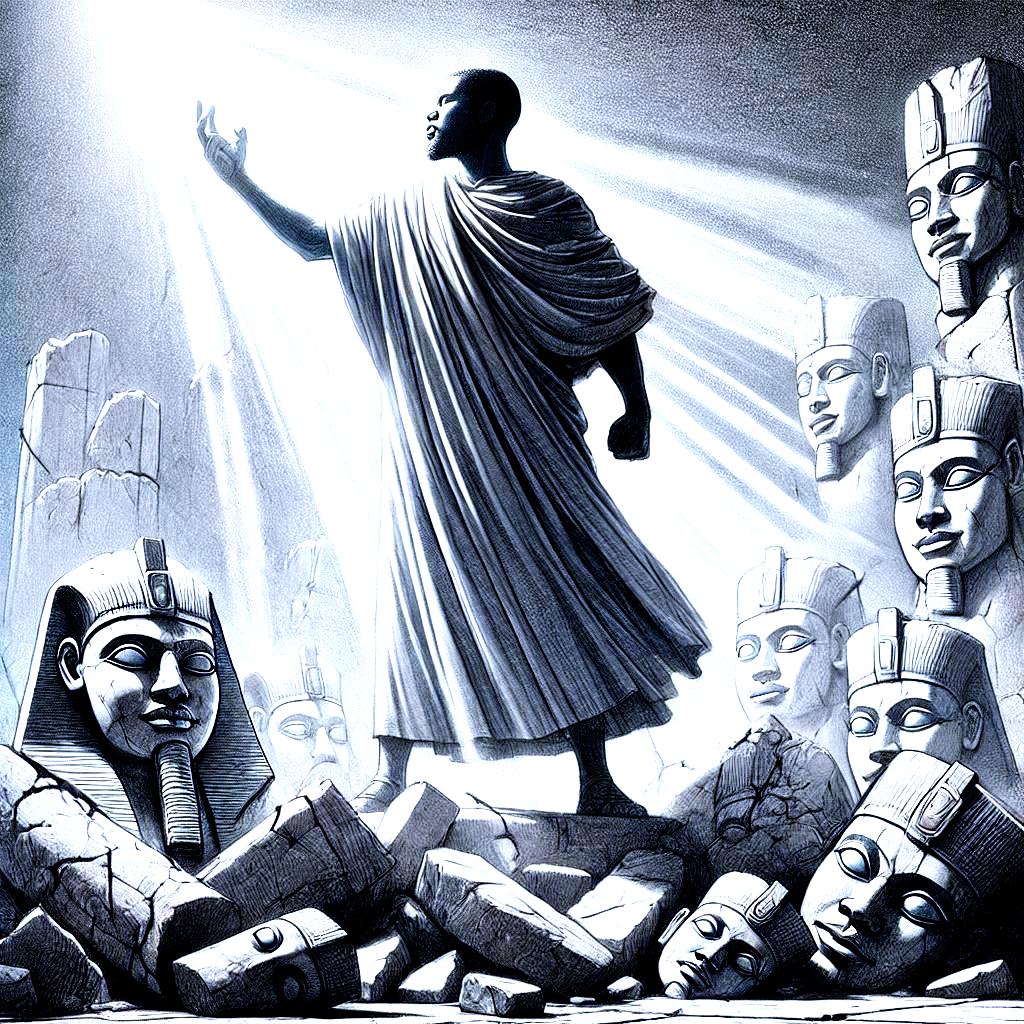
POWERLESSNESS AGAINST OMNIPOTENCE
KEY TEXT: Exodus 32:4 (AMP) – “And he took the gold from their hands, and fashioned it with an engraving tool and made it into a molten calf; and they said, ‘This is your god, O Israel, who brought you up from the land of Egypt.’”
In Exodus 20, God spoke to the Israelites the Ten Commandments.
Exodus 20:1-2 (KJ21) – “1 And God spoke all these words, saying, 2 ‘I am the LORD thy God, who have brought thee out of the land of Egypt, out of the house of bondage.’”
God spoke with His own voice to the Israelites, reminding them of His redeeming power and how He took them out of slavery in Egypt. When we look at the story of the Israelites coming out of Egypt, we see various miracles happening. After seeing those miracles, any honest person would acknowledge that God’s power was at work.
If God had done only one miracle and freed them, it might have been excusable for someone to think that it was a coincidence. However, God brought ten powerful plagues upon the Egyptians. After that, He caused the Red Sea to part and made a way for them to cross it in the middle. When the Egyptians tried to follow them, God caused them to drown in that same sea.
In Exodus 19:3-6, God spoke to the Israelites through Moses, reminding them of what He had done for them and what He planned to do. In Exodus 20, God spoke directly to the Israelites without a mediator.
Many people today who say there is no God are often not fully clear about whether God exists or not. Therefore, their claims may seem somewhat excusable. However, for the Israelites, their idolatrous action was not excusable at all because God had made it more than clear to them that He truly and surely does exist. It is a grievous iniquity when God assures you beyond doubt of His existence, and you still choose to doubt Him or to go against Him.
After God had manifested Himself to them, they still went ahead and made a golden calf to replace Him. Silver and gold belong to God (Haggai 2:8). All cattle and all animals belong to the Lord as well (Psalm 50:10). In other words, the Israelites used what belongs to God to replace the Creator who owns all things. They used God’s resources to disobey Him. This same tendency is common today, as many Christians idolize what God has blessed them with. Some idolize their cars, houses, property, education, or other blessings from God.
The Israelites not only made a golden calf, but they also said that it was the golden calf that brought them out of slavery in Egypt. This was ultimately foolish because they had heard God’s own voice telling them that He was the one who delivered them (Exodus 20:1-2). Besides that, they had personally witnessed His mighty hand performing great works.
The second commandment (Exodus 20:4-6) forbids people from making idols and worshiping them. While giving this commandment, God revealed Himself through His voice. We should believe God’s Word even though we cannot physically see Him.
The Israelites’ choice of a golden calf was influenced by cultural symbolism. In those days, cattle represented strength, fertility, and provision. Coming from Egypt, they had been exposed to the worship of the bull-god Apis, who symbolized fertility, strength, and divine blessing. A golden calf (a young bull) felt like a familiar religious image, blending Yahweh’s worship with Egyptian symbolism.
When God spoke to the Israelites in Exodus 20:1-2, His presence was so powerful that they trembled in fear, thinking they would die if they continued hearing His voice. They could not bear His direct speech and therefore asked Moses to speak with them instead of God.
In Exodus 32:4, the “expensive” golden calf idol could not even speak for itself. The people had to declare on its behalf, “This is your god, O Israel, who brought you up from the land of Egypt.” Speaking on behalf of their god showed that they knew they were more powerful than it. If they truly believed their god was greater, they would have let it speak for itself.
Even today, some religions spend vast amounts of energy, time, and resources fighting for their gods in what they call holy wars. Such actions reveal that they know their gods cannot defend themselves.
Furthermore, how could a god patterned after the Egyptian god Apis be the one to bring Israel out of Egypt? That would mean Apis was fighting against himself. The Israelites crafted a god of the same kind as Egypt’s, and it was foolish to expect such a god to wield greater power. God had already reminded them through Moses of the downfall of the Egyptians and how He Himself had lifted them (Exodus 19:3-6).
Having seen the fate of the Egyptians as a result of their vain religious practices, the Israelites should never have embraced those same practices. If you have already seen certain practices fail, why follow them again? If you have seen that working on the Sabbath is not bringing blessing, why continue doing it?
The God we worship—the only true God—can speak for Himself. He can fight for Himself, and He can fight for us too (Exodus 14:14). It is pointless to trust in a powerless god when we have access to the God with unlimited power.
The Israelites saw God’s mighty hand; they heard His powerful voice, and yet they still turned to a powerless image. Their sin was inexcusable because they had undeniable proof of God’s existence and power.
We too must guard our hearts carefully, for it is possible to misuse the blessings of God by turning them into objects of worship. The living God does not need us to defend Him—He speaks, He acts, and He fights for His people. No idol can compare to the Lord who parted the Red Sea, who delivered His people with a mighty hand, and who continues to work wonders in the lives of those who trust Him. Let us give Him the glory He alone deserves and never replace Him with the things He created.
Prayer
Heavenly Father, thank You for reminding me that You alone are worthy of my worship. Forgive me for the times I have placed Your blessings above You. Help me to keep my heart free from idols and to trust fully in Your power and faithfulness. Teach me to honor You with everything You have given me, and may my life be a testimony to Your greatness. In Jesus’ name, Amen.
Activity
• Take time this week to reflect on the blessings God has given you, your skills, possessions, and relationships.
• Write them down in a journal.
• Next to each one, write how you can use it to glorify God rather than to idolize it. For example, if you wrote “education,” commit to using your knowledge to serve others. If you wrote “income,” plan a way you can use it to support God’s work or bless someone in need.
Author: Mark Alex
BUY MY EBOOK: A FAITH FUELED LIFE: I RUN ON FAITH AND I’M NEVER RUNNING LOW
A FAITH FUELED LIFE: I RUN ON FAITH AND I’M NEVER RUNNING LOW (Amazon): https://amzn.to/4atSjuO
A FAITH FUELED LIFE: I RUN ON FAITH AND I’M NEVER RUNNING LOW (Google Play): https://bit.ly/4i9fXQp
Email: gettruthgetlife@gmail.com
Phone Number: +254710633247
My LinkedIn Profile: https://www.linkedin.com/in/mark-alex-0b87a9109/
PayPal: gettruthgetlife@gmail.com
Revolut: revolut.me/markalex92


Leave a Reply